



Menu

Commercial Maintenance Agreements in Riverside – Protect Your Business from Costly Downtime and Equipment Failures

Scheduled HVAC Maintenance Plans That Keep Your Riverside Commercial Property Running Without Interruption, Extend Equipment Lifespan, and Prevent Emergency Repairs During Peak Business Hours

Slider Image 1
Slider Image 2
Slider Image 3
Slider Image 4
Slider Image 5
Slider Image 7
Slider Image 8
Slider Image 9
Slider Image 10
Slider Image 11

How Inland Empire Heat and Operational Demands Put Commercial HVAC Systems at Risk

Riverside's position in the Inland Empire subjects commercial buildings to extreme temperature swings. Summer temperatures routinely exceed 100 degrees, forcing rooftop HVAC units to run at maximum capacity for extended periods. This sustained load accelerates wear on compressors, fan motors, and refrigerant lines.

Most commercial HVAC failures occur during peak cooling season when systems cannot handle the demand. A single breakdown during operating hours translates to lost productivity, inventory damage for temperature-sensitive businesses, and immediate financial impact. Restaurants near the Mission Inn district cannot afford kitchen ventilation failures during dinner service. Medical offices along Magnolia Avenue require continuous climate control for patient comfort and equipment protection.

Commercial HVAC service contracts address these vulnerabilities through scheduled inspections before seasonal demand peaks. HVAC preventive maintenance agreements identify failing components during planned service windows rather than during business hours. Commercial planned maintenance agreements include filter changes, refrigerant level checks, electrical connection tightening, and condensate drain clearing.

Buildings without commercial HVAC maintenance plans experience three times more emergency service calls and significantly shorter equipment lifespans. The reactive approach costs more over time and creates operational chaos. Commercial HVAC service agreements shift the maintenance model from reactive to predictive, allowing businesses to budget accurately and avoid surprises.

Riverside's commercial corridor stretches from the 91 freeway to Canyon Crest, encompassing diverse business types with varying HVAC demands. Each facility requires a customized approach based on occupancy patterns, equipment age, and operational requirements.

How Inland Empire Heat and Operational Demands Put Commercial HVAC Systems at Risk
The Engineering Behind Effective Commercial HVAC Service Contracts

The Engineering Behind Effective Commercial HVAC Service Contracts

Commercial HVAC maintenance plans follow a structured protocol designed around equipment manufacturers' specifications and operational stress points. The approach differs fundamentally from residential service because commercial systems operate under continuous load rather than intermittent cycling.

Peak HVAC Tampa structures commercial HVAC service agreements around critical system components that fail predictably under thermal stress. Compressor amperage readings reveal motor degradation before catastrophic failure. Superheat and subcooling measurements identify refrigerant charge issues that reduce efficiency by 20 percent or more. Blower wheel inspection catches imbalance that causes bearing failure and complete air handler shutdown.

The service interval depends on runtime hours rather than calendar months. A retail space running 12 hours daily needs quarterly visits. A 24-hour distribution center requires monthly inspections. Commercial planned maintenance agreements account for these variables rather than applying a one-size approach.

HVAC preventive maintenance agreements include oil analysis for larger chiller systems, which reveals contamination and acid formation before compressor damage occurs. Vibration analysis on rooftop units identifies mounting issues and fan imbalance. Thermal imaging locates hot spots in electrical panels and compressor terminals that signal imminent failure.

Documentation matters for commercial properties. Each service visit generates a detailed report with amperage readings, temperature differentials, refrigerant pressures, and component condition assessments. This data builds a performance baseline and tracks degradation trends. When a system approaches end-of-life, the documentation justifies capital expenditure requests with objective evidence rather than opinions.

Commercial HVAC service contracts include priority response for breakdowns, but the goal is preventing those calls entirely through systematic attention to failure indicators.

How Commercial Maintenance Agreements Work for Your Riverside Business

Commercial Maintenance Agreements in Riverside – Protect Your Business from Costly Downtime and Equipment Failures
01

Initial System Assessment

The process begins with a comprehensive audit of all HVAC equipment serving your facility. Technicians document make, model, tonnage, and age for each unit. They record operational parameters including supply and return temperatures, static pressure readings, and electrical draw. This baseline assessment identifies existing deficiencies and establishes performance benchmarks. The data determines appropriate service frequency and creates a customized maintenance schedule aligned with your operational calendar to minimize business disruption.
02

Scheduled Service Execution

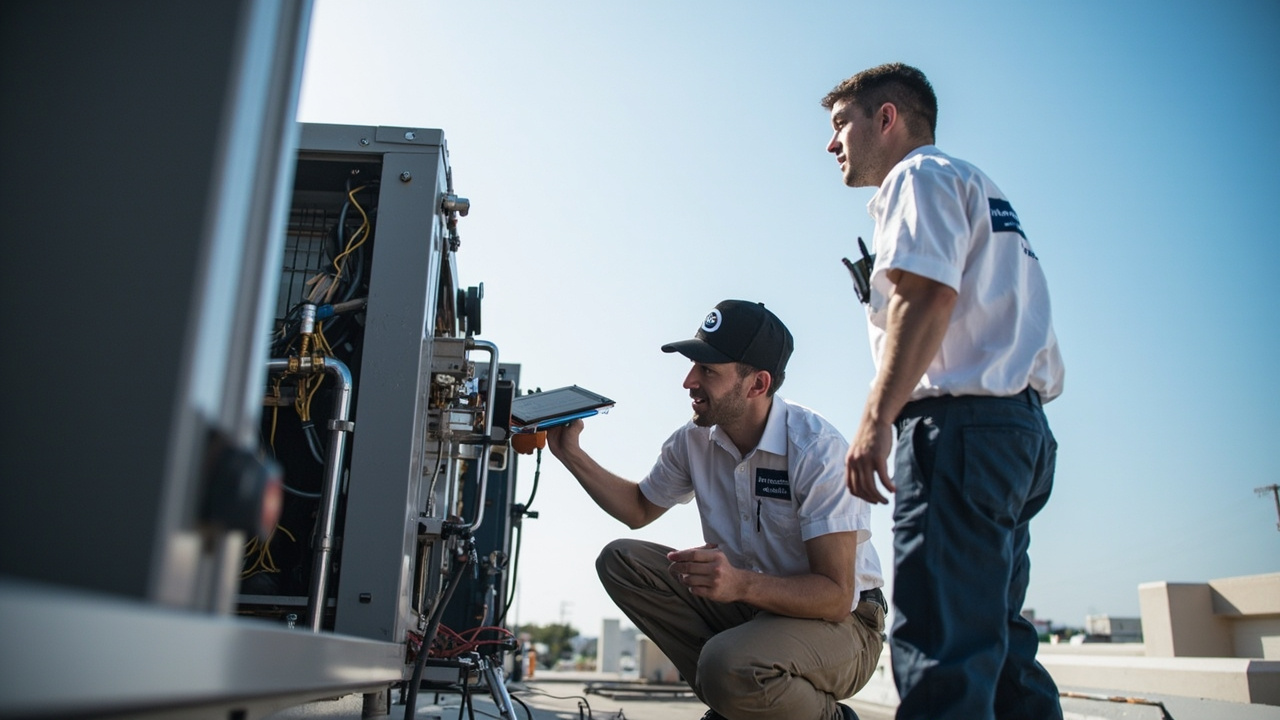
Maintenance visits occur during predetermined windows that align with low-occupancy periods when possible. Technicians follow a standardized checklist covering all system components. Each visit includes filter replacement, coil cleaning, refrigerant verification, electrical connection inspection, and control calibration. The technician documents findings in a digital report with photos of any concerns. Components approaching failure thresholds trigger replacement recommendations with lead time sufficient for budgeting and procurement. This proactive approach prevents emergency situations.
03

Performance Tracking and Optimization

Service data accumulates in a maintenance history that reveals equipment performance trends over time. Quarterly reports summarize system health, efficiency metrics, and upcoming component replacements. This longitudinal view supports capital planning and identifies chronic issues that may warrant system modifications. Businesses gain visibility into total cost of ownership and can make informed decisions about repair versus replacement. The relationship evolves beyond transactional service calls into a strategic partnership focused on minimizing HVAC-related operational risk and expense.

Why Riverside Businesses Choose Local Commercial HVAC Expertise

Commercial HVAC service in Riverside requires familiarity with specific building characteristics common to the area. Many commercial structures along University Avenue and in the Canyon Springs Business Park use packaged rooftop units rather than split systems. These configurations require different maintenance protocols and part availability.

Riverside County building codes mandate specific ventilation rates for commercial occupancies. Service providers must understand these requirements when evaluating system performance. A restaurant's makeup air unit cannot be serviced like a standard air handler because it serves both ventilation and code compliance functions.

Local supplier relationships matter for commercial maintenance. When a three-ton compressor fails on a 15-year-old Carrier unit, getting the correct replacement quickly requires established vendor accounts and knowledge of cross-reference options. National chains often lack these regional connections, leading to extended downtime while parts ship from distant warehouses.

Peak HVAC Tampa maintains service vehicles stocked with components common to Riverside's commercial building stock. Contactors, capacitors, and fan motors for prevalent equipment models allow same-visit repairs rather than return trips. This inventory strategy reduces your operational interruption.

Riverside's commercial landscape includes historic buildings in the downtown corridor with aging HVAC infrastructure. These systems require technicians comfortable working with equipment that may lack modern diagnostic ports or use refrigerants being phased out. The combination of mechanical aptitude and parts sourcing ability separates competent service from frustrated troubleshooting.

Commercial clients need a service provider who understands the financial impact of downtime and structures response accordingly. Priority dispatch and after-hours availability mean something only when backed by adequate staffing and local presence. A company based in Los Angeles cannot provide the same response time as a Riverside operation.

What Your Commercial Maintenance Agreement Includes

Service Frequency and Scheduling

Commercial HVAC maintenance plans include quarterly visits as a baseline, with monthly or bi-monthly service available for high-demand facilities. Scheduling occurs during your preferred time windows to minimize disruption. Weekend and evening appointments accommodate businesses that cannot afford daytime service interruptions. Each visit follows a comprehensive checklist covering all system components. You receive advance notice before each scheduled appointment, and technicians arrive within the agreed timeframe. The consistent service cadence prevents the neglect that leads to premature equipment failure and ensures your HVAC infrastructure receives attention before minor issues become major problems.

Inspection and Preventive Tasks

Each maintenance visit includes filter replacement, condenser and evaporator coil cleaning, refrigerant charge verification, electrical connection tightening, and control calibration. Technicians measure temperature differentials across coils, check compressor amperage, verify proper airflow, and inspect belts and bearings. Condensate drains receive clearing and treatment to prevent algae growth that causes backups. Thermostat operation is verified for accuracy. The inspection identifies components showing wear before failure occurs. Blower wheels are examined for debris accumulation that reduces airflow and efficiency. All findings are documented with photos and measurements, creating a permanent record of system condition over time. This data-driven approach allows you to make informed decisions about repairs and replacements.

Priority Service and Discounts

Commercial HVAC service agreements include priority dispatch when equipment failures occur despite preventive maintenance. Your calls move to the front of the service queue, reducing downtime. Agreement holders receive discounted rates on repairs and replacement parts, typically 15 to 20 percent below standard pricing. This discount often covers the agreement cost when even minor repairs are needed. The financial predictability helps with budget planning. You avoid the markup typically applied to emergency service calls. Labor rates remain consistent rather than fluctuating based on demand. The agreement creates a partnership model rather than a transactional relationship, aligning the service provider's interest with your goal of maximum uptime and minimum expense.

Documentation and Compliance Support

Each service visit generates a detailed report accessible through an online portal. The documentation includes all measurements, photos of equipment condition, and recommended actions. This record satisfies property management requirements and supports compliance documentation for facilities with regulatory obligations. Healthcare facilities, food service establishments, and manufacturing operations often require maintenance records for licensing or certification purposes. The systematic documentation demonstrates due diligence and proper facility management. Historical data supports capital budget requests by showing equipment age and condition trends. When equipment reaches end-of-life, the accumulated service history justifies replacement expenditures with objective evidence rather than subjective assessments. The records transfer with property sales, adding value by demonstrating proper maintenance history.

Frequently Asked Questions

You Have Questions,
We Have Answers

What should be included in a maintenance agreement? +

A commercial maintenance agreement should include scheduled preventive maintenance visits, emergency service response protocols, covered equipment specifications, labor and parts coverage details, and service frequency. For Riverside facilities, agreements must address HVAC filter changes due to high dust levels from inland conditions, refrigeration coil cleaning, electrical panel inspections, and plumbing fixture maintenance. The contract should define response times, exclusions, pricing structure, term length, and renewal conditions. Include provisions for equipment upgrades, reporting procedures, and compliance with California Title 24 energy standards. Clear scope definitions prevent disputes and ensure your facility stays operational year-round without unexpected repair costs.

What is the difference between AMC and CAMC? +

AMC stands for Annual Maintenance Contract, covering preventive maintenance and routine inspections but excluding parts and major repairs. CAMC means Comprehensive Annual Maintenance Contract, which includes parts, labor, and repairs beyond standard upkeep. For Riverside commercial properties, CAMC agreements provide better budget predictability since they cover component failures common in our hot, dry climate. You pay more upfront for CAMC, but eliminate surprise expenses when compressors fail or motors burn out. AMC suits newer equipment with warranty coverage, while CAMC makes sense for aging systems in older Riverside buildings where failure risk increases. Choose based on equipment age and risk tolerance.

What is the 10 rule in maintenance? +

The 10 rule in maintenance states you should spend 10 percent of equipment replacement cost annually on maintenance to maximize lifespan and avoid premature failure. For a 20-ton commercial HVAC unit worth 30,000 dollars in Riverside, budget 3,000 dollars yearly for maintenance. This covers quarterly inspections, filter replacements, coil cleaning, refrigerant checks, and minor repairs. Riverside's dusty conditions and temperature extremes accelerate wear, making this investment critical. Underspending leads to efficiency losses and early replacement. The rule helps facility managers justify maintenance budgets and avoid reactive repair cycles that cost three to five times more than planned maintenance.

What are the 4 types of maintenance? +

The four types of maintenance are preventive, predictive, corrective, and reactive. Preventive maintenance follows scheduled intervals regardless of condition. Predictive maintenance uses data like vibration analysis or thermal imaging to service equipment before failure. Corrective maintenance addresses minor issues found during inspections before they worsen. Reactive maintenance fixes equipment after breakdown. Riverside commercial facilities should prioritize preventive maintenance for HVAC due to constant cooling demands and predictive maintenance for critical systems like refrigeration. Reactive maintenance costs the most and causes business interruption. Well-structured maintenance agreements combine all four types based on equipment criticality and failure consequences for your operation.

What are the 4 P's of maintenance? +

The 4 Ps of maintenance are Plan, Perform, Prevent, and Predict. Plan involves creating maintenance schedules based on manufacturer recommendations and operating conditions. Perform means executing tasks correctly using qualified technicians. Prevent focuses on stopping failures before they occur through regular inspections and adjustments. Predict uses condition monitoring and data analysis to forecast when components will fail. For Riverside commercial properties, the planning phase must account for extended cooling seasons and dust infiltration rates. Performing maintenance during moderate weather prevents peak-season breakdowns. Prevention saves money compared to emergency repairs. Prediction reduces downtime by scheduling repairs during low-occupancy periods.

What are the 5 C's of a contract? +

The 5 Cs of a contract are Capacity, Consideration, Consent, Certainty, and Compliance. Capacity confirms both parties have legal authority to enter agreements. Consideration means something of value exchanges hands, typically service for payment. Consent requires both parties agree voluntarily without coercion. Certainty demands clear, specific terms with defined scope and responsibilities. Compliance ensures the contract follows California commercial law and local Riverside regulations. For maintenance agreements, certainty prevents disputes over what services are covered. Verify the contractor holds proper California contractor licenses and insurance. Review payment terms, service frequency, response times, and termination clauses carefully before signing to protect your business interests.

How Inland Empire Climate Conditions Accelerate Commercial HVAC Wear in Riverside

Riverside experiences over 100 days annually with temperatures exceeding 90 degrees, placing extreme demand on commercial cooling systems. The combination of high heat and low humidity creates dust-laden air that clogs condenser coils and filters rapidly. Buildings along the 91 and 60 corridors face additional particulate loading from traffic emissions. Rooftop units operate in direct sun exposure that raises cabinet temperatures 20 to 30 degrees above ambient, stressing electrical components and accelerating refrigerant breakdown. This environment makes commercial HVAC maintenance plans essential rather than optional. Systems without regular attention fail at significantly higher rates during peak cooling season when businesses can least afford downtime.

Riverside's commercial building stock includes structures spanning six decades with varying HVAC infrastructure quality. Older buildings downtown and along Market Street often house undersized systems pushed beyond design capacity. Newer developments in Orangecrest and Sycamore Canyon incorporate modern variable-speed equipment requiring specialized diagnostic tools. Peak HVAC Tampa understands this diversity and maintains the technical capability to service equipment across all generations and configurations. Local code knowledge ensures maintenance work complies with Riverside County requirements. The company's familiarity with regional equipment distributors and parts suppliers translates to faster repairs and reduced downtime for Riverside businesses compared to service providers without established local presence and relationships.
HVAC Services in The Riverside Area

We invite you to explore our service area and see where Horizon HVAC proudly delivers exceptional heating and cooling solutions. While our physical location serves as our hub, our dedicated team extends its expert services across the entire region, bringing unparalleled comfort and air quality directly to your doorstep, whether for residential or commercial needs, ensuring we’re always within reach for your HVAC requirements.

Address:
Horizon HVAC Riverside, 11801 Pierce St Suite 200, Riverside, CA, 92505

Additional Services We Offer

Our news updates

Latest Articles & News from The Blogs

Do Smart Vents Actually Work for Balancing Temperatures in a Two-Story Riverside Home? Smart vents promise to solve the age-old…

Do Smart Vents Actually Work for Balancing Temperatures in a Two-Story Riverside Home?

Do Smart Vents Actually Work for Balancing Temperatures in a Two-Story Riverside Home? Smart vents promise to solve the age-old…

Getting Rid of That Musty Dirty Sock Smell Coming from Your Riverside Air Vents

Getting Rid of That Musty Dirty Sock Smell Coming from Your Riverside Air Vents If your Riverside home suddenly smells…

Thinking About Relocating Your Outdoor AC Unit During a Riverside Home Remodel?

Thinking About Relocating Your Outdoor AC Unit During a Riverside Home Remodel? Moving your outdoor AC unit during a home…

Contact Us

Stop reacting to HVAC failures and start preventing them. Call (951) 223-9644 now to schedule a system assessment and customize a maintenance plan that protects your Riverside business from costly downtime and extends your equipment investment.