
Professional AC Installation for Spanish Tile Roofs in Riverside, CA
Spanish tile roofs are beautiful and durable but installing modern AC systems on them requires specialized knowledge and techniques. The combination of Riverside’s extreme summer heat and the fragile nature of terracotta or concrete tiles creates unique challenges that demand careful planning and execution.
Spanish tile roofs in Riverside typically use either clay tiles fired at high temperatures or concrete tiles molded for durability. Both materials are brittle and can crack under pressure or from improper weight distribution. The Inland Empire’s intense heat accelerates sealant degradation and requires careful consideration of thermal expansion when mounting equipment.
Installing an AC condenser or package unit on a Spanish tile roof involves more than just setting a heavy piece of equipment on top. It requires understanding the tile profile, proper flashing techniques, and methods to distribute weight across multiple tiles to prevent cracking. The process also must account for Riverside’s building codes and the need to maintain the roof’s waterproof integrity.
Why Spanish Tile Roofs Require Specialized AC Installation
Spanish tile roofs present specific challenges that standard shingle roofs do not face. The curved or S-shaped profile of clay tiles creates uneven surfaces that make mounting equipment difficult. Each tile must support its share of weight without cracking, which means traditional mounting brackets cannot be used directly on the tile surface.
The weight distribution problem becomes critical when installing heavy AC units. A typical residential condenser can weigh 150 to 250 pounds, and package units can exceed 500 pounds. Without proper support systems, this concentrated weight can crack multiple tiles, leading to leaks and expensive repairs. Same Day Emergency AC Repair for Families in Orangecrest.
Tile fragility extends beyond just weight. The installation process requires walking on the roof, which can break tiles if not done correctly. Riverside’s Santa Ana winds can also create uplift forces that stress mounting hardware, requiring additional anchoring methods that don’t penetrate the tiles. How Much Does a New AC Installation Cost in Woodcrest Today?.
Waterproofing presents another major concern. Spanish tile roofs rely on underlayment beneath the tiles for water protection. Any penetration for refrigerant lines or electrical connections must be sealed properly to prevent water intrusion, especially during Riverside’s occasional heavy rains.
Our Process: How We Protect Your Roof
Professional installation on Spanish tile roofs follows a systematic approach that protects both the roof and the HVAC equipment. The process begins with a thorough roof inspection to identify any existing damage or weak spots that need repair before installation.
Weight distribution is handled through specialized mounting systems. We use aluminum or galvanized steel mounting curbs that span multiple tile rows, distributing the AC unit’s weight across several tiles rather than concentrating it on one spot. These curbs are designed to fit the specific tile profile whether it’s mission, Spanish, or French pattern.
Tile protection during installation involves using walk boards made of plywood or specialized roof protection mats. These distribute the installer’s weight across multiple tiles, preventing point loads that cause cracking. We also use tile bridges when accessing areas near the mounting location.
Penetration sealing requires special attention. For refrigerant line sets, we use roof boots designed specifically for tile applications. These boots have flexible bases that conform to the tile surface and create a watertight seal without requiring tile modification. The boots are then sealed with compatible roofing sealant that adheres to both the boot material and the tile surface.
Vibration isolation is critical for preventing tile damage over time. We install rubber isolation pads between the mounting curb and the AC unit to absorb vibrations that could otherwise transfer through the mounting system and crack tiles.
Riverside Building Codes and Permit Requirements
Installing AC equipment on Spanish tile roofs in Riverside requires compliance with California Title 24 energy efficiency standards and Riverside County mechanical permit requirements. The mechanical permit process ensures the installation meets safety standards and doesn’t compromise the roof’s structural integrity. California Title 24 Energy Efficiency Standards.
Riverside County requires mechanical permits for all AC unit installations, including rooftop units. The permit process involves submitting detailed mounting plans that show how weight will be distributed and how penetrations will be sealed. The county also reviews wind load calculations to ensure the mounting system can withstand local wind conditions.
South Coast Air Quality Management District regulations may apply depending on the AC unit’s age and efficiency rating. Older units might require additional filtration or emission controls to meet current air quality standards. Switching to a High Efficiency Heat Pump in Riverside to Save on Monthly Energy Bills.
Roof warranty considerations are also important. Many tile manufacturers require specific installation methods to maintain warranty coverage. We document all installation procedures to ensure warranty compliance and provide homeowners with detailed records of the work performed.
Electrical requirements in Riverside often involve upgrading service panels to handle new AC units. The installation must comply with NEC Article 440 for air conditioning and refrigeration equipment, including proper disconnect switch placement and circuit protection.
Types of AC Systems Best Suited for Tile Roofs
Split system air conditioners are often the best choice for Spanish tile roofs because they separate the condenser from the indoor components. The outdoor condenser can be mounted on a ground-level pad or on a specially designed rooftop curb system that distributes weight properly.
Package units, which contain all components in a single outdoor unit, can work on tile roofs but require more robust mounting systems. These units need larger mounting curbs and additional wind anchoring due to their size and weight. The installation cost is typically higher due to the specialized mounting requirements.
Ductless mini-split systems offer another option for homes with Spanish tile roofs. These systems eliminate the need for extensive ductwork and can have smaller outdoor units that are easier to mount. The reduced weight and size make them ideal for situations where roof loading is a concern. Why Ductless Mini Splits are the Best Cooling Solution for Woodcrest Guest Houses.
Heat pump systems provide both heating and cooling and can be installed on tile roofs with the same mounting considerations as standard AC units. The additional heating capacity may require larger units, which increases the importance of proper weight distribution.
High-efficiency systems with variable speed compressors often make sense for Riverside’s climate. These units run more efficiently in extreme heat and may qualify for utility rebates that offset the higher initial cost of specialized tile roof installation.
Cost Factors and Maintenance Considerations
Installing AC on a Spanish tile roof typically costs 30 to 50 percent more than installation on a standard shingle roof. The additional cost covers specialized mounting hardware, tile protection equipment, extended installation time, and the expertise required to work with fragile materials.
Maintenance costs for tile roof AC installations can be higher over the system’s lifetime. The mounting hardware may require periodic inspection and tightening as the roof settles or as thermal expansion causes slight movement. Sealant around penetrations typically needs replacement every 5 to 7 years in Riverside’s intense sun.
Energy efficiency should be considered when selecting equipment for tile roof installations. High-SEER units may cost more upfront but can reduce monthly cooling costs significantly in Riverside’s long cooling season. The energy savings can help offset the higher installation costs over time.
Roof longevity is another factor to consider. Proper installation techniques can extend the life of both the roof and the AC system. Avoiding tile damage and maintaining proper drainage around the equipment prevents costly repairs and ensures the roof continues to protect the home for decades.
Insurance considerations may also affect the decision. Some insurance companies offer premium discounts for homes with properly installed, high-efficiency AC systems. The documentation of professional installation on a valuable tile roof can also help with insurance claims if damage occurs.
Frequently Asked Questions
Will my Spanish tiles crack during AC installation?
When installed by experienced professionals using proper tile protection methods, the risk of tile damage is minimal. We use walk boards, tile bridges, and specialized mounting systems that distribute weight and prevent point loads that cause cracking.
Do I need a crane to install an AC unit on my tile roof?
Not always. Many residential condensers can be lifted by two technicians using proper equipment. However, larger package units or installations on steep roofs may require crane service. We assess each situation and recommend the safest approach.
How long does AC installation on a Spanish tile roof take?
Standard condenser replacement typically takes 4 to 6 hours. Complete system installations with new mounting hardware may take 6 to 8 hours. Complex installations involving crane service or extensive modifications can take a full day or more.
Can I install a standard AC unit on my tile roof?
Yes, but it requires specialized mounting hardware and installation techniques. Standard units can work with proper weight distribution systems and tile protection methods. The key is using equipment and techniques designed for tile applications.
Will installing AC void my roof warranty?
Not if installed properly. We follow manufacturer guidelines and use approved mounting systems that maintain warranty coverage. We also document all installation procedures to provide warranty protection.
How do you handle the refrigerant lines through the tile roof?
We use specialized roof boots designed for tile applications. These boots create a watertight seal without requiring tile modification. The boots are sealed with compatible roofing sealant and flashed properly to prevent water intrusion.
What happens if a tile does get damaged during installation?
We carry replacement tiles and can match most common Spanish tile profiles. Any damaged tiles are replaced as part of the installation process. We also inspect the entire roof area and repair any pre-existing damage we discover.
Is it better to mount the AC on the ground instead of the roof?
Ground mounting eliminates roof concerns but may not be possible due to space constraints or HOA requirements. Roof mounting can be more efficient for cooling and saves yard space. We help you evaluate the best option for your specific situation.
How do you handle wind uplift on tile roof installations?
We use additional anchoring methods including hurricane straps and concrete dead loads where appropriate. The mounting system is engineered to withstand Riverside’s wind conditions, including occasional Santa Ana wind events.
Can I do the installation myself to save money?
DIY installation on tile roofs is not recommended. The specialized knowledge required to prevent tile damage, ensure proper sealing, and comply with building codes makes professional installation the safer and more cost-effective choice in the long run.
- Roof Inspection and Assessment
Examine the roof structure, identify tile type and condition, check for existing damage, and evaluate mounting locations for weight distribution.
- Permit Acquisition and Planning
Obtain necessary mechanical permits from Riverside County, submit mounting plans for approval, and schedule any required inspections.
- Mounting System Installation
Install aluminum or steel mounting curbs that span multiple tile rows, ensuring proper weight distribution and secure anchoring to roof structure.
- Equipment Mounting and Connection
Mount the AC unit using vibration isolation pads, connect refrigerant lines with proper sealing boots, and make electrical connections per NEC standards.
- Testing and Final Inspection
Test the system operation, verify all seals and connections, clean the work area, and schedule final inspection with building department.
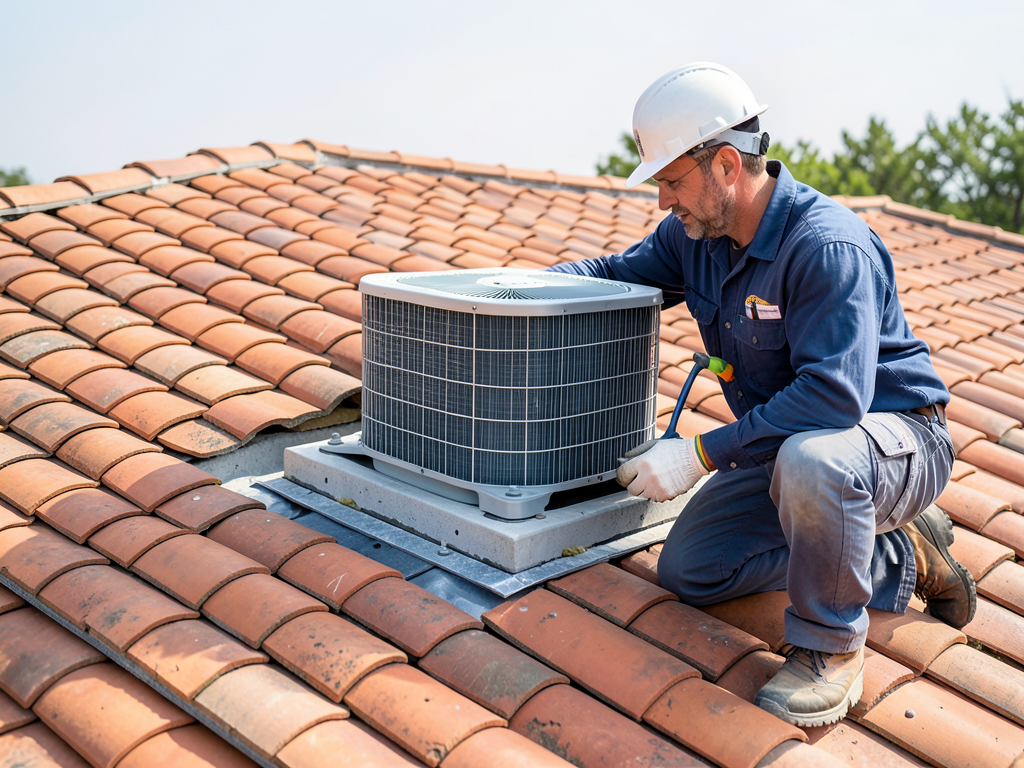

Installing modern AC on Spanish tile roofs in Riverside requires specialized expertise and careful attention to detail. The combination of fragile tile materials, extreme heat conditions, and strict building codes makes this a job for experienced professionals who understand both HVAC systems and roofing techniques.
The investment in proper installation pays off through extended roof life, reliable cooling performance, and peace of mind knowing your valuable tile roof is protected. Whether you’re replacing an existing system or installing AC for the first time, choosing a contractor with specific experience in tile roof installations is essential for success. Reliable Furnace Repair in Riverside to Keep Your Family Warm This Winter.
Don’t risk damaging your beautiful Spanish tile roof with inexperienced installation. Call (951) 223-9644 today to schedule your professional AC installation consultation. Our team has the expertise, equipment, and local knowledge to install your new cooling system safely and efficiently while protecting your roof investment.
Pick up the phone and call (951) 223-9644 before the next heat wave hits. We’ll evaluate your specific situation, explain your options, and provide a detailed proposal for installing your new AC system on your Spanish tile roof. Your comfort and your roof’s integrity are our top priorities. For more information, visit National Roofing Contractors Association.