




Menu

Iced Up Evaporator Coil in Riverside – Expert Diagnosis and Permanent Fixes

When your air conditioner coil freezes up, you need more than a quick thaw. You need technicians who identify the root cause, whether it's airflow restriction, refrigerant loss, or failed components, and repair it correctly the first time.

Slider Image 1
Slider Image 2
Slider Image 3
Slider Image 4
Slider Image 5
Slider Image 7
Slider Image 8
Slider Image 9
Slider Image 10
Slider Image 11

Why Your AC Evaporator Coil Freezes in Riverside's Desert Climate

You walk past your air handler and see ice coating the evaporator coil. Your home is warming up, and you hear the compressor running but getting no cooling. This is not normal, and it is not something you can ignore.

An iced up evaporator coil means your system cannot absorb heat. The coil should be cold, not frozen. When ice forms, it blocks airflow and prevents refrigerant from evaporating properly. The result is a system that runs constantly but delivers no cooling.

Riverside's extreme summer heat amplifies this problem. When outdoor temperatures exceed 100 degrees, your air conditioner works harder and longer. If there is any underlying issue, like restricted airflow from a clogged filter or low refrigerant from a slow leak, the coil temperature drops below freezing. Moisture in the air condenses on the coil and freezes solid.

This is not a simple ice problem. It is a symptom of a deeper failure. Common causes include dirty air filters that choke airflow, refrigerant leaks that drop system pressure, failed blower motors that reduce air movement, collapsed ductwork that restricts circulation, and clogged condensate drains that allow humidity buildup. Each of these issues requires a different repair approach.

Ignoring a frozen cooling coil leads to compressor damage, which is the most expensive component in your system. The compressor is designed to compress vapor, not liquid. When refrigerant does not evaporate properly in the coil, liquid refrigerant floods back to the compressor. This causes hydraulic shock and mechanical failure. The repair bill jumps from hundreds to thousands.

You need a technician who diagnoses the root cause, not just defrosts the coil and leaves.

Why Your AC Evaporator Coil Freezes in Riverside's Desert Climate
How We Diagnose and Repair Frozen Evaporator Coils

How We Diagnose and Repair Frozen Evaporator Coils

We do not guess. We do not thaw the coil and hope it stays fixed. We use diagnostic protocols to identify exactly why your air conditioner coil is freezing up, then repair the underlying failure.

First, we shut down the system safely to prevent compressor damage. We inspect the evaporator coil for ice buildup and check the refrigerant lines for frost migration. If ice extends to the suction line or compressor, we know refrigerant charge is critically low.

Next, we check airflow. We pull the air filter and inspect it for dust loading. A filter caked with dirt reduces airflow by 40 percent or more, which drops coil temperature and causes freezing. We inspect the blower motor, check fan speed settings, and measure static pressure in the ductwork. If static pressure is too high, airflow is restricted somewhere in the system.

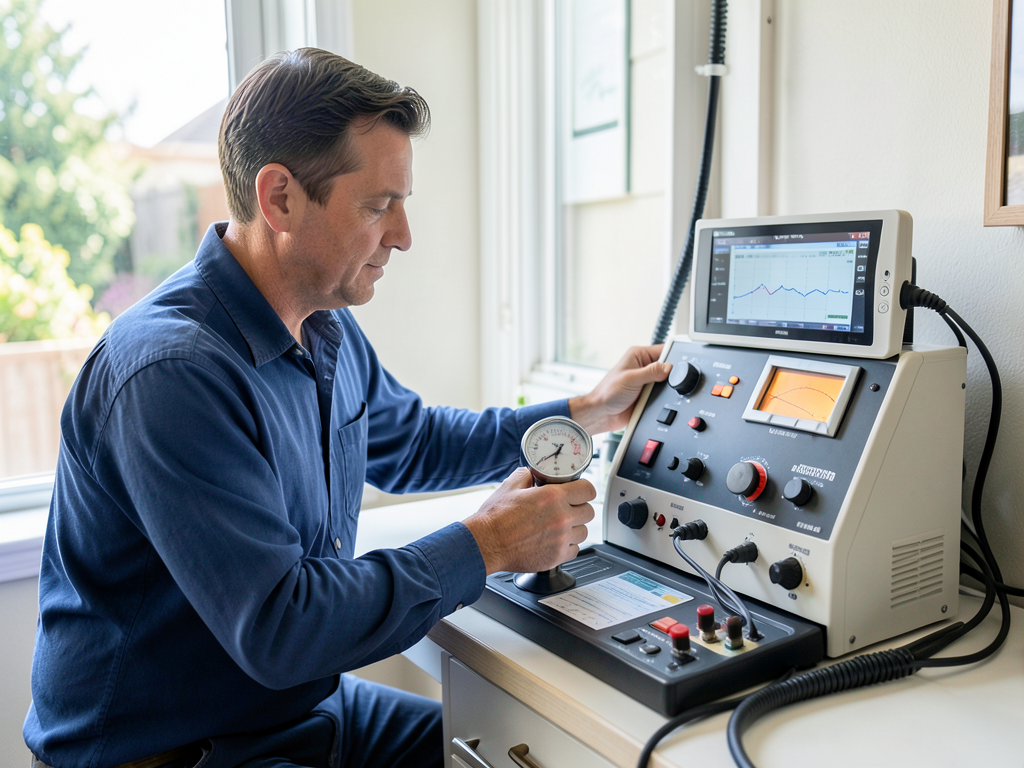
We use digital manifold gauges to measure refrigerant pressures and temperatures. Low suction pressure indicates either a refrigerant leak or an airflow problem. We compare superheat and subcooling values to manufacturer specifications. If refrigerant charge is low, we find the leak using electronic leak detectors and UV dye. We do not just add refrigerant and leave. We repair the leak, evacuate the system, and recharge it to exact specifications.

We also inspect the condensate drain system. A clogged drain pan or blocked drain line raises humidity inside the air handler, which contributes to coil icing. We clear blockages and verify proper drainage.

If the blower motor is failing, we test capacitor values and amperage draw. A weak motor cannot move enough air, and the coil freezes. We replace failed motors with OEM or equivalent parts rated for Riverside's heat.

Once we identify and repair the root cause, we monitor system operation through a complete cooling cycle to confirm the coil stays clear.

What Happens During Your Frozen Coil Repair

Iced Up Evaporator Coil in Riverside – Expert Diagnosis and Permanent Fixes
01

System Shutdown and Inspection

We power down your air conditioner to stop further ice formation and prevent compressor flooding. We remove the access panel and visually inspect the evaporator coil, refrigerant lines, blower assembly, and drain pan. We document ice location and thickness, which tells us whether the issue is airflow or refrigerant related. We check your thermostat settings and filter condition before moving to diagnostic testing.
02

Diagnostic Testing and Measurement

We use calibrated instruments to measure refrigerant pressures, airflow volume, and system temperatures. We test blower motor amperage, check capacitor microfarad values, and inspect ductwork for restrictions or leaks. If refrigerant charge is low, we perform a leak test using electronic detectors and pressure testing. We identify the exact failure point, whether it is mechanical, airflow related, or refrigerant related, before recommending repairs.
03

Repair and Verification

We complete the necessary repairs, whether that means sealing a refrigerant leak, replacing a blower motor, clearing ductwork restrictions, or cleaning the evaporator coil. We recharge the system to manufacturer specifications, restart the unit, and monitor operation for a full cooling cycle. We verify the evaporator coil remains clear, suction pressure stabilizes, and airflow meets design requirements. You get documentation of all repairs and measurements.

Why Riverside Residents Trust Horizon HVAC Riverside for Coil Freeze Issues

You need a company that understands how Riverside's desert environment affects air conditioning systems. We service systems in this climate year-round, and we know how dust intrusion, high static pressure, and extreme temperature swings cause coil freeze problems that would not happen in milder climates.

Riverside's air quality is a factor. Dust from the Santa Ana winds and particulate matter from surrounding agricultural areas load air filters faster than in coastal regions. Homeowners who change filters every 90 days in other cities need to change them every 30 to 45 days here. We educate customers on filter maintenance schedules specific to their neighborhood and air quality.

We also understand local construction patterns. Many homes in Riverside have ductwork installed in unconditioned attics, where summer temperatures exceed 140 degrees. Poorly sealed or undersized ducts create airflow problems that lead to frozen evaporator coils. We inspect ductwork as part of every coil freeze diagnosis because the problem is often hidden in the attic or crawlspace.

Our technicians carry refrigerant recovery equipment, leak detection tools, and replacement parts on every truck. We do not schedule a second trip to complete repairs. We fix the problem on the first visit whenever possible.

We also provide transparent diagnostics. You get a written explanation of what failed, why it failed, and what repair is needed. If your system is old and has multiple compounding issues, we give you options. Sometimes a frozen coil is the symptom of a dying compressor or a system that has reached the end of its service life. We help you make an informed decision about repair versus replacement.

We do not upsell unnecessary services. If your coil froze because of a dirty filter, we tell you. If it froze because of a refrigerant leak that will cost more to repair than the system is worth, we tell you that too.

Riverside homeowners call us because we diagnose correctly and repair permanently. We do not treat symptoms. We fix root causes.

What to Expect When You Call for Frozen Coil Service

Same-Day Emergency Response

We prioritize frozen evaporator coil calls because we know your home is heating up fast in Riverside's summer temperatures. Most service calls are scheduled within four hours. We arrive with diagnostic equipment and common repair parts so we can complete the repair on the first visit. You get a call when the technician is 30 minutes away, and you get a clear timeline for when your cooling will be restored.

Comprehensive System Diagnosis

We do not stop at the coil. We test refrigerant charge, measure airflow, inspect ductwork, check electrical components, and verify condensate drainage. We use digital manifold gauges and airflow meters to collect objective data. You get a written diagnostic report that explains what failed, what measurements we took, and what repair is needed. If multiple issues exist, we prioritize them by urgency and cost so you can make an informed decision.

Permanent Repairs, Not Temporary Fixes

We repair the root cause. If your coil froze because of a refrigerant leak, we find the leak, repair it, evacuate the system, and recharge it to exact specifications. If it froze because of restricted airflow, we replace the clogged filter, clean the coil, and inspect ductwork for blockages or leaks. If a blower motor is failing, we replace it with a properly rated component. You get a repair that lasts, not a bandage that fails again in two weeks.

Post-Repair Monitoring and Maintenance Plans

After we complete the repair, we monitor your system through a full cooling cycle to verify the coil stays clear and pressures stabilize. We provide written documentation of all measurements and repairs. We also offer maintenance plans that include filter replacement reminders, seasonal coil cleaning, and refrigerant level checks. Regular maintenance prevents most coil freeze issues before they happen. You get peace of mind and lower repair costs over the life of your system.

Frequently Asked Questions

You Have Questions,
We Have Answers

What causes ice on an evaporator coil? +

Ice forms on your evaporator coil when airflow drops or refrigerant pressure changes. Dirty air filters are the most common culprit in Riverside homes, especially during our dusty Santa Ana wind season. Other causes include blocked return vents, collapsed ductwork, low refrigerant from a leak, or a failing blower motor. When warm air cannot reach the coil, condensation freezes instead of draining. Your thermostat setting matters too. Running your AC below 68 degrees during cool Riverside evenings forces the coil temperature too low, creating ice buildup that blocks airflow completely.

What is the best way to thaw out an iced up evaporator coil? +

Turn off your AC at the thermostat immediately. Switch your fan setting to ON, not AUTO. This circulates warm air through your home without running the compressor, speeding up the thaw. The process takes 2 to 8 hours depending on ice thickness. Place towels under your indoor unit to catch dripping water. Never chip or scrape the ice. You risk puncturing the coil and causing an expensive refrigerant leak. Once thawed, replace your air filter before restarting. If ice returns within 24 hours, you have an underlying problem that needs professional diagnosis.

Will low refrigerant cause an evaporator to ice up? +

Yes. Low refrigerant drops the pressure inside your evaporator coil, causing the temperature to plummet below freezing. Refrigerant does not get used up like gas in a car. If levels are low, you have a leak somewhere in your system. This is common in older Riverside homes with aging line sets exposed to our temperature swings. The ice forms because the coil gets too cold to handle normal condensation. Simply adding refrigerant without fixing the leak wastes money and harms the environment. A proper repair locates the leak, fixes it, then recharges the system to manufacturer specifications.

How to melt ice on an evaporator coil? +

Turn off your air conditioner completely at the thermostat. Set the fan to ON to blow warm air across the coil. Open cabinet doors near your indoor unit to improve air circulation. The ice will melt on its own in 2 to 8 hours. Do not use a hairdryer, heat gun, or any external heat source. You risk damaging refrigerant lines or electrical components. Place towels or a shallow pan under the unit to catch water. Check your drain pan and condensate line to confirm water drains properly. If ice reappears after restart, call a technician to diagnose the root cause.

What is the likely cause for heavy icing in the evaporator coil? +

Heavy ice buildup points to severely restricted airflow or a significant refrigerant leak. In Riverside, the leading cause is a clogged air filter combined with dirty evaporator coil fins from dust accumulation. Other causes include closed or blocked supply registers in multiple rooms, crushed flex duct in your attic, or a blower motor running at reduced speed. On the refrigerant side, a large leak drops coil temperature dramatically, creating thick ice layers. Heavy icing also occurs when your AC runs during mild weather below 60 degrees outside, which we experience during winter months here.

Can I turn my AC back on after it thaws? +

Wait at least 30 minutes after the ice melts completely before restarting your AC. First, replace your air filter with a new one. Check all supply vents throughout your home to confirm they are open and unblocked. Inspect your drain pan for standing water and clear your condensate line if needed. When you restart, monitor the system for 2 hours. Feel the air coming from your vents. It should be cold. Listen for unusual sounds. If ice reforms within 24 hours, shut down immediately and call a technician. Repeated icing damages your compressor, leading to expensive repairs or full system replacement.

What are the six common causes of evaporator freezing? +

The six common causes are dirty air filters, blocked return or supply vents, low refrigerant from leaks, faulty blower motors, collapsed or disconnected ductwork, and clogged evaporator coils. In Riverside, add a seventh: running your AC when outdoor temperatures drop below 60 degrees, which happens during our cooler months. Each cause restricts airflow or drops refrigerant pressure below normal operating range. Your evaporator coil needs consistent warm airflow and proper refrigerant charge to stay above freezing. When either factor fails, condensation freezes instead of draining. Regular maintenance prevents most of these issues before ice forms.

What is the 3 minute rule for AC? +

The 3 minute rule protects your compressor from short cycling damage. After your AC shuts off, wait at least 3 minutes before restarting. This allows refrigerant pressure to equalize throughout the system. When you restart too quickly, the compressor works against high pressure, straining internal components and shortening equipment life. This matters in Riverside when you experience power flickers during summer storms or when troubleshooting an iced coil. Modern thermostats often include this delay automatically. If you repeatedly cycle your system on and off while diagnosing ice buildup, you risk compressor failure on top of your existing problem.

Can you run AC with frozen coils? +

No. Running your AC with frozen coils damages your compressor and wastes energy. The ice blocks airflow completely, forcing your system to work harder while cooling nothing. Your compressor runs continuously without relief, overheating and eventually failing. Compressor replacement costs $1,500 to $3,000 in Riverside. Ice also prevents proper heat exchange, meaning refrigerant returns to the compressor as liquid instead of gas. Liquid refrigerant destroys compressor valves. If you see ice, shut down immediately. Continuing to run your AC turns a simple fix like a dirty filter into a major repair bill. Protect your investment by addressing ice buildup right away.

What is the $5000 AC rule? +

The $5,000 rule helps homeowners decide between repair and replacement. If your AC repair costs more than $5,000, or if repair cost multiplied by equipment age in years exceeds $5,000, replacement makes better financial sense. For example, a $1,000 compressor repair on a 7-year-old unit equals $7,000 under this formula. Consider replacement. Newer systems use less energy, reducing bills by 20 to 40 percent in Riverside's hot climate. This rule is a guideline, not law. Factor in remaining equipment life, efficiency gains, and whether your current system uses obsolete R-22 refrigerant, which is expensive and environmentally harmful.

How Riverside's Dust and Heat Accelerate Coil Freeze Failures

Riverside sits in the Inland Empire, where summer temperatures regularly exceed 100 degrees and Santa Ana winds push dust and particulate matter through every crack in your home. This combination creates a perfect environment for air conditioner coil freezing up. Dust clogs filters faster here than in coastal California cities. A filter that would last 90 days in San Diego needs replacement every 30 days in Riverside. When airflow drops, coil temperature plummets, and ice forms. The extreme heat also forces your air conditioner to run longer cycles, which means any airflow restriction or refrigerant issue shows up faster and more aggressively than in milder climates.

Local HVAC companies that understand Riverside's climate know that coil freeze diagnostics require checking ductwork in unconditioned attics, where temperatures exceed 140 degrees in summer. Attic heat causes duct leaks and connection failures that reduce airflow to the evaporator coil. We inspect these areas as part of every frozen coil diagnosis because the failure point is often hidden above your ceiling. Our technicians have worked on systems throughout Riverside, from historic homes near the Mission Inn to newer subdivisions near Canyon Crest, and we know how local construction methods and air quality impact system performance.
HVAC Services in The Riverside Area

We invite you to explore our service area and see where Horizon HVAC proudly delivers exceptional heating and cooling solutions. While our physical location serves as our hub, our dedicated team extends its expert services across the entire region, bringing unparalleled comfort and air quality directly to your doorstep, whether for residential or commercial needs, ensuring we’re always within reach for your HVAC requirements.

Address:
Horizon HVAC Riverside, 11801 Pierce St Suite 200, Riverside, CA, 92505

Additional Services We Offer

Our news updates

Latest Articles & News from The Blogs

A Guide for Riverside Tenants on Requesting HVAC Repairs and Maintenance Living in Riverside means dealing with extreme summer heat…

A Guide for Riverside Tenants on Requesting HVAC Repairs and Maintenance

A Guide for Riverside Tenants on Requesting HVAC Repairs and Maintenance Living in Riverside means dealing with extreme summer heat…

Propane vs Electric Heating for Rural Homes in the Outskirts of Woodcrest

Propane vs Electric Heating for Rural Homes in the Outskirts of Woodcrest Homeowners in the outskirts of Woodcrest face a…

Heating and Cooling Solutions for New Multi-Generational Suites in Sycamore Highlands

Heating and Cooling Solutions for New Multi-Generational Suites in Sycamore Highlands Building a multi-generational suite in Sycamore Highlands means creating…

Contact Us

Your frozen evaporator coil will not fix itself. Every hour your system runs with ice buildup increases the risk of compressor damage. Call Horizon HVAC Riverside now at (951) 223-9644 for same-day diagnosis and repair. We identify the root cause and fix it permanently.