Getting Rid of That Musty Dirty Sock Smell Coming from Your Riverside Air Vents
If your Riverside home suddenly smells like a gym locker room or a pile of forgotten socks, you’re not imagining things. That musty odor coming from your air vents is a real HVAC phenomenon called Dirty Sock Syndrome. This distinctive smell typically appears when your AC or heat pump cycles on, releasing volatile organic compounds from bacteria and mold growing on your evaporator coil.
In Riverside’s unique climate, this problem becomes even more common. Our Inland Empire temperature swings between hot days and cooler nights create perfect conditions for moisture buildup on coils. When combined with the dust and pollen that constantly circulate through Riverside homes, your evaporator coil becomes a breeding ground for odor-causing microorganisms.
The smell itself is unmistakable once you know what to look for. It’s not a chemical odor or a burning smell. Instead, it’s a damp, earthy, musty scent that intensifies when your system starts up. Many Riverside homeowners describe it as smelling like old tennis shoes left in a gym bag or a forgotten load of laundry.
This isn’t just an unpleasant nuisance. That odor signals active microbial growth inside your HVAC system, which can affect your indoor air quality and potentially trigger allergies or respiratory issues for sensitive family members. The good news is that Dirty Sock Syndrome is treatable, and with the right approach, you can eliminate that smell for good.
What is Dirty Sock Syndrome?
Dirty Sock Syndrome is a specific type of microbial contamination that occurs on HVAC evaporator coils. The condition develops when heat pumps or air conditioning systems cycle between cooling and defrost modes, creating condensation that mixes with airborne organic particles. This creates an ideal environment for bacteria and mold to establish colonies on the coil surface.
The microorganisms responsible for the odor are typically strains of bacteria that produce volatile organic compounds (VOCs) as they metabolize organic matter. These VOCs are what you actually smell when your system turns on. The odor becomes trapped in your ductwork and released throughout your home every time the blower motor activates.
In Riverside specifically, the problem often worsens during shoulder seasons when temperatures fluctuate dramatically. A typical Riverside spring or fall day might start cool, requiring heating in the morning, then warm up significantly by afternoon, triggering the AC. These rapid temperature changes increase condensation cycles on the coil, accelerating microbial growth.
The condition affects all HVAC brands but is particularly common in systems that use aluminum coils, as these provide more surface area for biofilm attachment compared to copper coils. Older systems in Riverside neighborhoods like Canyon Crest or Orangecrest are especially vulnerable due to accumulated dust and reduced filtration efficiency over time. Switching to a High Efficiency Heat Pump in Riverside to Save on Monthly Energy Bills.
Why Riverside Homes are Susceptible
Riverside’s unique environmental conditions make Dirty Sock Syndrome more prevalent here than in many other California cities. Our inland location creates significant temperature variations between day and night, with summer days often exceeding 100°F and dropping to comfortable 60s at night. These swings increase the frequency of condensation cycles on your evaporator coil.
The Santa Ana winds that sweep through Riverside County carry enormous amounts of dust and pollen from the surrounding mountains and desert areas. This particulate matter enters your HVAC system and settles on the evaporator coil, providing organic material that bacteria feed on. During wind events, your filter can become overwhelmed, allowing more contaminants to reach the coil. HVAC Palm Desert.
Riverside’s water quality also plays a role. Our municipal water contains higher mineral content than coastal areas, and when this mineral-rich condensation interacts with organic debris on coils, it creates scale deposits that protect bacterial colonies from standard cleaning methods.
Many Riverside homes, particularly those built in the 1970s through 1990s in areas like Woodcrest and parts of Canyon Crest, have HVAC systems that are now 20-30 years old. These aging systems often have reduced filtration efficiency and may have developed microscopic cracks in drain pans where moisture accumulates, creating additional breeding grounds for odor-causing organisms. How Much Does a New AC Installation Cost in Woodcrest Today?.
The Science: Bacteria and Evaporator Coils
The evaporator coil in your HVAC system is essentially a cold surface where refrigerant absorbs heat from indoor air. When warm, humid air passes over this cold coil, condensation forms. This moisture, combined with organic particles from your indoor air, creates a perfect environment for biofilm development.
Biofilm is a complex community of microorganisms that adhere to surfaces and produce a protective matrix of extracellular polymeric substances. Once established on an evaporator coil, biofilm can be extremely difficult to remove with standard cleaning methods. The bacteria within the biofilm produce metabolic byproducts that include the musty, sock-like odor you notice.
The most common bacteria involved in Dirty Sock Syndrome belong to the Bacillus and Pseudomonas genera. These organisms thrive in the temperature range typically found in HVAC systems and can survive on minimal organic matter. They produce a variety of volatile organic compounds, including alcohols, aldehydes, and ketones, which create the characteristic odor.
What makes Riverside particularly challenging is our combination of high particulate matter and temperature fluctuations. The dust from agricultural areas, construction sites, and natural desert terrain provides abundant organic material for bacterial growth. When this dust combines with the moisture from our temperature swings, it creates an accelerated growth environment.
According to the Environmental Protection Agency’s guidelines on indoor air quality, microbial growth in HVAC systems can significantly impact occupant health. The EPA recommends addressing any persistent odors as they may indicate conditions that could lead to mold growth or other IAQ issues.
Our 3-Step Remediation Process
Eliminating Dirty Sock Syndrome requires more than just spraying coil cleaner. Our comprehensive approach addresses both the immediate odor problem and the underlying conditions that allow microbial growth to return. Here’s our proven three-step process for Riverside homes.
Step 1: Deep Coil Cleaning and Sanitization
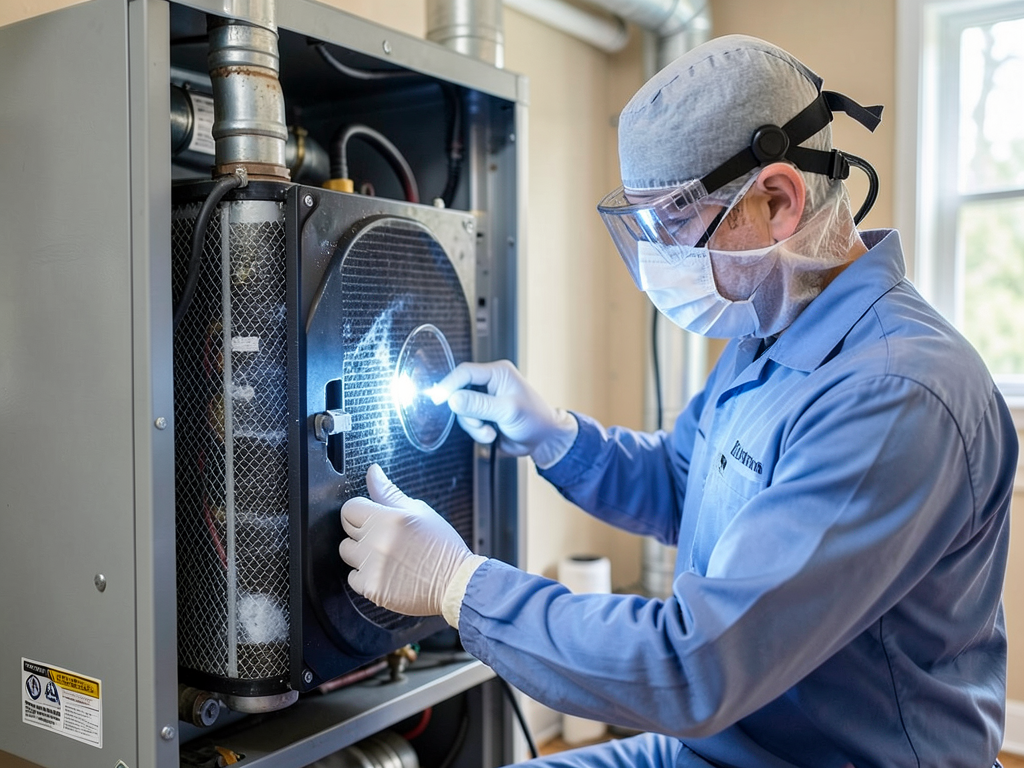
We begin with a thorough inspection of your evaporator coil, using specialized ultraviolet lights to identify areas of heavy contamination. Our technicians then apply an industrial-strength, non-acidic coil cleaner specifically formulated for HVAC use. Unlike consumer products, our professional-grade cleaners penetrate deep into the coil fins to dissolve biofilm and mineral deposits.
The cleaning process involves removing the coil access panel, protecting surrounding components, and applying the cleaning solution under controlled pressure. We pay special attention to the condensate drain pan and drain line, as these areas often harbor additional microbial growth that contributes to the odor problem.
Step 2: Antimicrobial Treatment
After cleaning, we apply a professional-grade antimicrobial coating to the coil surface. This coating, which meets California Title 24 energy efficiency standards, creates a protective barrier that inhibits future microbial growth. The treatment bonds to the coil surface at the molecular level, providing protection that lasts significantly longer than standard cleaning alone.
Our antimicrobial solutions are EPA-registered and specifically tested for HVAC applications. They work by creating an environment that’s hostile to bacteria and mold while being completely safe for your family and pets. This step is crucial in Riverside’s climate, where the combination of dust and moisture makes recurrence likely without proper protection.
Step 3: Optional UV-C Germicidal Light Installation
For severe cases or homeowners who want maximum protection, we recommend installing UV-C germicidal lights in the air handler. These lights emit ultraviolet radiation at the 254-nanometer wavelength, which is lethal to microorganisms. The UV-C light continuously sanitizes the coil surface and surrounding areas, preventing new microbial growth.
UV-C installation is particularly effective in Riverside homes because it addresses the ongoing exposure to dust and pollen that our environment creates. The lights operate continuously, providing 24/7 protection against the bacteria that cause Dirty Sock Syndrome. They also help improve overall indoor air quality by reducing airborne microorganisms.
Prevention Tips for IE Homeowners
Once you’ve eliminated the odor, preventing recurrence is essential. Here are proven strategies specifically tailored for Riverside’s climate and environmental conditions.
Upgrade Your Air Filtration
Standard 1-inch fiberglass filters are inadequate for Riverside’s high dust environment. Upgrade to a MERV 11 or MERV 13 pleated filter, which captures smaller particles that contribute to coil contamination. These filters cost more but significantly reduce the organic material reaching your evaporator coil.
Change your filter every 30-45 days during high-use seasons. During Santa Ana wind events or periods of heavy construction in your area, check your filter weekly and replace it if it appears dirty. A clean filter is your first line of defense against Dirty Sock Syndrome.
Maintain Proper Humidity Control
While Riverside’s climate is generally dry, certain areas near the Santa Ana River or in older neighborhoods with mature landscaping can have localized humidity issues. Consider installing a whole-house dehumidifier if you notice condensation on windows or if your home feels damp. Proper humidity control reduces the moisture available for microbial growth.
During the cooling season, keep your thermostat set to a consistent temperature. Large temperature swings increase condensation cycles on your coil. A programmable thermostat set to maintain a steady temperature can help minimize the conditions that promote bacterial growth.
Schedule Annual Professional Maintenance
Professional maintenance is crucial for preventing Dirty Sock Syndrome recurrence. During a maintenance visit, technicians inspect your coil for early signs of contamination, clean the drain pan and line, check refrigerant levels, and verify proper airflow. Early detection allows for intervention before odors develop.
Consider enrolling in a maintenance plan that includes twice-yearly visits. Spring maintenance prepares your system for the heavy cooling season, while fall maintenance addresses any issues that developed during summer operation. This proactive approach is particularly important for Riverside homes due to our extended cooling season.
Cost Considerations for Riverside Residents
The cost to eliminate Dirty Sock Syndrome varies based on your system’s condition and the severity of contamination. A basic coil cleaning service in Riverside typically ranges from $250-$400, while comprehensive remediation including antimicrobial treatment runs $450-$700.
UV-C light installation adds $800-$1,200 to the project cost but provides long-term protection that often justifies the investment, especially in Riverside’s challenging environment. Many homeowners find that the improved indoor air quality and prevention of future odor issues make UV-C installation worthwhile.
Factors affecting cost include system accessibility, coil condition, and whether additional services like duct cleaning are needed. Older systems in Riverside’s established neighborhoods may require more extensive work due to accumulated contamination over years of operation.
Most HVAC companies in Riverside offer free estimates for odor diagnosis, allowing you to understand the scope of work before committing to any service. Some also provide financing options for larger remediation projects, making professional treatment more accessible for budget-conscious homeowners.
When to Call a Professional
While some homeowners attempt DIY solutions for Dirty Sock Syndrome, certain situations require professional intervention. If you’ve tried basic cleaning methods without success, or if the odor is severe and pervasive throughout your home, it’s time to call an HVAC specialist.
Professional help is essential if you notice additional symptoms like reduced cooling efficiency, unusual system cycling, or visible mold growth around your air handler. These signs indicate more serious contamination that DIY methods cannot adequately address.
In Riverside’s climate, where environmental factors continuously introduce new contaminants to your system, professional-grade solutions provide the most reliable and lasting results. Our local technicians understand the specific challenges posed by our Inland Empire environment and can recommend solutions tailored to your home’s needs. Reliable Furnace Repair in Riverside to Keep Your Family Warm This Winter.
Don’t wait until the smell becomes unbearable or affects your family’s comfort. Early intervention prevents the problem from worsening and typically costs less than emergency service calls for severe contamination cases. Same Day Emergency AC Repair for Families in Orangecrest.
Frequently Asked Questions
Is Dirty Sock Syndrome dangerous to my health?
While the odor itself isn’t toxic, the microbial growth can affect indoor air quality and potentially trigger allergies or respiratory issues in sensitive individuals. The EPA recommends addressing any persistent HVAC odors as a matter of indoor air quality.
How long does the remediation process take?
Most coil cleaning and treatment services can be completed in 2-4 hours, depending on system accessibility and contamination severity. UV-C light installation typically adds 1-2 hours to the process.
Will my homeowner’s insurance cover this?
Standard homeowner’s insurance policies typically don’t cover Dirty Sock Syndrome, as it’s considered a maintenance issue rather than sudden damage. However, some home warranty plans may cover coil cleaning services.
How can I tell if the smell is coming from my AC or somewhere else?
The most reliable test is to run your AC for 10-15 minutes, then turn it off and immediately check near your air vents. If the smell intensifies when the system is running and diminishes when it’s off, the source is likely your HVAC system.
Do newer AC systems get Dirty Sock Syndrome?
Yes, newer systems can develop this issue, though they may be less susceptible due to improved coil designs and better filtration options. However, even high-efficiency systems in Riverside’s environment can experience microbial growth without proper maintenance.
Take Action Today
That musty odor coming from your vents isn’t going to disappear on its own. Every day you wait allows more bacteria to colonize your evaporator coil, making the problem harder and more expensive to fix. Riverside’s unique climate means your system faces constant challenges from dust, pollen, and temperature swings that create ideal conditions for microbial growth.
Our experienced HVAC technicians understand the specific challenges Riverside homeowners face. We’ve successfully eliminated Dirty Sock Syndrome from hundreds of homes throughout the Inland Empire, from Canyon Crest to Woodcrest and everywhere in between. We know exactly what it takes to not only remove the current odor but prevent it from returning.
Don’t let another day go by breathing air that’s been circulated through a contaminated coil. Pick up the phone and call (951) 223-9644 today to schedule your inspection. Our team will diagnose the source of the odor, explain your treatment options, and provide a clear, upfront estimate with no hidden fees.
Call (951) 223-9644 now and take the first step toward fresh, clean air in your Riverside home. Your family deserves to breathe easy without that embarrassing dirty sock smell following them from room to room. For more information, visit EPA’s Indoor Air Quality Guidelines. For more information, visit ASHRAE Technical Resources.