
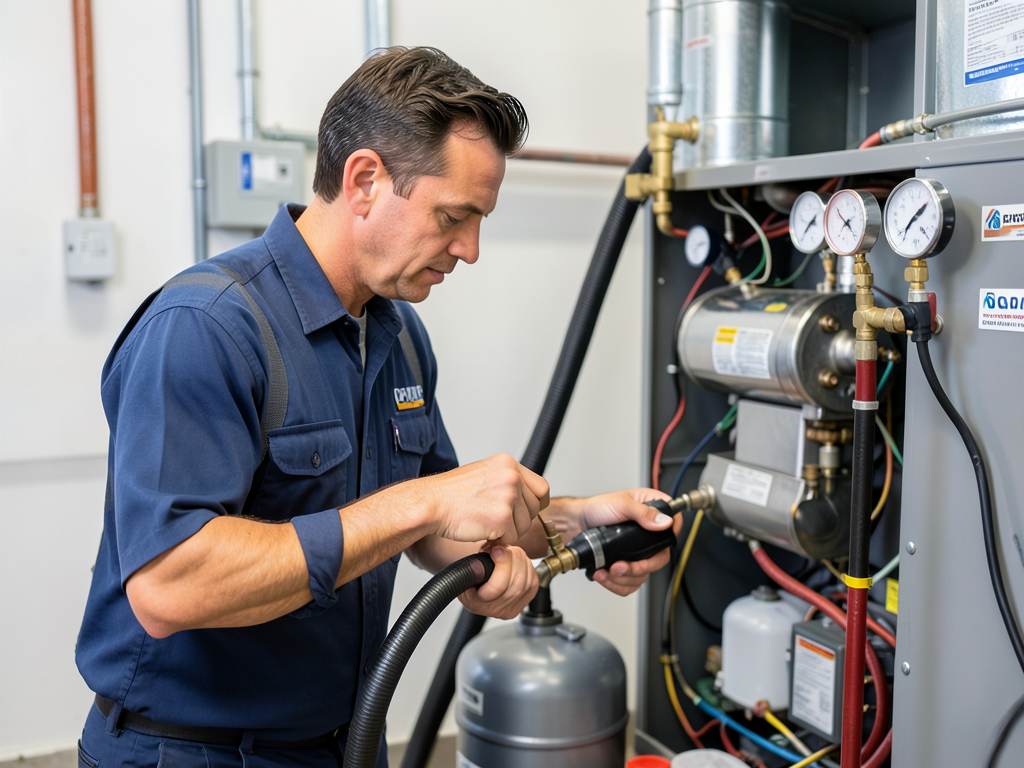
Thinking About Relocating Your Outdoor AC Unit During a Riverside Home Remodel?
Moving your outdoor AC unit during a home remodel in Riverside is more than just picking up a heavy box and setting it down somewhere else. The process involves refrigerant recovery, electrical work, line set rerouting, and city permits. Most homeowners in Riverside County spend between $1,500 and $3,500 for a professional relocation, depending on the distance and complexity.. Read more about Turning Your Riverside Spare Room Into a Comfortable Home Office with Targeted Cooling.
Before you start tearing up your landscaping or moving walls, you need to know the real cost drivers, the local permit requirements, and why this is absolutely not a DIY job in Riverside’s extreme heat. Let’s break down exactly what you’re facing.. Read more about Why Your Riverside Home Needs a Surge Protector for the AC Condenser Unit.
Why Move Your AC Unit in the First Place?
Homeowners in Riverside relocate AC units for several reasons. Maybe your new patio design puts the condenser right in the middle of your entertainment space. Maybe your remodel requires the wall where the current unit sits. Or maybe the original location sits in full afternoon sun, forcing your system to work harder in Riverside’s 110°F summer heat.
Whatever your reason, the relocation process follows a strict sequence that protects your system, your home, and your wallet from costly mistakes.
The Real Cost Breakdown for Riverside AC Relocation
Understanding where your money goes helps you budget accurately and avoid surprise charges. Here’s what typically makes up the total cost:
| Cost Component | Typical Range | Notes |
|---|---|---|
| Labor (HVAC technician) | $800 – $1,500 | 2-4 hours of skilled work |
| Refrigerant recovery & recharge | $200 – $400 | EPA required for R-410A systems |
| Line set extension | $150 – $300 | Copper tubing and brazing |
| Electrical work | $150 – $350 | Disconnect move and wiring |
| Concrete pad or mounting | $100 – $250 | Level surface required |
| Riverside building permit | $75 – $150 | City of Riverside mechanical permit |
| Total Estimated Cost | $1,575 – $3,050 | Based on typical Riverside jobs |
Local Riverside Factors That Affect Your Cost
Moving an AC unit in Riverside isn’t the same as moving one in a cooler climate. Our extreme heat means your system works harder, so proper relocation becomes critical for efficiency and longevity. Switching to a High Efficiency Heat Pump in Riverside to Save on Monthly Energy Bills.
The City of Riverside requires a mechanical permit for any AC relocation that involves refrigerant handling or electrical changes. Permit fees typically range from $75 to $150, and you’ll need to submit plans showing the new location meets clearance requirements.
Riverside County’s building code follows California Title 24 energy standards, which means your new location must maintain proper airflow clearance around the unit. The minimum is usually 24 inches on sides and back, 36 inches in front for service access. California Title 24 Energy Standards.
Soil conditions in Riverside vary by neighborhood. Areas near the Santa Ana River have more expansive clay soil that can cause concrete pads to shift over time. Your technician might recommend a larger pad or additional anchoring in these areas.
Key Variables That Drive Up the Price
Several factors can push your relocation cost higher than the average range. Understanding these helps you plan and budget accurately.
- Distance of move: Moving the unit 5 feet versus 50 feet dramatically changes line set costs and labor time.
- Refrigerant type: R-410A systems require specific recovery equipment and procedures under EPA Section 608 regulations.
- Electrical complexity: If your new location requires running conduit through walls or underground, costs increase significantly.
- Pad requirements: Sloped yards or areas with poor drainage need special pad construction or elevation.
- Accessibility: Tight spaces, stairs, or obstacles add labor hours to the job.
The Step-by-Step Relocation Process
Professional AC relocation follows a specific sequence to protect your system and ensure proper operation. Here’s what happens during a typical Riverside job:
- System shutdown and refrigerant recovery
The technician pumps down the system and recovers refrigerant using EPA-certified equipment. This prevents environmental violations and protects your compressor. EPA Section 608 Certification.
- Electrical disconnect
The power is shut off at the disconnect box, and wiring is carefully labeled before removal.
- Unit removal
The condenser is disconnected from line sets and lifted from its current pad.
- Line set extension
New copper tubing is brazed to existing lines, maintaining proper refrigerant flow and minimizing pressure drop.
- Vacuum pull and pressure test
The system is evacuated to remove moisture and non-condensables, then pressure tested for leaks.
- Recharge and startup
The correct refrigerant charge is added based on line set length and system requirements.
- Final testing
The system is tested for proper cooling, airflow, and electrical operation.. Read more about Heating and Cooling Solutions for New Multi-Generational Suites in Sycamore Highlands.
Why This Is Absolutely Not a DIY Job
Many homeowners think moving an AC unit is just heavy lifting, but the risks are substantial. Here’s what can go wrong:
EPA violations: Releasing refrigerant into the atmosphere violates federal law and carries fines up to $37,500 per day. You need EPA Section 608 certification to handle refrigerants legally.
System damage: Improper brazing or contamination can destroy your compressor, costing $1,500 to $2,500 to replace.
Electrical hazards: AC units run on 240-volt power. Mistakes can cause fires, electrocution, or damage to your home’s electrical system.
Voided warranty: Most manufacturers require professional installation and service to maintain warranty coverage.
Permit violations: Skipping permits in Riverside can result in stop-work orders, fines, and problems when you sell your home.
Impact on Your System’s Performance and Efficiency
Where you place your relocated AC unit directly affects how much you’ll pay to cool your home. Units in direct afternoon sun can use 10-15% more electricity than shaded units.
Proper airflow is critical in Riverside’s heat. Units placed too close to walls or vegetation struggle to reject heat, causing higher head pressures and reduced efficiency.
Noise is another consideration. Condensers can produce 70-80 decibels at full operation. If you’re moving the unit near bedrooms or patios, ask about sound-dampening pads or strategic placement to minimize noise impact.
Permit Requirements in Riverside County
The City of Riverside requires permits for AC relocations that involve refrigerant handling, electrical changes, or structural modifications. Here’s what you need to know:
Mechanical permit: Required for any work involving refrigerant lines or system charging. Application fee is typically $75-$150.
Electrical permit: Required if new wiring or conduit is installed. Usually included with mechanical permit for HVAC work.
Plan submission: You’ll need to show the new location meets clearance requirements and doesn’t violate setback rules.
Inspection: A city inspector will verify the work meets code before final approval.
Skipping permits might save you $100 upfront, but violations can cost you thousands in fines and force you to tear out work that doesn’t pass inspection.
Choosing the Right Location for Your Relocated Unit
Before your technician arrives, think about these factors for the new location:
- Sun exposure: North or east sides of your home stay cooler and reduce system workload.
- Clearance: Maintain 24 inches on sides, 36 inches in front, and 60 inches above for service access.
- Drainage: Avoid low spots where water pools, which can cause rust and electrical issues.
- Noise impact: Consider bedrooms, patios, and neighbor proximity.
- Future access: Leave room for service technicians to work without climbing over obstacles.
Common Mistakes to Avoid
Even with professional help, some decisions can cost you later. Here are mistakes we see repeatedly in Riverside:
- Choosing the cheapest bid: Low prices often mean cutting corners on vacuum pulling or refrigerant charging.
- Ignoring clearance requirements: Units placed too close to walls or vegetation fail prematurely.
- Skipping the vacuum step: Moisture in the system causes acid formation and compressor failure.
- Using undersized line sets: This causes efficiency losses and potential system damage.
- Improper pad installation: Uneven pads cause vibration, noise, and premature wear.
When to Consider Replacement Instead
Sometimes relocation costs approach the price of a new system. Consider replacement if:
- Your unit is over 10-12 years old
- Repair costs are mounting
- You want a higher efficiency model
- The relocation would require extensive line set replacement
New AC installations in Riverside typically range from $4,500 to $8,000, but they come with better efficiency, warranties, and the latest technology. How Much Does a New AC Installation Cost in Woodcrest Today?.
Getting Your Free Estimate
Every AC relocation is different based on your home’s layout, the distance of the move, and local requirements. A professional assessment ensures you get accurate pricing and avoid costly mistakes.
Call (951) 223-9644 today to schedule your free estimate. Our Riverside-based technicians will evaluate your situation, explain your options, and provide a detailed quote with no hidden fees.
Don’t let your remodel plans get derailed by unexpected AC relocation costs. Get the facts first, then make your decision with confidence.
Frequently Asked Questions
How long does AC relocation take?
Most relocations take 2-4 hours for a straightforward move. Complex jobs with long line sets or difficult access can take 6-8 hours.
Can I move my AC unit myself?
No. AC relocation requires EPA certification for refrigerant handling, electrical expertise, and knowledge of building codes. DIY attempts often result in system damage, voided warranties, and legal violations.
Will my warranty cover relocation?
Warranty coverage varies by manufacturer. Some cover relocation if done by a certified technician, while others consider it a modification that voids coverage. Check your specific warranty terms.
Do I need a permit for AC relocation in Riverside?
Yes, if the work involves refrigerant handling, electrical changes, or structural modifications. Riverside requires mechanical permits for these types of HVAC work.
How far can I move my AC unit?
There’s no technical limit, but longer moves increase costs significantly. Most relocations stay within 20-30 feet to keep line set costs reasonable. Beyond that, you might consider replacement instead.
What happens to my old pad?
Your technician can remove the old pad and patch the area, or you can keep it for other uses like a garden base or equipment stand.
Will relocation affect my AC’s efficiency?
Yes, if done correctly. Proper placement in a shaded area with good airflow can improve efficiency by 10-15%. Poor placement can reduce efficiency and increase operating costs.
You may also find this helpful. Finding the Quietest Outdoor AC Units for Peaceful Alessandro Heights Backyards.
You may also find this helpful. Designing the Perfect Climate Control System for Your Hawarden Hills Wine Cellar.