
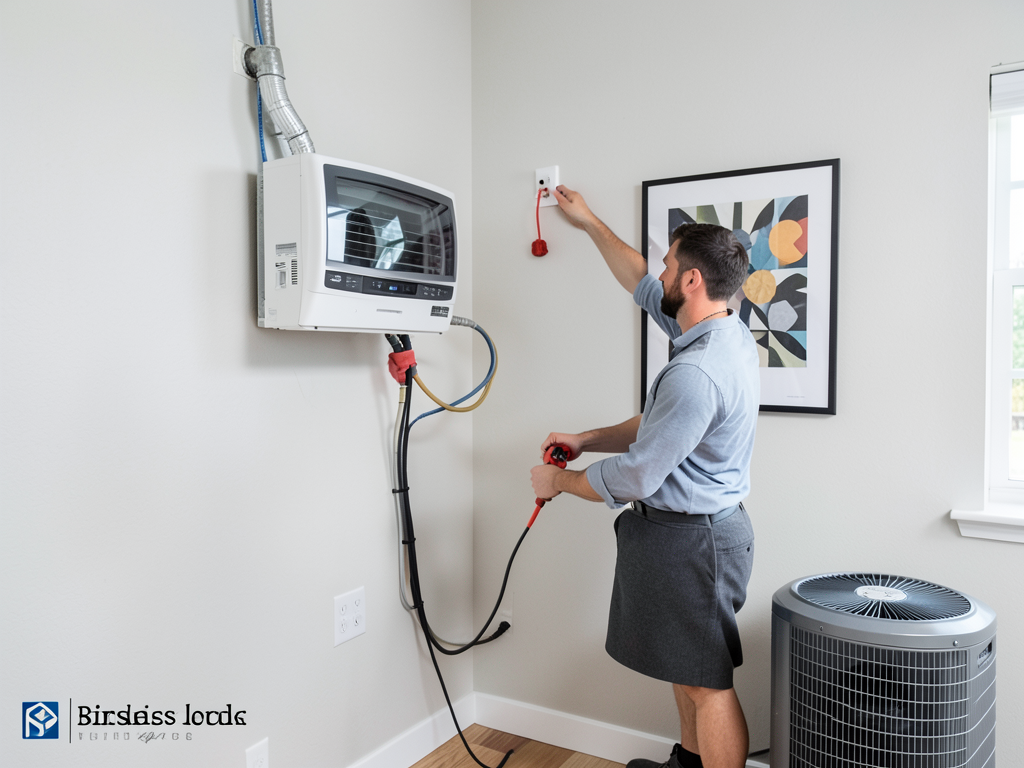
Turning Your Riverside Spare Room Into a Comfortable Home Office with Targeted Cooling
Working from home in Riverside means battling the Inland Empire heat, especially when your spare room turns into your office. Standard central air often fails to keep a single workspace cool during triple-digit summers, leaving you sweating through video calls and struggling to focus. The solution isn’t just blasting the whole house—it’s targeted cooling that delivers comfort where you need it most.
Your home office faces unique challenges: computers generate heat, west-facing windows bake the room in afternoon sun, and poor insulation traps warmth. Understanding these factors helps you choose the right cooling approach that balances comfort, energy efficiency, and cost. Energy Star certified air conditioners.
The Challenge of Cooling a Riverside Home Office
Riverside’s climate creates specific cooling demands. Summer temperatures regularly exceed 100°F, and the dry heat combined with Santa Ana winds can make afternoon work sessions unbearable. A typical spare room often lacks proper insulation or has windows that amplify solar heat gain. Add in electronics, and the room’s heat load can be significantly higher than other spaces in your home.
Standard HVAC systems are designed to cool entire homes evenly, not to handle the concentrated heat of a small office with multiple devices running. This mismatch leads to rooms that stay warm even when the thermostat reads comfortable, forcing you to either suffer or overcool the rest of your house.
Top Cooling Solutions for Small Workspaces
Ductless Mini-Split Systems (The Premium Choice)
A ductless mini-split offers the most effective targeted cooling for your Riverside home office. These systems consist of an outdoor compressor and one or more indoor air handlers mounted on your wall or ceiling. They provide precise temperature control without the energy losses of ductwork. Why Ductless Mini Splits are the Best Cooling Solution for Woodcrest Guest Houses.
Modern mini-splits operate at SEER2 ratings up to 28, making them incredibly efficient for California’s Title 24 energy standards. Installation requires mounting the indoor unit, connecting refrigerant lines through a small wall hole, and placing the outdoor condenser. The entire process typically takes one day for a single-room setup. How Much Does a New AC Installation Cost in Woodcrest Today?.
The initial investment ranges from $3,500 to $5,500 installed, but the energy savings and comfort make it worthwhile. You’ll enjoy whisper-quiet operation, zone control, and the ability to heat your office during Riverside’s occasional cold snaps.
HVAC Zoning and Smart Dampers
If you have a newer central HVAC system, zoning might be your answer. Smart zoning systems use motorized dampers in your ductwork to direct conditioned air specifically to your office when needed. You control different zones independently through a smart thermostat, maintaining comfort without cooling unused rooms.
Installation involves adding zone control panels, thermostats, and dampers to your existing system. Costs typically range from $2,500 to $4,000 depending on your home’s layout. The system integrates with your current AC, so there’s no need for separate outdoor equipment.
Smart zoning works best for homes with good ductwork and when you want to maintain the appearance of central air while gaining room-by-room control.
Portable AC vs. Window Units: Pros and Cons
Portable air conditioners offer the lowest upfront cost but come with trade-offs. These units sit on your floor and vent hot air through a window kit. While convenient for renters or temporary setups, they’re less efficient than other options and can be noisy during important calls.
Window units mount directly in your window opening, providing better cooling efficiency than portables. Modern Energy Star certified models with high EER ratings can cool a 150-200 square foot office effectively. Installation is straightforward, but you’ll lose the use of that window. Switching to a High Efficiency Heat Pump in Riverside to Save on Monthly Energy Bills.
Both options cost between $300 and $600 for adequate cooling power, but expect higher electricity bills compared to mini-splits or zoned systems.
Ventilation and Heat Recovery Fans
Sometimes the issue isn’t cooling but air circulation. Heat recovery ventilators (HRVs) or energy recovery ventilators (ERVs) exchange stale indoor air with fresh outdoor air while transferring heat energy. This process can make your existing AC feel more effective by improving air movement and reducing humidity.
These systems work particularly well in newer, tightly sealed homes where poor ventilation can make rooms feel stuffy even when temperatures are acceptable. Installation costs range from $1,500 to $3,000 and can be combined with other cooling solutions.. Read more about How to Improve Airflow and Ventilation in Riverside Office Buildings and Retail Spaces.
Energy Efficiency & Local Rebates
Riverside Public Utilities and Southern California Edison offer rebates for high-efficiency cooling equipment. Mini-splits with SEER2 ratings above 18 often qualify for $300 to $500 rebates. These programs aim to reduce peak summer energy demand across the Inland Empire. Southern California Edison rebates.
Energy Star certified portable and window units also qualify for smaller rebates, typically $50 to $100. The application process requires proof of purchase and installation by a licensed contractor for larger systems.
Beyond rebates, high-efficiency equipment saves money through lower operating costs. A SEER2 20 mini-split might use 40% less electricity than a standard 14 SEER unit, translating to $30-50 monthly savings during peak cooling season in Riverside.
Practical Tips to Reduce Heat Load
Before investing in cooling equipment, reduce the heat entering your office. Start with thermal curtains or cellular shades that block 80-90% of solar heat gain. Black-out curtains work even better but eliminate natural light.
Seal air leaks around windows and doors with weatherstripping. Even small gaps can let hot outdoor air infiltrate, forcing your AC to work harder. Check for drafts by holding a tissue near window frames on a windy day.
Manage internal heat sources. Computers, monitors, and chargers generate significant heat. Use a smart power strip to completely cut power to devices when not in use. Consider LED desk lamps instead of incandescent bulbs that produce more heat than light.
Attic insulation plays a crucial role. If your spare room shares an attic wall, poor insulation above can radiate heat downward. Adding R-30 to R-38 insulation in your attic can reduce ceiling heat gain by up to 25%.
Professional Installation vs. DIY
DIY installation works for portable units and simple window ACs, but larger systems require professional expertise. Mini-split installation involves handling refrigerant, electrical work, and proper sizing calculations that affect efficiency and comfort.
A professional HVAC technician performs a Manual J load calculation to determine exactly how much cooling your office needs. This calculation considers room dimensions, window orientation, insulation levels, and heat-generating equipment. Oversized units cycle on and off too frequently, while undersized ones run constantly without achieving comfort.
Professional installation ensures proper refrigerant charge, correct drainage setup, and compliance with California building codes. Incorrect installation can void warranties and create moisture problems that lead to mold growth in your workspace.
Call (951) 223-9644 today to schedule your inspection and get a free estimate on the perfect cooling solution for your Riverside home office.
Making the Right Choice for Your Workspace
The best cooling solution depends on your specific situation. Renters or those needing temporary solutions might start with portable or window units. Homeowners planning to stay long-term often find mini-splits provide the best combination of efficiency, comfort, and property value.
Consider your office size, budget, and whether you need cooling year-round or just during summer months. A 150 square foot office typically needs 5,000-6,000 BTU of cooling capacity, but add 600 BTU for each computer or major electronics setup.
Don’t forget about noise levels. Mini-splits operate at 25-35 decibels, quieter than a whisper, while portable units can reach 50-60 decibels during full operation. This difference matters when you’re on conference calls or recording videos.
Energy efficiency should factor into your decision. Higher SEER2 ratings mean lower electricity bills, which adds up over Riverside’s long cooling season. Calculate the payback period by comparing equipment costs with expected energy savings over 5-7 years.
Your home office cooling choice impacts more than just comfort. It affects your productivity, energy bills, and even your home’s resale value. Choose a solution that solves your immediate comfort needs while providing long-term value.
Ready to transform your spare room into a productive workspace? Call (951) 223-9644 now to speak with a Riverside HVAC expert who understands Inland Empire cooling challenges. Don’t let another hot day derail your work-from-home success.
Frequently Asked Questions
How much does it cost to cool a home office in Riverside?
Costs vary widely based on the solution you choose. Portable units run $300-600, window ACs cost $400-800, while mini-splits range from $3,500-5,500 installed. Monthly operating costs depend on efficiency and usage patterns, with high-efficiency systems using 30-50% less electricity.
Can I use my existing central AC to cool just my office?
Standard central systems cool your entire home evenly and aren’t designed for single-room control. However, zoning systems with smart dampers can direct more conditioned air to your office while reducing flow to other areas, effectively creating targeted cooling without separate equipment.
What size air conditioner do I need for a home office?
A typical 150 square foot home office needs about 5,000-6,000 BTU of cooling capacity. Add 600 BTU for each computer or major electronics setup. Factors like west-facing windows, poor insulation, or high ceilings may increase these requirements. A professional load calculation ensures proper sizing.
Are there rebates available for home office cooling in Riverside?
Yes, Riverside Public Utilities and Southern California Edison offer rebates for high-efficiency cooling equipment. Mini-splits with SEER2 ratings above 18 often qualify for $300-500 rebates, while Energy Star certified portable and window units may receive $50-100 rebates. Check current programs before purchasing.
You may also find this helpful. The Best Ways to Cool a Sunroom or Enclosed Patio in Alessandro Heights.