What to Do When Your AC Drain Line Clogs and Floods Your Riverside Attic
Your AC just shut down and water is dripping from your ceiling. The float switch tripped and now your attic is filling with water from a clogged condensate drain line. This is a common emergency in Riverside homes during summer heat waves when algae and mineral buildup block the narrow PVC pipe that carries away condensation from your evaporator coil. Same Day Emergency AC Repair for Families in Orangecrest.
The first 15 minutes matter. Standing water in your attic can soak through insulation, warp wood framing, and create perfect conditions for mold growth within 24-48 hours. Riverside’s high summer humidity accelerates this damage compared to drier inland areas. You need to act fast but smart.. Read more about How Riverside Hard Water Can Quietly Destroy Your HVAC System Components.
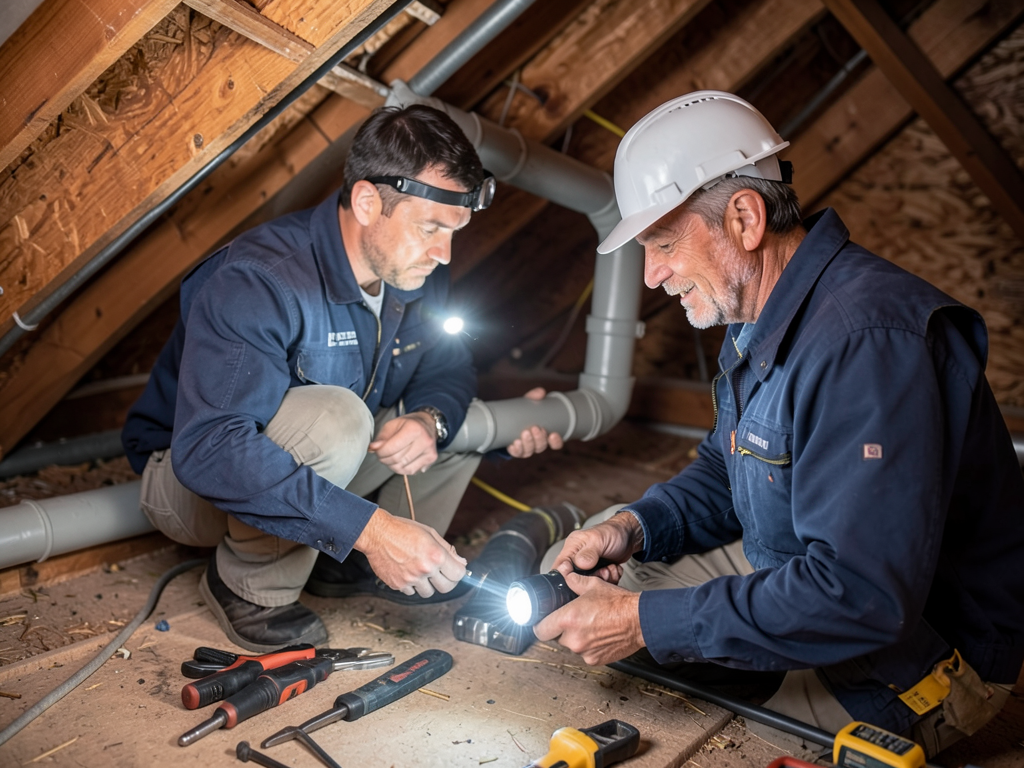
Turn off your AC at the thermostat immediately. This stops more water from forming while you work. Next, locate your air handler in the attic and look for the secondary drain pan underneath it. This pan catches overflow when the main drain clogs. If you see water in this pan, your primary drain line is blocked somewhere between the air handler and the exterior drain point.
Now check the safety float switch. This device sits in the secondary pan and cuts power to your AC when water rises. It’s working correctly if your system shut down automatically. Without this switch, water would continue filling the pan until it overflowed through your ceiling.
The most common clog locations are the P-trap under your air handler, the drain line exit near your outdoor unit, or the access tee where you can pour cleaning solutions. Riverside’s hard water leaves mineral deposits while summer heat creates ideal conditions for algae growth in these dark, moist pipes. Commercial Duct Cleaning.
Before attempting any DIY fix, put on safety glasses and gloves. You’ll be working with potentially contaminated water and sharp tools. Have towels ready to catch spills and a bucket to collect water from the secondary pan.
Call (951) 223-9644 now if you’re not comfortable working in your attic or if you see signs of electrical damage from the water. Water and electricity create serious hazards.
Why Riverside AC Drain Lines Clog More Often Than Other Areas
Riverside’s unique climate creates perfect conditions for condensate line problems. Our summer temperatures regularly exceed 100°F, causing AC units to run constantly and produce more condensation than systems in cooler coastal areas. This constant moisture flow through the PVC pipes creates ideal conditions for biological growth.
Our local water contains high mineral content from the Colorado River supply system. As water evaporates from the condensate, it leaves behind calcium and magnesium deposits that gradually narrow the pipe diameter. A 3/4-inch drain line can become completely blocked by a layer of scale just 1/8-inch thick.
Dust from Santa Ana winds settles on evaporator coils and gets washed into the drain system during operation. This creates a sludge mixture of dust, minerals, and biological growth that sticks to pipe walls. Homes near agricultural areas or construction sites see even faster buildup rates.
Most Riverside homes built before 2010 lack proper secondary drain pan overflow protection. Building codes now require secondary pans with separate drain lines for attic installations, but many older homes still have the original single-drain setup that allows ceiling damage when clogs occur. How Much Does a New AC Installation Cost in Woodcrest Today?.
According to the California Energy Commission Title 24 standards, all new AC installations must include condensate drain safety switches. However, many homeowners don’t realize their older systems lack this protection until a clog causes damage. California Title 24 Energy Efficiency Standards.
Call (951) 223-9644 for a free safety inspection of your condensate drain system. We’ll check if your Riverside home meets current code requirements.
Step-by-Step DIY: How to Clear Your Clogged AC Drain Line
Tools you’ll need: Wet/dry vacuum, 1/4-inch nylon brush, white vinegar, funnel, towels, bucket, safety glasses, gloves.
Step 1: Access the drain line
Locate the white PVC pipe near your air handler. This is typically 3/4-inch diameter and runs vertically down from the unit. Look for a T-shaped fitting with a cap – this is your access point for cleaning.
Step 2: Remove standing water
Use a wet/dry vacuum to remove water from the secondary drain pan. Empty this water outside, away from your home’s foundation. Don’t pour it down another drain – it contains biological contaminants.
Step 3: Clear the main clog
Attach your wet/dry vacuum to the drain line exit outside your home. Seal the connection with duct tape to create suction. Run the vacuum for 3-5 minutes to pull the clog backward through the pipe. You may hear debris coming through.
Step 4: Flush with vinegar solution
Remove the cap from the access tee. Pour 1 cup of white vinegar followed by 2 cups of warm water through the funnel. Let this sit for 30 minutes to dissolve mineral deposits and kill algae. Vinegar is safe for PVC pipes unlike some chemical cleaners.
Step 5: Test the system
Turn your AC back on and run it for 15 minutes. Check outside for water dripping from the drain line exit – this confirms the clog is cleared. Also check the secondary pan for any new water accumulation.
Step 6: Prevent future clogs
Install a condensate drain line cleaning brush on the access tee. Monthly, pour 1/2 cup of vinegar through the brush to maintain the line. Consider installing algae prevention tablets in the secondary pan.
If these steps don’t restore drainage within 30 minutes, the clog is likely deep in the wall or under the concrete slab. This requires professional equipment to clear without damaging your home’s structure.
Call (951) 223-9644 if you’re not seeing water flow after the vinegar treatment. We have specialized tools that can clear deep clogs without cutting into walls.
Safety First: When to Call a Riverside HVAC Professional
DIY drain line clearing works for simple clogs near the access point, but several situations require professional help. If you see any of these warning signs, stop work immediately and call for service.
Electrical hazards – If water has reached electrical components, wiring, or your air handler’s control board, you risk shock or fire. Look for water stains on electrical panels or signs of corrosion on wires.
Refrigerant leaks – Water damage can cause copper refrigerant lines to corrode and leak. If you smell a sweet chemical odor or see oil stains near the air handler, you may have a refrigerant leak that requires EPA-certified repair.
Deep wall clogs – When the clog is located inside wall cavities or under concrete slabs, DIY methods can’t reach it. Professional technicians use CO2-powered drain guns or hydro-jet equipment that clears pipes from the inside without demolition.
Structural damage – If your ceiling shows signs of water damage like sagging drywall or bubbling paint, the water has already compromised your home’s structure. You need both water damage restoration and AC repair.
Repeated clogs – If your drain line clogs more than once per year, you have an underlying issue like improper pipe slope, incorrect pipe sizing, or contaminated air handler installation that requires professional diagnosis.
According to Riverside County building codes, all HVAC work affecting condensate drainage requires a mechanical permit. Professional technicians pull these permits and ensure work meets California Title 24 energy efficiency standards. Switching to a High Efficiency Heat Pump in Riverside to Save on Monthly Energy Bills.
Call (951) 223-9644 for 24/7 emergency service. We’re licensed, insured, and familiar with Riverside’s specific building requirements.
Preventative Maintenance Tips for Riverside Homeowners
Regular maintenance prevents most drain line clogs and the water damage they cause. A few simple steps each month can save you thousands in repair costs and prevent the stress of emergency AC shutdowns during heat waves.
Monthly vinegar flush – Pour 1/2 cup of white vinegar into your drain line access tee every month during cooling season. This prevents algae growth and dissolves early mineral deposits before they create blockages.
Change air filters regularly – Dirty air filters allow dust to accumulate on evaporator coils. This dust gets washed into the drain line during operation. Replace 1-inch filters every 30-60 days and 4-inch filters every 6 months.
Keep drain line exits clear – Ensure the PVC pipe exit outside your home remains unobstructed by plants, mulch, or debris. The pipe should extend at least 6 inches beyond your home’s foundation to prevent soil from entering.
Install a secondary drain pan – If your attic air handler lacks a secondary pan with overflow drain, consider having one installed. This provides backup protection that meets current building codes and prevents ceiling damage.
Schedule annual professional tune-ups – A qualified technician can clean the entire drain system, check for proper pipe slope, and identify potential problems before they cause damage. Professional cleaning includes the evaporator coil, drain pan, and all drain line connections.
Monitor your system – Check the secondary drain pan monthly during cooling season. If you see any water accumulation, address it immediately before it causes damage. Also listen for gurgling sounds from drain lines, which indicate developing restrictions.
Riverside’s extreme summer temperatures mean your AC runs more hours than systems in milder climates. This increased runtime multiplies the importance of regular maintenance. A system that runs 12 hours daily in July processes significantly more condensation than one running 6 hours in coastal areas.
Call (951) 223-9644 to schedule your annual AC maintenance before summer heat arrives. Our comprehensive tune-up includes drain line cleaning and safety inspections.
Cost Comparison: DIY vs Professional Drain Line Service in Riverside
| Service Type | Typical Cost Range | What’s Included | Best For |
|---|---|---|---|
| DIY Vinegar Flush | $5-10 | Vinegar, brush, basic tools | Monthly maintenance, minor buildup |
| Wet/Dry Vacuum Service | $75-150 | Professional suction cleaning | Single clogs near access point |
| Professional Hydro-flush | $200-350 | High-pressure cleaning, inspection | Deep clogs, annual maintenance |
| Emergency Service Call | $350-600 | After-hours service, immediate response | Active leaks, system shutdown |
| Complete Drain System Replacement | $800-1,500 | New pipes, proper slope, code compliance | Recurring clogs, old system |
Professional service costs more upfront but includes expertise that prevents repeat problems. Our technicians use specialized tools like CO2 drain guns that clear clogs without damaging pipes, and we guarantee our work meets Riverside County mechanical codes.
DIY methods work for prevention but rarely solve deep clogs that require cutting into walls or accessing pipes under concrete slabs. When DIY fails, you’ve already spent money on supplies and time, plus you still need professional service.
Call (951) 223-9644 for a free estimate on professional drain line cleaning. We’ll show you exactly what needs repair and provide upfront pricing.
Understanding Your AC’s Condensate System
Your air conditioner doesn’t just cool air – it also removes humidity. As warm, moist air passes over the cold evaporator coil, water vapor condenses into liquid form. This water must go somewhere, and that’s where your condensate drain system comes in.
The evaporator coil sits inside your air handler and operates at temperatures around 40°F. When Riverside’s 80-90°F summer air hits this cold surface, water droplets form and drip into the drain pan below. A typical 3-ton AC unit can produce 5-10 gallons of condensate water on a humid summer day.
This water flows through the primary drain line, which should slope downward at 1/4 inch per foot toward the exterior drain point. The P-trap under your air handler prevents sewer gases from entering your home through the drain line. Without this trap, you’d smell unpleasant odors from your AC vents.
The secondary drain pan catches overflow when the primary system fails. This pan should have its own independent drain line that exits somewhere visible, like above a window or near your home’s foundation. If you see water dripping from this secondary line, your primary drain is clogged.
Modern systems include a float switch in the secondary pan that automatically shuts off your AC when water rises. This safety feature prevents the extensive water damage that was common in older Riverside homes before these switches became standard.
According to the International Mechanical Code Section 307.2.2, condensate drain lines must terminate at least 6 inches above grade and away from building foundations to prevent water damage and pest entry. International Mechanical Code Section 307.2.2.
Call (951) 223-9644 if you’re unsure about your system’s safety features. We’ll inspect your entire condensate drainage setup and ensure it meets current safety standards.
Frequently Asked Questions
How often should I clean my AC drain line?
Clean your drain line monthly during cooling season with vinegar, and schedule professional cleaning annually. Homes in Riverside with hard water may need more frequent service due to faster mineral buildup.
Can a clogged drain line damage my AC unit?
Yes. When the float switch doesn’t work properly, water can overflow and damage electrical components, the evaporator coil, or the air handler’s control board. This can lead to expensive repairs or complete system replacement.
Why does my AC keep clogging even after cleaning?
Recurring clogs usually indicate improper pipe slope, incorrect pipe sizing, or contaminated air handler installation. Professional inspection can identify these underlying issues that DIY cleaning can’t fix.
Is vinegar safe for my AC drain line?
Yes. White vinegar is safe for PVC pipes and effectively kills algae and dissolves mineral deposits. It’s much safer than chemical drain cleaners, which can damage pipes and harm the environment.
How long does professional drain line cleaning take?
Most professional drain line cleanings take 30-60 minutes. Emergency service for active leaks may take longer if water damage restoration is needed.
What’s the difference between primary and secondary drain lines?
The primary drain line handles normal condensation flow. The secondary line serves as backup protection, draining from the overflow pan when the primary line clogs. Both should exit the home at different visible locations.
Can I prevent algae growth in my drain line?
Yes. Monthly vinegar treatments kill algae, and installing algae prevention tablets in the secondary pan provides ongoing protection. Keeping your air filters clean also reduces the organic matter that feeds algae growth.
How much does it cost to replace a drain line?
Drain line replacement costs $300-800 for accessible lines and $800-1,500 for lines that require wall or ceiling access. Complex replacements may require permits and inspections per Riverside County codes.
What causes the gurgling sound from my AC drain?
Gurgling indicates developing restrictions in your drain line. Air bubbles pass through partial blockages, creating the gurgling noise. This often precedes complete clogs and should be addressed promptly.
Should I turn off my AC if I suspect a drain clog?
Yes. Turn off your AC immediately to prevent more water from forming. Continuing to run a clogged system can cause extensive water damage to your home’s structure and electrical systems.
Don’t wait until you have water damage. Call (951) 223-9644 today for preventative drain line cleaning and inspection. Our experienced technicians know exactly how to handle Riverside’s unique climate challenges.
You may also find this helpful. Getting Rid of That Musty Dirty Sock Smell Coming from Your Riverside Air Vents.