The Best Ways to Heat and Cool Your Riverside Pool House or Cabana
Heating and cooling a pool house in Riverside requires specialized HVAC solutions that handle both extreme outdoor heat and high indoor humidity. The Inland Empire’s desert climate creates unique challenges for detached structures like pool houses and cabanas. You need equipment that can maintain comfortable temperatures while controlling moisture to prevent mold and mildew growth.
The best approach combines proper sizing, moisture control, and energy efficiency. Riverside’s summer temperatures regularly exceed 100°F while pool houses deal with constant humidity from the water. This combination demands HVAC systems that can handle both heat loads and moisture removal simultaneously. Switching to a High Efficiency Heat Pump in Riverside to Save on Monthly Energy Bills.
Professional installation makes the difference between a comfortable retreat and a damp, uncomfortable space. Local building codes require specific permits for HVAC work in accessory structures. Understanding these requirements helps you plan your project correctly from the start. How Much Does a New AC Installation Cost in Woodcrest Today?.
Unique Climate Challenges for Riverside Pool Houses
Riverside’s climate creates specific problems for pool house HVAC systems. Summer heat waves push outdoor temperatures above 105°F while Santa Ana winds bring dust and debris that can clog filters and reduce efficiency. These conditions require equipment rated for high ambient temperatures.
Indoor humidity levels in pool houses often reach 70-80% due to evaporation from the pool surface. This moisture can damage walls, ceilings, and equipment if not properly controlled. Standard residential air conditioners struggle with this dual challenge of heat and humidity.
Energy costs in Riverside run higher than many areas due to the extended cooling season. Southern California Edison rates increase during peak summer hours when pool houses need cooling most. Choosing energy-efficient equipment reduces monthly utility bills significantly. California Title 24 Energy Code.
Local soil conditions also affect installation. Riverside’s clay soil expands and contracts with moisture changes, potentially shifting foundation-mounted equipment over time. Proper mounting techniques prevent vibration and maintain system alignment.
Top 3 HVAC Options for Pool Houses
Selecting the right HVAC system depends on your pool house size, usage patterns, and budget. Each option offers different advantages for Riverside’s specific conditions.
Ductless Mini-Split Systems
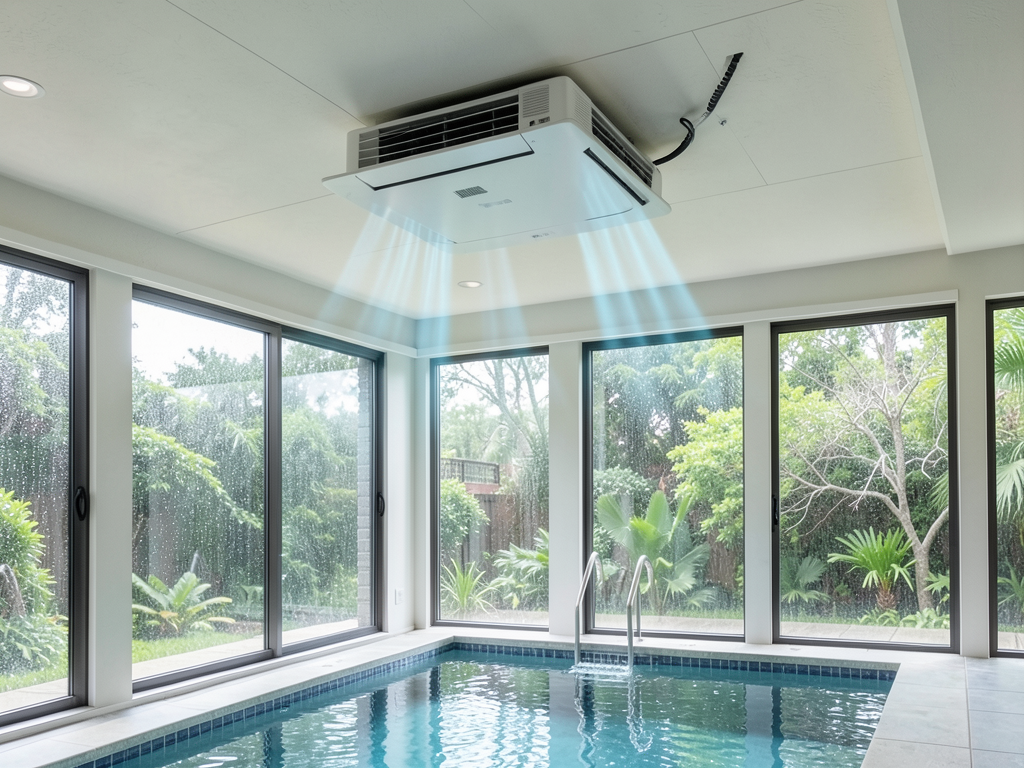
Ductless mini-splits provide the most flexible solution for pool houses. These systems include an outdoor compressor unit connected to one or more indoor air handlers. They excel at both cooling and heating while maintaining precise temperature control. Why Ductless Mini Splits are the Best Cooling Solution for Woodcrest Guest Houses.
Installation requires only a small wall penetration for refrigerant lines. This makes mini-splits ideal for retrofitting existing structures without major construction. The indoor units can be mounted on walls or ceilings to maximize space.
Modern mini-splits achieve SEER2 ratings above 20, making them highly efficient for Riverside’s climate. They also offer excellent humidity control through variable-speed compressors that run longer cycles at lower power levels.
Cost ranges from $3,500 to $6,000 installed for a typical pool house. This includes the outdoor unit, indoor air handler, and professional installation with proper refrigerant charging.
Packaged Terminal Air Conditioners
PTAC units mount through exterior walls and provide both cooling and heating in one package. They work well for smaller pool houses under 400 square feet. These units offer simplicity and lower upfront costs.
PTACs install quickly with minimal construction. They plug into standard 220-volt circuits and require only exterior wall access. Maintenance involves cleaning filters and checking condensate drains.
However, PTACs have limitations in Riverside’s extreme heat. Standard units may struggle when outdoor temperatures exceed 100°F. They also provide less precise humidity control than mini-splits.
Installation costs typically range from $2,500 to $4,000 including electrical work and wall modifications.
Heat Pump Systems
Heat pumps offer the most energy-efficient solution for year-round pool house comfort. They move heat rather than generate it, providing both cooling and heating from the same unit. Modern heat pumps work effectively even in Riverside’s mild winters.
High-efficiency heat pumps achieve HSPF ratings above 10, reducing heating costs by 30-50% compared to electric resistance heat. They also provide excellent dehumidification during cooling mode.
Heat pumps require more complex installation than other options. They need proper sizing for both heating and cooling loads, which differ significantly in Riverside’s climate.
Installation costs range from $4,000 to $8,000 depending on system size and complexity. The higher initial investment often pays back through energy savings within 3-5 years.
Humidity and Ventilation: Preventing Mildew
Moisture control represents the biggest challenge in pool house HVAC design. Without proper dehumidification, humidity levels create perfect conditions for mold growth on walls, ceilings, and furniture.
Pool houses need dedicated dehumidification capacity beyond standard cooling. Water evaporating from the pool surface adds significant moisture load that regular air conditioners cannot handle efficiently.
Ventilation requirements increase in pool houses due to chemical vapors from pool water treatment. Proper ventilation removes these contaminants while bringing in fresh air to maintain indoor air quality.
Building codes require specific ventilation rates for enclosed pool areas. California Title 24 mandates minimum air changes per hour based on pool house volume and occupancy.
Dehumidification systems should maintain relative humidity between 50-60% to prevent mold while avoiding overly dry conditions that cause discomfort. This requires equipment specifically designed for pool environments.
Condensate management becomes critical in high-humidity applications. Proper drainage prevents water damage and ensures continuous operation during peak moisture conditions.
Local Permit and Installation Requirements
Riverside County requires permits for all new HVAC installations in accessory structures. The permitting process ensures compliance with California Energy Code and local building standards.
Mechanical permits typically cost $150-300 depending on system size. The permit process includes plan review to verify proper equipment sizing and installation methods.
Installation must comply with California Title 24 energy efficiency requirements. This includes minimum SEER2 ratings, proper duct sealing if applicable, and energy management controls.
Electrical permits are required for all new circuits powering HVAC equipment. Riverside County building officials inspect all electrical work to ensure safety and code compliance.
Noise ordinances affect equipment placement. Pool house HVAC units must meet local sound level requirements, particularly for installations near property lines or residential areas.
Foundation requirements vary based on soil conditions. Riverside’s clay soil may require reinforced pads or piers to prevent equipment settling over time.
Professional HVAC contractors handle all permitting and inspections as part of the installation process. This ensures your system meets all local requirements from the start.
Cost of Pool House HVAC in Riverside
Pool house HVAC costs depend on system type, size, and installation complexity. Understanding these factors helps you budget effectively for your project.
System sizing affects both upfront costs and long-term efficiency. Undersized equipment runs continuously without maintaining comfort. Oversized units cycle frequently, reducing efficiency and increasing wear.
Installation complexity varies significantly based on your structure. Retrofitting existing pool houses often costs more than new construction due to access limitations and existing conditions.
Energy efficiency ratings impact operating costs. Higher SEER2 and HSPF ratings reduce monthly utility bills but increase initial equipment costs. The payback period depends on your usage patterns.
Permit and inspection fees add $200-500 to most projects. These mandatory costs ensure your system meets all safety and efficiency standards.
Maintenance costs average $150-300 annually for professional service. Regular maintenance prevents costly repairs and maintains system efficiency over time. Same Day Emergency AC Repair for Families in Orangecrest.
Energy rebates may offset some costs. Southern California Edison offers rebates for high-efficiency equipment that meets specific performance criteria. Southern California Edison Rebates.
Comparing lifetime costs rather than just upfront prices helps you make the best decision. Higher efficiency systems often provide better long-term value despite higher initial costs.
Energy Efficiency and Operating Costs
Energy efficiency directly impacts your monthly utility bills in Riverside’s hot climate. Understanding efficiency ratings helps you choose equipment that minimizes operating costs.
SEER2 ratings measure cooling efficiency. Higher numbers indicate better efficiency. Modern pool house systems should achieve at least 16 SEER2, with premium units reaching 20+ SEER2.
HSPF ratings measure heating efficiency for heat pump systems. Values above 8.2 indicate good efficiency. Higher HSPF ratings reduce heating costs during Riverside’s mild winters.
Variable-speed compressors provide the best efficiency by matching output to actual cooling demand. They run longer at lower speeds rather than cycling on and off frequently.
Smart thermostats optimize energy use by learning your schedule and adjusting temperatures automatically. They can reduce energy consumption by 10-15% without sacrificing comfort.
Proper insulation reduces the heating and cooling load on your HVAC system. Well-insulated pool houses require smaller, more efficient equipment to maintain comfort.
Zone control allows different temperature settings in various areas. This prevents cooling unused spaces and reduces overall energy consumption.
Regular maintenance maintains efficiency over time. Dirty filters, coils, and fans can reduce system efficiency by 20% or more.
Maintenance Requirements for Riverside Pool Houses
Pool house HVAC systems require specific maintenance due to the harsh environment. Regular service prevents costly repairs and maintains system efficiency.
Filter changes become more frequent in Riverside’s dusty environment. Pool houses may need filter replacement every 30-60 days compared to standard 90-day intervals.
Coil cleaning prevents efficiency loss from dust and debris buildup. Professional coil cleaning annually removes contaminants that reduce heat transfer efficiency.
Condensate drain maintenance prevents water damage and mold growth. Pool house drains require more frequent cleaning due to higher moisture levels.
Refrigerant level checks ensure optimal system performance. Low refrigerant reduces efficiency and can damage compressors over time.
Electrical connection inspections prevent failures from loose connections or corrosion. Riverside’s heat accelerates electrical component degradation.
Thermostat calibration maintains accurate temperature control. Improper calibration leads to comfort issues and wasted energy.
Professional maintenance visits should occur twice yearly for pool house systems. Spring service prepares equipment for summer cooling demands while fall service addresses heating needs.
DIY maintenance includes keeping outdoor units clear of debris and ensuring proper drainage around equipment. These simple steps prevent many common problems.
Choosing the Right Contractor in Riverside
Selecting a qualified HVAC contractor ensures proper system design and installation. Not all contractors have experience with pool house applications.
Look for contractors with specific pool house experience. These systems require different design approaches than standard residential HVAC.
Verify contractor licensing through the California Contractors State License Board. Pool house installations require C-20 HVAC contractor licenses.
Check references for similar projects in Riverside. Local experience with Inland Empire climate conditions proves valuable for system design.
Insurance coverage protects you from liability during installation. Contractors should carry both general liability and workers’ compensation insurance.
Written estimates should detail equipment specifications, installation methods, and warranty coverage. Avoid contractors who provide vague or verbal quotes.
Warranty coverage varies by manufacturer and contractor. Look for at least 5-year parts warranties with 1-year labor coverage minimum.
Post-installation support matters for long-term satisfaction. Choose contractors who offer maintenance programs and responsive service for future needs.
Local contractors understand Riverside’s specific requirements better than out-of-area companies. They know local codes, utility programs, and climate conditions.
Frequently Asked Questions
What size HVAC system do I need for my pool house?
System size depends on pool house square footage, ceiling height, insulation levels, and local climate conditions. A professional load calculation using Manual J methodology determines the exact requirements. Most pool houses need 12,000-24,000 BTU systems, but proper sizing prevents both undersized and oversized equipment problems.
How much does pool house HVAC installation cost in Riverside?
Installation costs range from $3,000 to $8,000 depending on system type and complexity. Ductless mini-splits typically cost $3,500-6,000 while heat pump systems range $4,000-8,000. Factors affecting cost include equipment efficiency, installation difficulty, and permit requirements.
Can I install HVAC in my existing pool house?
Yes, most existing pool houses can accommodate new HVAC systems. Ductless mini-splits work particularly well for retrofits since they require minimal construction. The installation process involves evaluating your structure’s electrical capacity, mounting options, and any necessary modifications for proper equipment installation.
How long does pool house HVAC installation take?
Most installations complete in 1-2 days. Simple ductless mini-split installations often finish in a single day. More complex heat pump systems or those requiring electrical upgrades may take two days. Weather conditions and permit processing can affect timelines.
What maintenance does pool house HVAC require?
Pool house systems need filter changes every 30-60 days, annual professional cleaning, and condensate drain maintenance. The high humidity environment requires more frequent service than standard residential systems. Biannual professional maintenance prevents most common problems and maintains efficiency.
Will my pool house HVAC qualify for rebates?
Many high-efficiency pool house HVAC systems qualify for Southern California Edison rebates. Systems must meet specific SEER2 and HSPF ratings to qualify. Your contractor can help identify eligible equipment and handle rebate paperwork as part of the installation process.
How do I control humidity in my pool house?
Proper humidity control requires equipment with dedicated dehumidification capacity. Mini-splits and heat pumps with variable-speed compressors provide the best humidity control. Additional dehumidifiers may be necessary for larger pool houses or those with indoor pools. Maintaining relative humidity between 50-60% prevents mold growth while ensuring comfort.
What permits are required for pool house HVAC in Riverside?
Riverside County requires mechanical permits for all new HVAC installations in accessory structures. Electrical permits are also required for new circuits. The permitting process ensures compliance with California Energy Code and local building standards. Professional contractors handle all permitting and inspections as part of the installation.
Ready to Upgrade Your Pool House Comfort?
Don’t let another hot Riverside summer make your pool house uncomfortable. The right HVAC system transforms your space into a year-round retreat while protecting your investment from moisture damage. Our experienced technicians understand the unique challenges of Inland Empire pool houses and can recommend the perfect solution for your needs.
Call (951) 223-9644 today to schedule your free consultation. We’ll evaluate your pool house, discuss your options, and provide a detailed proposal with no obligation. Our team handles everything from permits to final installation, ensuring your new system meets all local requirements and delivers years of reliable comfort. Reliable Furnace Repair in Riverside to Keep Your Family Warm This Winter.
Pick up the phone and call (951) 223-9644 before the next heat wave hits. Your perfect pool house oasis is just one call away.