
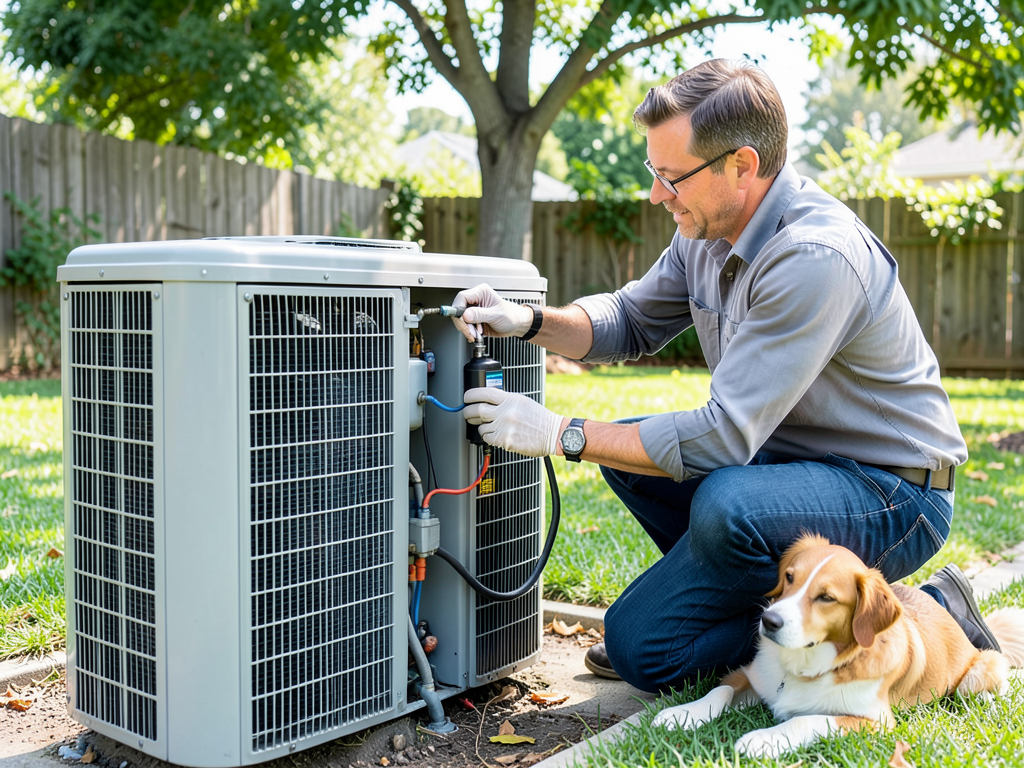
Signs Your Riverside Dog or Cat is Overheating Even When the AC is Running
Your pet pants on the tile floor even though the thermostat reads 72 degrees. The AC hums along but something feels wrong. In Riverside’s dry heat where summer temperatures regularly climb above 100 degrees the indoor air can still become dangerous for pets even when the cooling system runs. This guide shows you how to spot the warning signs and what to do before it becomes an emergency. heat wave safety tips from the Red Cross.
Why Riverside Pets Face Unique Heat Risks
Riverside sits in the Inland Empire where summer temperatures often exceed 105 degrees. The Santa Ana winds bring hot dry air that makes shade and water evaporate quickly. Homes in neighborhoods like Canyon Crest and Arlington absorb heat through tile roofs and large windows. Even with air conditioning running the indoor temperature can rise if the system struggles with the load or if airflow is blocked by pet hair in the filters.
Dogs and cats cool themselves by panting and through their paw pads. When humidity drops below 20 percent as it often does in Riverside their natural cooling systems become less effective. A pet can overheat even if the thermostat shows a safe number because the air may not circulate properly or the humidity level may be too low.
Seven Warning Signs Your Pet is Overheating
- Excessive Panting – If your dog pants loudly with a wide open mouth and rapid breaths for more than a few minutes after resting the cooling system may not be keeping up.
- Bright Red Gums – Healthy gums should be pink. Bright red or purple gums indicate poor circulation and overheating.
- Thick Drooling – Excessive thick saliva that drips from the mouth shows the body is struggling to cool itself.
- Lethargy or Disorientation – If your pet seems confused slow to respond or unwilling to move it may be experiencing heat stress.
- Rapid Heart Rate – You can feel the heartbeat on the chest. A racing pulse when your pet is at rest signals overheating.
- Vomiting or Diarrhea – These symptoms can appear as heat stress progresses and indicate a medical emergency.
- Collapse – If your pet falls over or cannot stand it needs immediate veterinary care.
How AC Settings Affect Pet Safety
Many pet owners set the thermostat to 78 or 80 degrees when leaving for work to save energy. In Riverside’s extreme heat that temperature may not protect your pet. The system must work harder to remove heat from the home and may not maintain a consistent cool zone.
For homes with pets the ideal thermostat setting ranges from 68 to 74 degrees depending on the breed. Brachycephalic dogs like Bulldogs and Persian cats need cooler temperatures because their short airways make breathing harder in heat. Setting the fan to ON instead of AUTO keeps air moving and prevents hot spots.
Smart thermostats let you check the temperature from your phone. If the power flickers or the AC struggles you can spot the problem before your pet suffers. Some models even send alerts when the temperature rises above your set range.
Common HVAC Problems That Trap Heat Indoors
Pet hair and dander clog air filters faster than normal dust. In Riverside’s dry climate this buildup can reduce airflow by half in just one month. When air cannot move freely through the system it cannot remove heat from your home.
Refrigerant leaks cause the AC to blow warm air even when the outdoor unit runs. A system low on refrigerant may cool for a few minutes then shut off leaving your pet in rising heat. The indoor coil can also freeze if airflow is restricted which stops cooling completely.
Leaky ductwork in attics or crawl spaces wastes cooling power. Riverside homes often have ducts running through hot attics where temperatures reach 140 degrees. If connections separate conditioned air escapes before it reaches your pet’s space.
Using a MERV 13 filter to catch pet dander can actually restrict airflow if the system is not designed for it. Always check with your HVAC technician before upgrading filters.
Humidity Control for Pet Comfort
Dry air makes it harder for pets to cool through panting. In Riverside where humidity often drops into the teens a whole house humidifier can help. These systems add moisture to the air keeping humidity between 30 and 50 percent which supports natural cooling.
Portable humidifiers work for single rooms but require daily refilling. For multiple pets or large homes a duct mounted humidifier provides consistent moisture throughout the space. Be sure to clean it regularly to prevent mold growth.
Evaporative coolers or swamp coolers can help in very dry conditions but they raise indoor humidity. In Riverside’s extreme heat they may not cool enough on their own and work best as a supplement to central air.
Creating Pet Safe Cooling Zones
Not all rooms in your home cool equally. South facing rooms with large windows can be ten degrees warmer than north facing spaces. Create a dedicated cool zone for your pet with these steps:
- Choose the coolest room – Often a north facing interior room away from direct sun.
- Block sunlight – Use blackout curtains or reflective window film to reduce heat gain.
- Add a cooling mat – Gel filled mats provide a cool surface for pets to lie on.
- Place multiple water bowls – Use wide shallow bowls that cannot tip. Add ice cubes to keep water cool.
- Run a ceiling fan – Fans do not cool air but they move it across your pet’s body to aid evaporation.
Never rely on a fan alone in extreme heat. Moving hot air can make pets more uncomfortable without lowering the temperature.
Hydration Strategies for Hot Days
Dehydration happens quickly in dry heat. A 10 pound dog needs about one cup of water per day at normal temperatures but that amount can triple when it is hot. Cats need less but still require constant access to fresh water.
Use multiple water stations around the home. Place bowls in the coolest areas and refill them often. Add ice cubes or freeze a water bowl overnight so it melts slowly during the day.
Canned pet food has more moisture than dry kibble. On very hot days mixing in a little extra water or switching to wet food can help with hydration. Switching to a High Efficiency Heat Pump in Riverside to Save on Monthly Energy Bills.
Watch for signs of dehydration such as dry gums, loss of skin elasticity, or dark urine. If you suspect your pet is dehydrated offer small amounts of water frequently and contact your veterinarian.
Outdoor Safety for Riverside Pets
Even with perfect indoor cooling your pet may need to go outside. Riverside pavement can reach 150 degrees when air temperature hits 100 degrees. Press your hand on the sidewalk for seven seconds. If it is too hot for your hand it is too hot for your pet’s paws.
Walk dogs early in the morning or after sunset when surfaces are cooler. Use grassy areas instead of pavement when possible. Consider booties for short trips outside but do not rely on them for long walks.
Never leave a pet in a parked car even with the windows cracked. On a 90 degree day the interior can hit 120 degrees in ten minutes. Riverside Animal Control responds to dozens of calls each summer about pets in hot cars.
When to Call for Emergency HVAC Help
An AC failure during a Riverside heat wave is a pet emergency. If your system stops cooling and indoor temperature climbs above 80 degrees take these steps: Same Day Emergency AC Repair for Families in Orangecrest.
- Move pets to the coolest room – Use a bathroom or interior closet with tile floors.
- Place wet towels on their body – Cool but not ice cold water helps lower body temperature.
- Offer small amounts of water – Do not force drinking if your pet resists.
- Call your HVAC company – Explain you have pets and need immediate service.
- Contact your vet if symptoms appear – Heatstroke can become fatal in under an hour.
Many HVAC companies in Riverside offer priority service for homes with pets during heat waves. Ask about this when you schedule your next maintenance visit.
Preventative Maintenance for Pet Homes
Regular maintenance keeps your system running when your pet needs it most. Schedule service in early spring before the heat arrives. A technician will check refrigerant levels clean coils and test electrical components.
Change air filters every one to two months if you have pets. Use a filter with a MERV rating between 8 and 11 for pet hair and dander. Higher ratings can restrict airflow in some systems.
Clean the outdoor unit of debris leaves and pet hair. Keep at least two feet of clearance around the unit for proper airflow. If your pet sheds heavily consider a professional duct cleaning every few years. Commercial Duct Cleaning.
Check thermostat batteries seasonally. A dead battery can cause the system to shut off without warning leaving your pet in rising heat.
Local Resources for Pet Heat Safety
Riverside County offers cooling centers during extreme heat events. Some allow pets on leash or in carriers. Check the county website for locations and hours.
Emergency veterinary clinics in Riverside include Riverside Animal Emergency at 6780 Brockton Avenue and emergency services at VCA Animal Medical Center of Riverside. Keep these numbers handy during heat waves.
The Riverside Department of Animal Services responds to calls about pets in distress. If you see a pet in a hot car or suffering in the heat call (951) 358-7387.
Local pet stores sell cooling vests bandanas and mats designed for hot weather. These products use evaporative cooling to help pets stay comfortable outdoors.
Smart Home Technology for Pet Monitoring
Smart thermostats let you check and adjust temperature from anywhere. Some models track humidity and send alerts if levels fall outside your set range. This feature helps you protect pets from both heat and dry air.
Indoor temperature sensors can be placed near your pet’s bed or crate. These devices send alerts to your phone if the temperature rises above a safe level.
Pet cameras with two way audio let you check on your pet and even talk to them if you are away. Some models include temperature and humidity displays on the app.
Automated pet feeders with built in water fountains ensure your pet has access to food and water even if you are delayed. Look for models with backup battery power in case of outages.
DIY Emergency Cooling Solutions
If your AC stops working and you cannot get immediate service try these emergency steps:
- Freeze water bottles – Place frozen bottles in your pet’s bed or crate for localized cooling.
- Use box fans – Position fans to blow across ice bowls for a makeshift cooler.
- Close blinds and curtains – Block all sunlight to reduce heat gain.
- Move to the lowest level – Heat rises so a basement or first floor stays cooler.
- Offer chilled treats – Frozen broth cubes or pet safe ice cream can help lower body temperature.
Never use ice packs directly on your pet’s skin. Wrap them in a thin towel to prevent frostbite.
Understanding Your Pet’s Breed Specific Needs
Some breeds handle heat better than others. Short nosed dogs like Pugs and Bulldogs struggle in warm weather because their airways are narrow. Overweight pets also overheat faster because extra fat acts as insulation.
Double coated breeds like Huskies and Malamutes shed heavily but their undercoat still traps heat. Regular brushing helps but never shave these breeds as it can damage their coat and increase sunburn risk.
Kittens and senior pets have less tolerance for heat. Young animals have not fully developed their cooling systems and older pets may have medical conditions that make heat stress more dangerous.
If you have a breed prone to heat issues talk to your veterinarian about additional precautions. They may recommend earlier morning walks or cooling vests for outdoor time.
Creating a Heat Safety Plan
Prepare for heat waves before they arrive. Make a checklist of steps to take when temperatures climb above 95 degrees. Include phone numbers for your HVAC company veterinarian and emergency vet.
Stock up on supplies like extra water filters cooling mats and battery powered fans. Keep a small cooler with ice packs ready to use if the power goes out.
Practice your plan with a drill on a mild day. See how long it takes to move your pet to the cool zone and gather supplies. This practice helps you act quickly during an actual emergency.
Share your plan with family members or pet sitters. Make sure everyone knows where the supplies are and how to contact emergency services.
Frequently Asked Questions
What indoor temperature is safe for my dog or cat?
Most healthy adult dogs and cats tolerate temperatures between 65 and 75 degrees. Brachycephalic breeds elderly pets and those with medical conditions need cooler conditions around 68 to 72 degrees.
How often should I change the air filter with pets?
Change your filter every one to two months if you have pets. Pet hair and dander clog filters faster than normal dust reducing airflow and cooling efficiency.
Can I use a portable AC for my pet’s room?
Portable AC units work for small spaces but they require venting to the outside. Make sure the exhaust hose is properly installed and the unit has enough cooling capacity for the room size.
What are the signs of heat exhaustion in pets?
Signs include excessive panting drooling bright red gums lethargy and rapid heart rate. If you notice these symptoms move your pet to a cool area and contact your veterinarian immediately.
How can I keep my pet cool without AC?
Use multiple fans cooling mats frozen water bottles and keep your pet in the coolest room. Offer plenty of fresh water and avoid outdoor activity during the hottest parts of the day.
Should I leave a fan on for my pet when I am at work?
fans help move air but they do not cool it. A fan can help your pet feel more comfortable but it is not a substitute for air conditioning in extreme heat.
Conclusion
Your pet depends on you to keep them safe during Riverside’s extreme heat. Even with the AC running indoor temperatures can rise and humidity can drop to dangerous levels. By learning the warning signs creating cool zones and maintaining your HVAC system you can protect your dog or cat from heat stress.
Regular maintenance is the best way to prevent cooling system failures. Schedule your tune up today and ask about our pet friendly filter options. If your system struggles to keep up or if you notice any warning signs in your pet call (951) 223-9644 right away. Your pet’s comfort and safety are worth it.
Stay cool and keep your furry friends safe this summer.
Call (951) 223-9644 today to schedule your inspection. For more information, visit ASPCA summer safety tips for pets.