Is Your Current Riverside Air Conditioner Energy Efficient Enough to Run on Solar Power?
Your Riverside air conditioner might be costing you more than you think especially if you’re considering solar power. Most homes in Riverside see their AC units running nearly 2,000 hours during peak summer months with energy demands that can spike to 3,500-5,000 watts during startup. That massive power draw can overwhelm a solar system unless your AC is specifically designed for solar compatibility.
The question isn’t just about saving money on your electric bill. It’s about whether your current system can actually work with the solar panels on your roof without causing brownouts or damaging your equipment. Older units built before 2015 often lack the efficiency features that make solar integration practical and cost-effective. Switching to a High Efficiency Heat Pump in Riverside to Save on Monthly Energy Bills.
Quick Answer: Most AC units over 10 years old need upgrades or replacement to run efficiently on solar power in Riverside. Modern SEER2-rated systems with inverter technology and soft start kits can reduce startup surges by up to 70%, making solar integration much more viable.
Understanding HVAC and Solar Compatibility in Riverside
Your air conditioner’s energy efficiency directly impacts how many solar panels you’ll need. A standard 3-ton AC unit might require 12-16 solar panels just to run during daylight hours. But that’s only half the story.
The real challenge comes from startup amperage. When your compressor kicks on it can draw 5-7 times its normal running wattage for a split second. This locked rotor amperage (LRA) is what trips breakers and makes solar integration difficult.
SEER2 ratings tell you how efficiently your AC uses electricity. In Riverside where summer temperatures regularly exceed 100°F even a high SEER2 rating might not be enough if your system lacks modern inverter technology.
Golden Nugget #1: Riverside Public Utilities reports that homes with solar panels still draw 40-60% of their electricity from the grid during summer months primarily due to air conditioning demands.
The ‘Soft Start’ Solution for Riverside AC Units
Soft start kits are the unsung heroes of solar-HVAC integration. These devices gradually ramp up your compressor’s power draw instead of hitting it with full voltage instantly.
Without a soft start your 5,000-watt AC might need 25,000 watts for that critical half-second startup. With a soft start that demand drops to 8,000-10,000 watts making it possible to run your AC on fewer solar panels.
Installation takes about 2-3 hours for most systems. The kit mounts near your outdoor condenser and intercepts the power supply before it reaches the compressor. How Much Does a New AC Installation Cost in Woodcrest Today?.
Golden Nugget #2: The California Energy Commission reports that soft start installations in Riverside County have increased by 180% since 2022 as more homeowners add solar panels to existing homes.
Soft Start vs. Hard Start: What’s the Difference?
Hard start kits provide a quick boost of power but still create a significant surge. Soft starts eliminate the surge entirely by using microprocessor control to manage the power delivery.
For solar compatibility soft starts are essential. They can reduce your system’s peak power demand enough to allow a smaller inverter or fewer panels.
The cost ranges from $300-600 for the kit plus installation. Most Riverside homeowners see payback in 2-3 years through reduced solar system costs and lower electricity bills.
Inverter Technology: The Gold Standard for Solar-HVAC
Inverter-driven compressors are to AC units what LED bulbs are to lighting. They use variable-speed motors that adjust their output based on cooling demand rather than cycling on and off at full power.
This technology alone can reduce energy consumption by 30-50% compared to traditional single-stage units. When combined with solar power the efficiency gains become even more dramatic.
Modern inverter ACs can operate on as little as 1,500 watts during mild cooling conditions. That’s less than half the power draw of a standard unit.
Golden Nugget #3: Riverside’s Building and Safety Department now requires all new HVAC installations to meet Title 24 energy efficiency standards which effectively mandate inverter technology for most residential replacements.
Variable-Speed vs. Single-Stage Performance
Single-stage units run at 100% capacity or not at all. They create uncomfortable temperature swings and waste energy by overshooting your cooling needs.
Variable-speed units can operate at 25%, 50%, 75%, or 100% capacity. This precision cooling maintains consistent temperatures while using minimal power.
The difference becomes critical when running on solar power. A variable-speed unit might use 1,200 watts on a mild day while a single-stage unit would still draw 3,500 watts.
Calculating Your Solar Offset in Riverside
Riverside receives an average of 5.5 peak sun hours per day during summer months. This means a 300-watt solar panel produces about 1,650 watt-hours of electricity daily.
A 3-ton AC unit running 8 hours per day might consume 24,000-30,000 watt-hours. To offset this entirely you’d need 15-18 high-efficiency solar panels.
But with an inverter AC and soft start that same cooling might only require 12,000-15,000 watt-hours daily. Now you only need 8-10 panels.
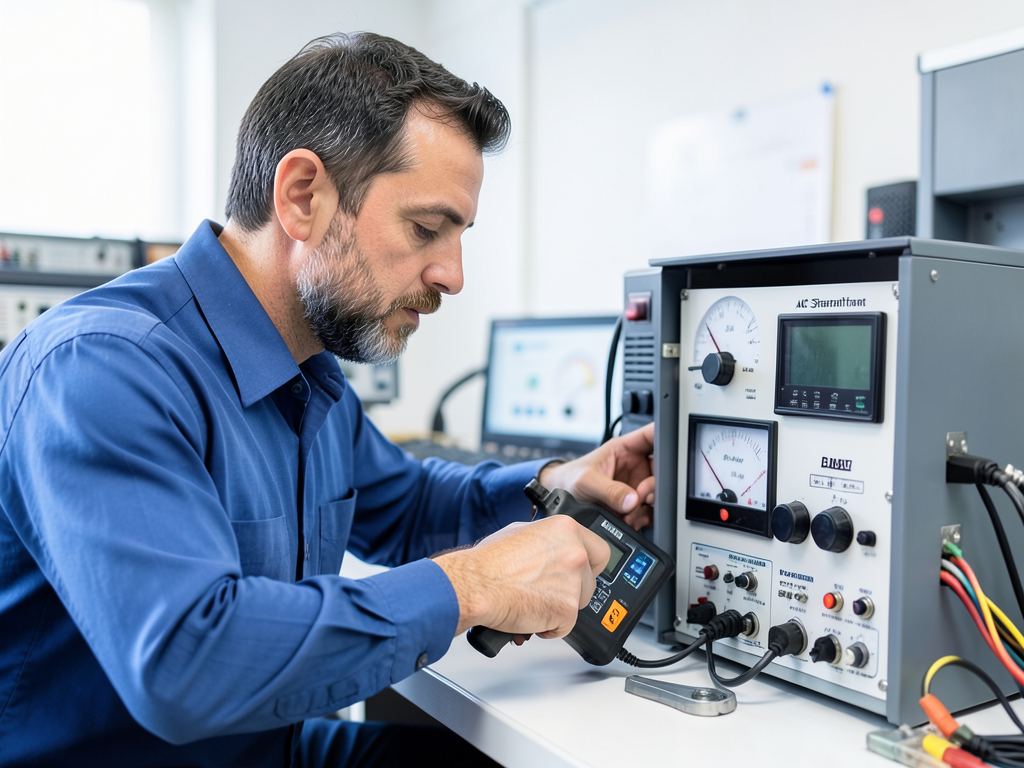
DIAGNOSTIC TIP: Use a clamp meter to measure your AC’s actual power draw during startup. Most homeowners are shocked to see the difference between running watts and startup amps.
Panel Requirements by AC Size
| AC Size (Tons) | Standard AC Panels Needed | Inverter AC with Soft Start | Estimated Cost Savings |
|---|---|---|---|
| 2 Ton | 10-12 | 6-8 | $1,500-2,000 |
| 3 Ton | 15-18 | 8-10 | $2,000-2,800 |
| 4 Ton | 20-24 | 10-12 | $2,500-3,500 |
NEM 3.0 and Battery Storage (Powerwalls)
California’s Net Energy Metering 3.0 policy changed how solar credits work. Under NEM 3.0 you get paid less for excess solar power sent to the grid during peak hours. California Title 24 Energy Standards.
This makes battery storage essential for solar-HVAC integration. A Tesla Powerwall or Enphase battery lets you store solar energy during the day and use it to run your AC at night.
Without batteries you’re forced to draw expensive grid power during evening hours when AC demand is highest and solar production is zero.
CODE REFERENCE: California Title 24 Section 110.9 requires new residential construction to include solar readiness or actual solar panels, making NEM 3.0 compliance mandatory for most Riverside homeowners.
Battery Storage Options for AC Power
Most home batteries can provide 5,000-7,000 watts of continuous power. This is enough to run most AC units but not during startup without additional support.
Hybrid inverters with AC coupling can handle the startup surge by drawing from both battery and grid momentarily. This prevents system shutdown during compressor startup.
The investment in battery storage typically adds $8,000-15,000 to your solar project but provides energy independence and protection during outages.
Solar-Ready HVAC vs. Solar-Integrated HVAC
Solar-ready HVAC systems are designed to work efficiently with solar power but don’t require it. They include features like low startup amps and high-efficiency compressors.
Solar-integrated systems go further. They include built-in power management, direct DC power options, and compatibility with specific solar inverters.
The difference matters because solar-ready systems work with any solar installation while solar-integrated systems might lock you into specific equipment brands.
DIAGNOSTIC TIP: Check your AC’s nameplate for LRA (Locked Rotor Amps). If it’s over 60 amps your system will struggle with solar power without upgrades.
Top Solar-Compatible AC Brands for Riverside
| Brand | Solar Ready Models | SEER2 Rating | Soft Start Included |
|---|---|---|---|
| Lennox | SL25/XP25 | 28 | Yes |
| Carrier | Infinity 24 | 26 | Optional |
| Daikin | Fit Series | 25 | Yes |
| Mitsubishi | Diamond Comfort | 24 | Yes |
Making the Switch: Your Solar-HVAC Roadmap
Before investing in solar panels you need to know if your AC can handle the transition. Here’s a simple assessment process:
- Check Your AC Age
Units over 10 years old likely need replacement regardless of solar plans.
- Measure Power Draw
Use a clamp meter to check running amps and LRA rating.
- Evaluate SEER2 Rating
Below 16 SEER2 means poor solar compatibility.
- Test Soft Start Need
High startup surges indicate soft start requirement.
- Calculate Panel Requirements
Determine if your roof can accommodate needed panels.
Most Riverside homeowners find they need at least one upgrade to make solar-HVAC integration work properly. The good news is that these upgrades often pay for themselves through energy savings even without solar.
Golden Nugget #4: Riverside County offers expedited permitting for solar-HVAC integrated systems, reducing approval time from 4-6 weeks to 1-2 weeks.
Cost Considerations and ROI
The total investment for solar-compatible HVAC varies widely based on your current system and solar goals. A basic soft start installation might cost $400-800 while a complete solar-ready system with panels could run $15,000-30,000.
However, federal tax credits cover 30% of solar installation costs through 2032. California also offers additional rebates through the California Solar Initiative. California Net Energy Metering 3.0.
The real savings come from reduced energy bills. A properly integrated system can cut cooling costs by 40-60% while providing backup power during outages.
DIAGNOSTIC TIP: Request a solar shade analysis before installation. Trees or roof angles might limit your solar production capacity.
Maintenance for Solar-Integrated Systems
Solar-compatible AC units require slightly different maintenance than standard systems. The soft start kits need annual inspection, and inverter boards require specialized diagnostics.
Filter changes become even more critical because dirty filters reduce efficiency and can cause system shutdowns when running on limited solar power.
Most manufacturers recommend biannual maintenance for solar-integrated systems compared to annual maintenance for standard units.
CODE REFERENCE: NEC Article 690.12 requires rapid shutdown capabilities for solar installations, which affects how your AC can be wired to solar systems.
Frequently Asked Questions
Can my 15-year-old AC run on solar power?
Probably not efficiently. Older units have high startup surges and poor efficiency. You’d need significantly more solar panels, making the investment less worthwhile. Consider replacement with a solar-ready model.
How many solar panels do I need to run my AC?
It depends on your AC size and efficiency. A standard 3-ton unit needs 15-18 panels, while an efficient inverter model with soft start might only need 8-10 panels.
Will my AC work during a power outage with solar?
Only if you have battery storage and a system designed for islanding. Most grid-tied solar systems shut down during outages unless you have backup power capabilities.
What’s the difference between SEER and SEER2?
SEER2 uses more realistic testing conditions that better reflect actual performance. It typically shows 4-5% lower efficiency than SEER ratings for the same equipment.
Can I add solar panels to my existing AC system?
Yes, but you might need upgrades like a soft start kit or capacitor improvements to handle the startup surge on solar power alone.
Ready to Make the Switch?
Solar power and air conditioning are a perfect match for Riverside’s sunny climate, but only if your system is properly equipped. The combination of inverter technology, soft start kits, and proper battery storage can transform your energy bills and provide backup power when you need it most.
Don’t wait until summer heat waves hit to discover your system isn’t solar compatible. A simple assessment can save you thousands in unnecessary solar panel costs and ensure your home stays cool all summer long.
Call (951) 223-9644 today to schedule your free solar-HVAC compatibility assessment. Our Riverside experts will evaluate your current system and provide a clear roadmap for solar integration that actually works.
Pick up the phone and call (951) 223-9644 before the next heat wave hits. Your energy independence starts with the right equipment and the right expertise.