
How Falling Debris from Riverside Citrus Trees Can Quietly Kill Your Outdoor AC Unit
Your Riverside air conditioner works hard to keep your home cool during the scorching summer months. But did you know that the very trees providing shade and fresh fruit could be sabotaging your cooling system? Citrus trees in Riverside neighborhoods like Victoria Avenue and Orangecrest drop leaves, blossoms, and sticky residue that can clog your AC condenser and reduce efficiency by up to 30 percent. Switching to a High Efficiency Heat Pump in Riverside to Save on Monthly Energy Bills.
Many homeowners don’t realize the damage happening right outside their windows. The combination of Riverside’s Santa Ana winds and heavy citrus shedding creates a perfect storm for AC problems. This guide explains the hidden dangers of citrus debris, how to spot trouble early, and what you can do to protect both your trees and your cooling system.
The Hidden Enemy: How Citrus Debris Damages Your AC

Citrus trees produce more than just fruit. Throughout the year, they shed leaves, blossoms, and organic matter that gets pulled into your AC condenser unit. The sticky residue from aphids and other pests feeding on citrus creates a glue-like coating on coils. When this debris builds up, it acts like insulation, preventing heat from escaping properly.
The problem intensifies during Riverside’s peak cooling season. As temperatures climb above 100 degrees, your AC works overtime. A condenser choked with citrus debris can’t release heat efficiently, forcing the system to run longer and harder. This not only increases your electric bill but also shortens the lifespan of critical components.
Understanding the Heat Exchange Process
Your AC condenser works by releasing heat absorbed from inside your home. The unit contains refrigerant that absorbs indoor heat and carries it outside. The condenser coil releases this heat into the outdoor air. When debris blocks airflow around the coil, the heat exchange process fails.
According to California Title 24 Energy Efficiency Standards, proper airflow clearance around HVAC equipment is mandatory for safe and efficient operation. Riverside County mechanical permit requirements specify minimum distances between vegetation and outdoor units to prevent exactly this type of efficiency loss. California Title 24 Energy Efficiency Standards.
The Three-Foot Rule: Proper Clearance for Airflow
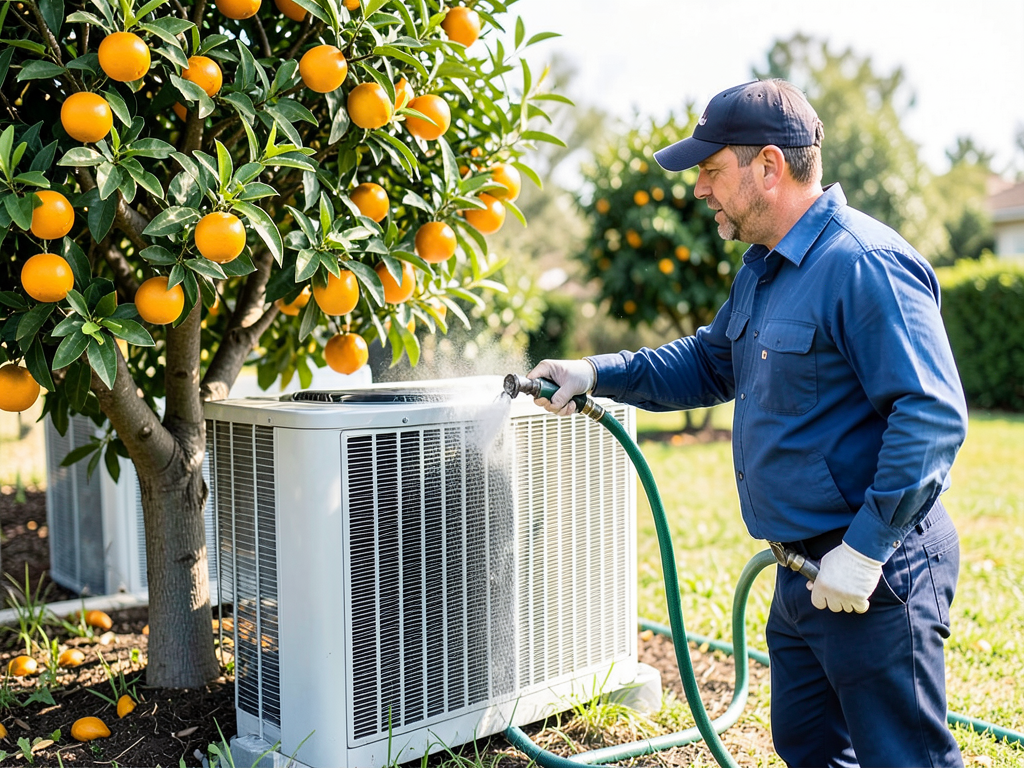
Maintaining proper clearance between your citrus trees and AC unit is crucial. The three-foot rule means keeping all vegetation at least three feet away from the condenser on all sides. This distance allows adequate airflow for heat dissipation while still permitting you to harvest fruit and maintain your trees.
Many Riverside homes violate this rule without realizing it. Citrus trees planted too close to units grow into the clearance zone over time. Branches that start two feet away can extend to touch the unit within a few growing seasons. The sticky residue from blossoms and leaves then accumulates directly on the condenser housing.
Seasonal Challenges in Riverside’s Citrus Belt
Riverside’s citrus growing season creates specific maintenance challenges. The spring bloom period produces massive amounts of blossoms that can coat your AC unit in sticky pollen. Summer brings the heaviest leaf drop as trees respond to heat stress. Fall’s fruit drop adds another layer of organic debris.
The Santa Ana winds compound these problems. These seasonal winds blow debris from multiple yards into your AC unit, creating layers of leaves, dirt, and organic matter. A condenser that looks clean one day can be completely clogged the next after a windstorm.
Diagnostic Signs Your AC is Under Attack
Learning to recognize early warning signs can save you from expensive repairs. Here are the diagnostic indicators that citrus debris is affecting your system: EPA recommendations for HVAC maintenance.
- Longer cooling cycles than normal
- Warm air blowing from vents when AC is running
- Unusual humming or clicking sounds from the outdoor unit
- Visible debris accumulation on or around the condenser
- Higher than normal electric bills during summer months
The screwdriver test is simple but effective. Turn off power to your AC at the breaker, then open the access panel. If you see matted leaves, dirt, or sticky residue on the coils, your unit needs immediate attention. The coils should appear clean and metallic, not coated with organic matter.
Maintenance Checklist for Citrus Season
Regular maintenance prevents most citrus-related AC problems. Follow this checklist to keep your system running efficiently:
- Power Safety First
Always turn off power at the breaker before cleaning your AC unit. Riverside’s electrical grid can have voltage fluctuations that make this step critical for safety. Commercial Duct Cleaning.
- Clear the Area
Remove all vegetation within three feet of the unit. Trim citrus branches back to maintain proper clearance throughout the growing season.
- Clean the Coils
Using a garden hose with gentle spray, rinse the condenser coils from the inside out. Never use high-pressure washers as they can bend the delicate fins.
- Check the Base
Inspect the concrete pad for settling or cracks. Riverside’s soil can shift during dry seasons, causing units to tilt and reducing efficiency.
- Inspect Electrical Components
Look for signs of pest damage or corrosion on wiring. Citrus trees attract rodents that may chew on electrical connections.
Professional Solutions for Riverside Homeowners
While DIY maintenance helps, professional service provides the deep cleaning your AC needs after heavy citrus shedding. Horizon HVAC Riverside offers specialized citrus-safe maintenance packages that address the unique challenges of our local climate.
Professional technicians use commercial-grade coil cleaners that remove sticky residue without damaging the aluminum fins. They also check for root intrusion from nearby trees, which can damage the concrete pad and create uneven operation. The EPA recommends professional maintenance at least once per year for systems in areas with heavy vegetation.
The Cost of Neglect: Efficiency Loss Breakdown
| Debris Level | Efficiency Loss | Monthly Cost Increase | Lifespan Impact |
|---|---|---|---|
| Light (1/4 covered) | 5-10% | $15-30 | Negligible |
| Moderate (1/2 covered) | 15-25% | $45-75 | 1-2 years lost |
| Heavy (3/4 covered) | 30-50% | $90-150 | 3-5 years lost |
| Blocked (fully covered) | 60%+ | $180+ | System failure imminent |
These numbers represent typical Riverside households during peak summer months. The efficiency loss directly translates to higher cooling costs and premature system replacement.
Smart Landscaping for AC Protection
You don’t have to remove your citrus trees to protect your AC. Smart landscaping creates a balance between beautiful trees and efficient cooling. Consider these strategies:
- Plant citrus trees at least six feet from planned AC locations
- Use gravel or decorative rock mulch instead of organic mulch near units
- Install trellises or screens that block debris while allowing airflow
- Choose dwarf citrus varieties for smaller yards
- Create a dedicated cleaning schedule aligned with citrus growth cycles
The Riverside Public Utilities website offers rebates for energy-efficient landscaping that can help offset the cost of proper AC protection measures.
When to Call the Professionals
Some AC problems require professional attention. Call Horizon HVAC Riverside if you notice:
- AC running constantly but not cooling properly
- Ice formation on refrigerant lines
- Unusual noises from the outdoor unit
- Visible damage to coils or fins
- Electrical issues or burning smells
Emergency service is available 24/7 for critical cooling failures. Riverside’s extreme summer heat makes AC problems more than just uncomfortable they can be dangerous for vulnerable residents. Same Day Emergency AC Repair for Families in Orangecrest.
Frequently Asked Questions
How often should I clean my AC if I have citrus trees?
Clean your AC unit monthly during peak citrus shedding seasons (spring and fall). Perform a thorough cleaning every three months minimum. Professional deep cleaning is recommended annually.
Can citrus tree roots damage my AC unit?
Yes. Citrus tree roots can grow under concrete pads, causing them to crack or tilt. This creates uneven operation and can lead to premature compressor failure. Maintain at least a six-foot root barrier between large citrus trees and your unit.
What’s the best way to clean sticky citrus residue from AC coils?Use a commercial coil cleaner designed for HVAC systems. Rinse thoroughly with a garden hose using gentle spray. Never use high-pressure washers or abrasive cleaning tools that can damage the delicate fins.
How much clearance do I really need between trees and my AC?
Maintain at least three feet of clearance on all sides for adequate airflow. More clearance is better if space allows. This distance helps prevent debris accumulation while still allowing you to maintain and harvest from your trees.
Protect Your Investment Today
Your air conditioning system represents a significant investment in your home’s comfort and value. The citrus trees in your Riverside yard add beauty and fresh fruit but require careful management to prevent damage to your cooling system.
Don’t wait until your AC fails on the hottest day of the year. Schedule your citrus-safe maintenance inspection now. Our technicians understand the unique challenges of Riverside’s climate and can help you create a maintenance plan that protects both your trees and your cooling system.
Call (951) 223-9644 today to schedule your inspection. We’ll evaluate your current setup, clean your system thoroughly, and provide specific recommendations for your property. Your comfort is our priority, and we’re here to help you enjoy both cool air and fresh citrus without compromise.
Remember, proactive maintenance costs far less than emergency repairs or premature system replacement. Take action now to protect your investment and ensure reliable cooling all summer long. Reliable Furnace Repair in Riverside to Keep Your Family Warm This Winter.