Finding a Trusted Contractor for Attic Insulation and HVAC Efficiency in Riverside
The Inland Empire’s brutal summer heat pushes your HVAC system to its limits. In Riverside, where temperatures regularly exceed 100°F, attic insulation becomes the critical barrier between your home’s comfort and your skyrocketing energy bills. Without proper insulation, your air conditioner works overtime, fighting against heat radiating down from your attic space. This battle wastes energy and shortens your system’s lifespan.. Read more about Lower Your Bills with a Whole House Fan Installation in Riverside.
Finding a trusted contractor who understands Riverside’s unique climate challenges makes all the difference. The right professional doesn’t just install insulation; they analyze your home’s thermal envelope, identify air leaks, and recommend solutions that work with your existing HVAC system. They know the local building codes, understand Southern California Edison’s rebate programs, and can help you qualify for energy efficiency incentives. California Title 24 Energy Efficiency Standards.
Quality attic insulation combined with a properly sized HVAC system can reduce your cooling costs by 20-40 percent. But the key lies in the installation quality and the contractor’s expertise in handling Riverside’s specific conditions. Let’s explore what makes attic insulation and HVAC efficiency so crucial in our area and how to find the right contractor for your home. Switching to a High Efficiency Heat Pump in Riverside to Save on Monthly Energy Bills.
Understanding Riverside’s Climate Impact on Your HVAC System
Riverside sits in a unique climate zone where summer heat meets winter chill. The temperature swings create stress on your HVAC system that many contractors outside the area don’t fully understand. During July and August, when daytime temperatures hit 105°F and drop only to 75°F at night, your system runs almost continuously.
This constant operation affects both efficiency and longevity. Heat pumps and air conditioners in Riverside face different challenges than those in coastal areas. The dry, intense heat means your system must work harder to remove the same amount of heat from your home. Poor attic insulation compounds this problem by allowing heat to transfer directly into your living space.
Local building codes reflect these challenges. California Title 24 requires specific insulation R-values for Riverside County homes, but many older homes fall short of current standards. A knowledgeable contractor will assess your home’s current insulation levels and recommend upgrades that meet or exceed code requirements.
Attic Insulation Types and Their Performance in Riverside Heat
Not all insulation performs equally in Riverside’s extreme temperatures. The most common options include fiberglass batts, blown-in cellulose, and spray foam insulation. Each has different R-values per inch and varying resistance to heat transfer.. Read more about The Best Quiet AC Options for Light Sleepers in Sycamore Highlands.
Fiberglass batts remain popular due to their cost-effectiveness and ease of installation. However, they can settle over time, reducing their effectiveness. Blown-in cellulose provides better coverage in irregular spaces and has slightly higher R-values, but it can absorb moisture if not properly installed with vapor barriers. How Much Does a New AC Installation Cost in Woodcrest Today?.
Spray foam insulation offers the highest R-value per inch and creates an air seal that prevents heat transfer through convection. In Riverside’s climate, closed-cell spray foam provides the best thermal resistance, though it comes at a higher initial cost. The investment often pays for itself through energy savings within 3-5 years.
Attic ventilation works hand-in-hand with insulation. Without proper airflow, heat builds up in your attic space, radiating down into your home even with good insulation. A trusted contractor will evaluate your attic’s ventilation system and recommend improvements like ridge vents, soffit vents, or attic fans to complement your insulation upgrade.
California Title 24 and Local Building Requirements
California’s Title 24 Energy Efficiency Standards set minimum requirements for insulation in new construction and major renovations. For Riverside County, these standards require R-38 insulation in attics for new homes. However, many homes built before 2019 have R-19 or lower insulation levels.
Local building departments enforce these codes through permit requirements. Any major HVAC replacement or attic work typically requires permits and inspections. A reputable contractor handles this process, ensuring your project meets all local requirements. They understand the documentation needed for utility rebates and can help you navigate the paperwork.
The California Energy Commission updates Title 24 every three years. The 2022 standards introduced stricter requirements for duct sealing and insulation performance. These changes reflect growing concerns about energy consumption and climate impact. Contractors who stay current with these regulations provide better long-term value for your investment.
Beyond Title 24, Riverside County has additional requirements for homes in certain areas. Properties near wildfire zones may need specific ventilation designs. Homes in flood-prone areas require moisture-resistant insulation materials. A local contractor understands these nuances and can recommend appropriate solutions.
Riverside Public Utilities and SCE Rebate Programs
Both Riverside Public Utilities and Southern California Edison offer significant rebates for energy efficiency improvements. These programs can offset 20-50 percent of your insulation and HVAC upgrade costs. However, the application process requires specific documentation and often needs to be completed before work begins. Southern California Edison Rebate Programs.
Riverside Public Utilities offers rebates for attic insulation upgrades that meet specific R-value requirements. The current program provides up to $500 for qualifying improvements. They also offer rebates for high-efficiency HVAC equipment, with amounts varying based on the system’s SEER2 rating.
Southern California Edison’s Energy Savings Assistance Program provides free energy efficiency upgrades to income-qualifying households. This includes attic insulation, HVAC tune-ups, and even complete system replacements in some cases. The application process requires proof of income and home ownership or long-term rental agreements.. Read more about How to Get a Whole House Fan Installed in Your Riverside Home to Slash Cooling Costs.
Federal tax credits through the Inflation Reduction Act add another layer of savings. Homeowners can claim 30 percent of qualified energy efficiency improvements, including insulation and HVAC upgrades, up to specific dollar limits. A knowledgeable contractor will help you understand which improvements qualify and provide the necessary documentation for your tax return.
Finding the Right Contractor for Your Riverside Home
Not all HVAC and insulation contractors have the same level of expertise. In Riverside, you need someone who understands our specific climate challenges, local building codes, and utility rebate programs. The right contractor will provide a comprehensive assessment rather than just quoting prices for insulation installation.
Look for contractors with specific certifications beyond basic licensing. NATE (North American Technician Excellence) certification indicates advanced knowledge of HVAC systems. Building Performance Institute (BPI) certification shows expertise in whole-home energy efficiency. These credentials demonstrate a commitment to ongoing education and industry best practices.
Local experience matters significantly. A contractor who has worked in Riverside for years understands the unique challenges of our older neighborhoods, the specific requirements for newer developments, and the most effective solutions for our climate. They should be able to provide references from local homeowners with similar homes and issues.
Transparency in pricing and processes sets trustworthy contractors apart. They should explain their assessment methodology, provide detailed written estimates, and be willing to show you exactly what they’re recommending and why. Avoid contractors who pressure you into immediate decisions or can’t explain the technical aspects of their recommendations.
The Assessment Process: What to Expect
A thorough assessment goes beyond a quick visual inspection. Quality contractors use diagnostic tools to measure your home’s actual performance. They’ll check attic temperatures, measure insulation depth, inspect for air leaks, and evaluate your HVAC system’s efficiency.
Blower door tests reveal air leakage points throughout your home. Infrared cameras show heat loss patterns in your attic and walls. Duct leakage tests measure how much conditioned air escapes through your duct system. These diagnostic tools provide concrete data rather than guesswork about your home’s efficiency issues.
The assessment should include a calculation of your home’s heating and cooling loads. This Manual J calculation determines the proper size for any new HVAC equipment. Oversized systems short-cycle, reducing efficiency and comfort. Undersized systems run constantly, increasing wear and energy costs. A trusted contractor will perform this calculation rather than simply replacing your existing unit with a similar size.
Air quality testing might be part of a comprehensive assessment. Poor attic insulation can allow dust, pollen, and other contaminants to enter your living space. A contractor who considers these factors provides a more complete solution than one focused solely on temperature control.
Installation Quality and What to Watch For
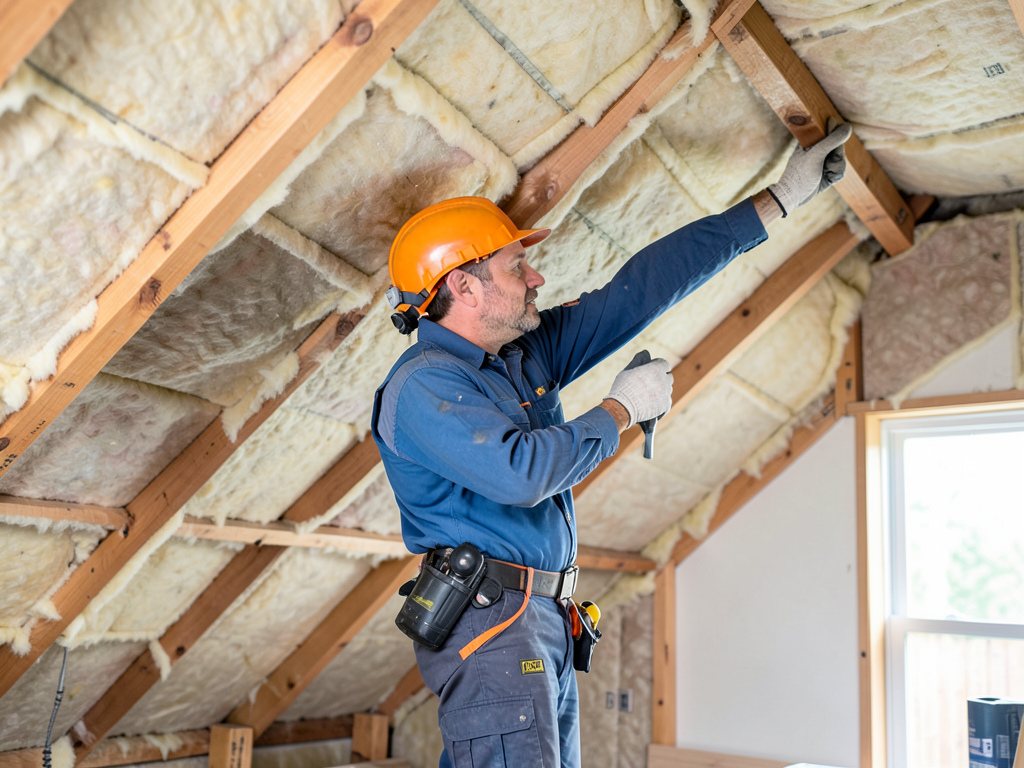
Even the best insulation materials fail if installed incorrectly. Quality installation requires attention to detail that separates professional contractors from those who cut corners. Watch for proper preparation, including sealing air leaks before adding insulation and protecting ventilation systems.
Attic access points need special treatment. Contractors should install insulated covers over attic stairs or hatches to prevent heat transfer. Recessed light fixtures require insulation shields to prevent fire hazards while maintaining thermal performance. These details matter for both safety and efficiency.
Duct sealing represents another critical quality factor. Leaky ducts can waste 20-30 percent of your conditioned air. Professional contractors use mastic sealant or metal tape (not standard duct tape) to seal connections. They test the sealed system to verify the improvements and ensure proper airflow throughout your home.
Post-installation verification demonstrates a contractor’s commitment to quality. They should measure the final insulation depth, verify proper ventilation, and test your HVAC system’s performance after the work is complete. This follow-up ensures you receive the benefits you paid for and helps identify any issues that need correction.
Maintenance and Long-Term Performance
Attic insulation and HVAC efficiency require ongoing attention. Even quality installations can develop issues over time. Rodents may nest in insulation. Moisture can cause settling or mold growth. Duct connections can loosen. A trusted contractor provides maintenance services to protect your investment.
Annual HVAC maintenance should include checking insulation integrity, especially in accessible attic areas. Technicians can identify problems like moisture intrusion, pest damage, or settling that reduces effectiveness. Early detection prevents minor issues from becoming major efficiency losses.
Smart thermostats add another layer of efficiency control. These devices learn your schedule, adjust temperatures automatically, and provide energy usage data. Many Riverside homeowners save an additional 10-15 percent on heating and cooling costs by using smart controls effectively.
Air filter maintenance directly impacts both HVAC efficiency and indoor air quality. In Riverside’s dusty environment, filters may need monthly replacement rather than the standard three-month schedule. A knowledgeable contractor will recommend appropriate filter types and replacement schedules based on your specific home and conditions.
Cost Considerations and Return on Investment
Attic insulation and HVAC efficiency improvements represent significant investments, typically ranging from $3,000 to $15,000 depending on your home’s size and the scope of work. However, the return on investment often exceeds expectations when you factor in energy savings, utility rebates, and increased home value.
Energy savings vary based on your home’s starting condition and local utility rates. Most Riverside homeowners see 20-40 percent reductions in cooling costs after comprehensive insulation and HVAC upgrades. At current rates, this translates to $500-1,200 in annual savings for an average home.
Utility rebates can reduce your upfront costs by 20-50 percent. When combined with federal tax credits, the net investment often drops significantly. Some homeowners see payback periods of 3-5 years, after which the savings represent pure financial benefit.
Beyond direct energy savings, these improvements increase your home’s value and marketability. Energy-efficient homes command premium prices and sell faster than comparable properties without efficiency upgrades. The comfort improvements also enhance your quality of life, reducing hot spots and improving indoor air quality.
Common Mistakes to Avoid
Homeowners often make costly mistakes when improving attic insulation and HVAC efficiency. One common error involves adding insulation without addressing air leaks first. This approach wastes money by allowing conditioned air to escape through gaps around light fixtures, plumbing penetrations, and attic access points.
Another mistake involves choosing the wrong insulation type for your specific needs. Spray foam offers excellent performance but may not be suitable for all applications. Fiberglass batts work well in some situations but can settle over time. A trusted contractor helps you select the right material for your home’s construction and your budget.
DIY insulation projects often result in problems that cost more to fix than professional installation would have cost initially. Compression of insulation reduces its effectiveness. Blocking ventilation creates moisture problems. Improper handling of recessed lights creates fire hazards. Professional installation ensures these issues don’t occur.
Focusing solely on price rather than value leads to poor decisions. The cheapest contractor may use inferior materials, skip important steps, or lack proper insurance and licensing. Quality work from a trusted professional provides better long-term value through improved performance and durability.
Local Success Stories and Case Studies
Homeowners throughout Riverside have experienced dramatic improvements after proper insulation and HVAC upgrades. One family in Canyon Crest saw their summer cooling bills drop from $350 to $180 per month after comprehensive attic insulation and duct sealing. Their home became more comfortable, with fewer temperature variations between rooms.
A historic home in downtown Riverside faced unique challenges with its older construction. The contractor used a combination of spray foam in accessible areas and blown-in cellulose in tight spaces to improve efficiency without compromising the home’s character. The owners reported 35 percent energy savings and improved indoor air quality.
Commercial properties also benefit significantly. A small office building in Riverside’s business district reduced its annual HVAC costs by $8,000 after upgrading insulation and installing a high-efficiency system. The improvements paid for themselves in just under three years through energy savings and utility rebates. Commercial Duct Cleaning.
These success stories share common elements: thorough assessment, quality materials, professional installation, and ongoing maintenance. They demonstrate that proper insulation and HVAC efficiency improvements deliver real, measurable benefits for Riverside homes and businesses.
Frequently Asked Questions
How much insulation does my Riverside home need?
California Title 24 requires R-38 insulation in attics for new construction in Riverside County. However, many experts recommend R-49 to R-60 for optimal performance in our extreme summer heat. The right level depends on your home’s construction, age, and specific conditions.
Can I add new insulation over old insulation?
Yes, you can add new insulation over existing material if the old insulation is dry and in good condition. However, you should address any air leaks, moisture issues, or pest problems before adding new insulation. Sometimes removing old insulation and starting fresh provides better results.
How long does professional insulation installation take?
Most residential attic insulation projects take 1-2 days for professional installation. The timeline depends on your attic’s size, accessibility, and the type of insulation being installed. Additional work like air sealing or duct repair may extend the project duration. Same Day Emergency AC Repair for Families in Orangecrest.
Will new insulation make my house too airtight?
Quality insulation installation includes proper ventilation to maintain healthy indoor air quality. The goal is to control air movement rather than eliminate it entirely. Your contractor should ensure your home has adequate fresh air exchange while preventing unwanted heat transfer.
How do I know if my contractor is trustworthy?
Look for proper licensing, insurance, and certifications like NATE or BPI. Check online reviews, ask for local references, and verify they pull required permits. A trustworthy contractor provides detailed written estimates, explains their recommendations clearly, and doesn’t pressure you into immediate decisions.
- Verify Credentials
Check licensing, insurance, and certifications. Ensure they have experience with Riverside’s specific climate and building requirements.
- Get Multiple Assessments
Have at least three contractors evaluate your home. Compare their recommendations, not just their prices.
- Check References
Ask for local references and actually contact them. Inquire about the contractor’s communication, quality, and follow-up service.
- Review Documentation
Ensure they provide detailed written estimates, explain permit requirements, and outline the rebate application process.
Take the Next Step Toward Energy Efficiency
Your home’s comfort and efficiency depend on quality insulation and proper HVAC operation. The extreme Riverside heat makes these improvements more critical here than in many other areas. Don’t wait until your energy bills become unbearable or your system fails during a heatwave.
A professional assessment provides the information you need to make informed decisions about your home’s energy efficiency. This evaluation reveals specific problems, recommends targeted solutions, and helps you understand the potential return on your investment. The assessment itself often identifies issues you weren’t aware of, from duct leaks to inadequate ventilation.
Quality contractors understand that every home has unique characteristics requiring customized solutions. They don’t apply one-size-fits-all approaches but instead develop strategies based on your home’s construction, your family’s needs, and your budget constraints. This personalized approach ensures you receive maximum benefit from your investment.
Energy efficiency improvements represent one of the best home investments you can make in Riverside’s climate. The combination of lower utility bills, improved comfort, better indoor air quality, and increased home value provides benefits that extend far beyond simple temperature control. Your family deserves a home that stays comfortable without breaking the bank.
Ready to start saving money and improving your home’s comfort? Call (951) 223-9644 today to schedule your professional assessment. Our experienced team understands Riverside’s unique challenges and can recommend solutions that deliver real results. Don’t let another summer of high energy bills pass by – take action now and start enjoying the benefits of a properly insulated, efficiently operating home.
You may also find this helpful. Why the Second Floor of Your Spring Mountain Ranch Home Stays Hot (And How to Fix It).