Cleaning Your AC System After a Riverside Brush Fire (How to Remove Ash and Smoke)
Wildfire smoke and ash from Riverside brush fires contain microscopic particles that infiltrate your HVAC system. These particles settle on coils, ductwork, and filters, creating a film that reduces efficiency and circulates contaminants throughout your home. The Inland Empire’s valley geography traps smoke, making post-fire HVAC cleaning essential for protecting your indoor air quality and system performance. Switching to a High Efficiency Heat Pump in Riverside to Save on Monthly Energy Bills.
How Wildfire Ash Affects Your Riverside HVAC System
Ash from Southern California wildfires contains fine particulate matter (PM2.5) mixed with oils from burned vegetation. When these particles enter your AC system, they create an abrasive residue that coats evaporator coils and clogs air filters. The Riverside County Air Quality Management District reports that smoke particles can remain suspended in valley air for days after a fire, continuously entering outdoor units through condenser coils.
The microscopic size of wildfire ash means standard filters cannot capture all particles. Ash particles smaller than 2.5 microns pass through typical MERV 8 filters and accumulate on internal components. This buildup forces your system to work harder, increasing energy consumption by up to 15% while reducing cooling capacity.
Health Risks of Smoke-Contaminated AC Systems
Smoke-contaminated HVAC systems circulate harmful particles throughout your home. The EPA classifies wildfire smoke as containing volatile organic compounds (VOCs), carbon monoxide, and acrolein – all of which can trigger respiratory issues. Riverside residents with asthma, children, and elderly family members face increased health risks when breathing air filtered through smoke-damaged systems. EPA particulate matter information.
Smoke particles trapped in ductwork create a breeding ground for bacteria and mold. The moisture from your AC’s cooling process combines with ash residue to form a sticky film that harbors microorganisms. This contamination can cause persistent odors and degrade indoor air quality long after the visible smoke clears.
Professional vs. DIY AC Cleaning After a Fire
Basic maintenance homeowners can perform includes replacing air filters with MERV 13+ rated filters and cleaning visible debris from the outdoor unit. However, professional cleaning becomes necessary when smoke exposure lasts more than 24 hours or when you notice reduced airflow, unusual odors, or visible soot around vents. Commercial Duct Cleaning.
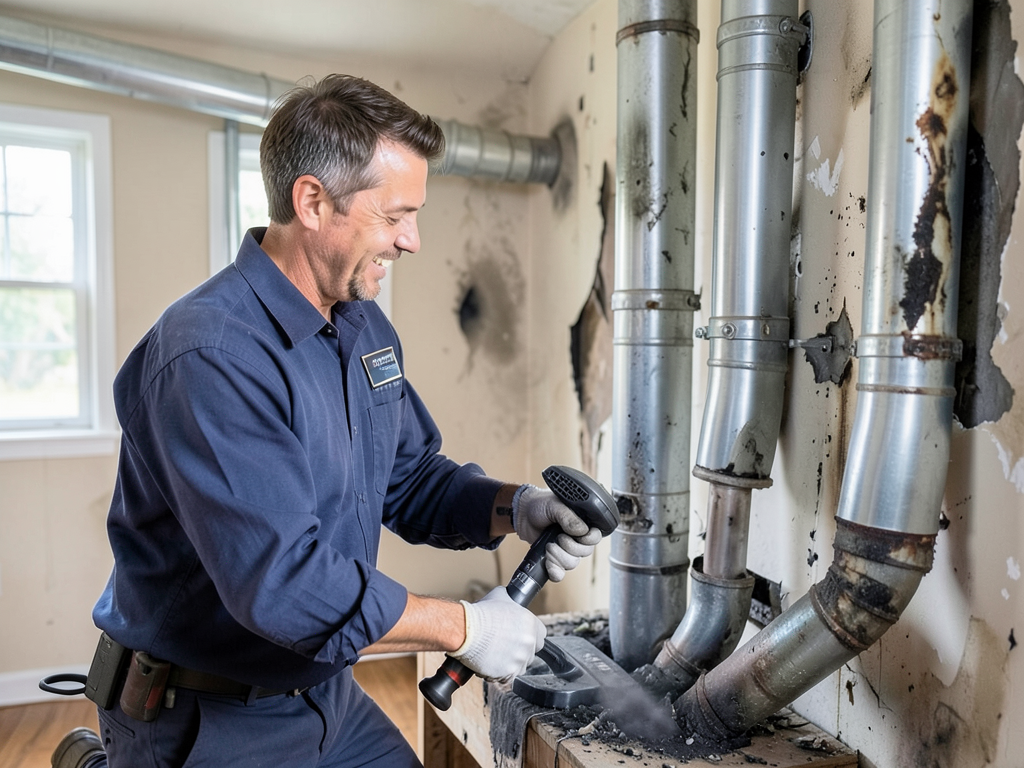
Professional HVAC technicians use specialized equipment including HEPA-filtered vacuums and chemical coil cleaners designed to remove oily smoke residue. The National Air Duct Cleaners Association (NADCA) recommends professional duct cleaning when visible mold growth, vermin infestation, or excessive dust appears after fire events. National Air Duct Cleaners Association.
Step-by-Step Guide to Post-Fire AC System Cleaning
- Replace All Air Filters
Install MERV 13 or higher filters to capture fine smoke particles. Replace filters every 30 days during smoke season rather than the standard 90-day interval.
- Clean Outdoor Condenser Coils
Turn off power at the breaker. Remove debris from coil fins using a soft brush. Spray with coil cleaner specifically formulated for smoke residue removal. Rinse thoroughly and allow to dry completely.
- Inspect and Clean Evaporator Coils
Access the indoor unit and examine evaporator coils for ash buildup. Use a no-rinse coil cleaner for light contamination. Heavy buildup requires professional chemical washing.
- Check Ductwork for Smoke Damage
Remove vent covers and inspect for soot accumulation. Use a flashlight to examine duct interiors through vents. Professional duct cleaning removes embedded particles that household vacuums cannot reach.
- Test System Performance
After cleaning, run the system for 15 minutes and check for unusual noises or odors. Monitor energy usage for the first month to ensure efficiency returns to normal.
MERV Ratings and Filter Selection for Smoke Protection
| Filter Type | MERV Rating | Smoke Particle Capture | Recommended Use |
|---|---|---|---|
| Standard Fiberglass | 4-6 | Less than 20% | Not recommended for smoke events |
| Pleated Media | 8-11 | 40-60% | Basic protection only |
| High-Efficiency | 13-16 | 85-95% | Recommended for smoke events |
| Hospital Grade | 17-20 | 99%+ | Maximum protection, may restrict airflow |
The Riverside area experiences multiple smoke events annually due to its proximity to national forests and brushland. Installing MERV 13 filters provides optimal balance between smoke particle capture and system airflow. Higher MERV ratings capture more particles but may reduce airflow in older systems.
Outdoor Unit Protection During Fire Season
Riverside’s Santa Ana wind conditions can drive ash horizontally at high speeds, forcing particles through standard condenser unit louvers. Installing a temporary mesh screen over the outdoor unit during active fire events provides additional protection. Use 1/4-inch mesh that allows airflow while blocking larger ash particles.
Position outdoor units away from prevailing wind paths when possible. Units installed on the north side of buildings receive less direct ash exposure than those on south-facing walls. Regular inspection of outdoor coils becomes critical during fire season, with monthly cleaning recommended instead of the standard annual schedule.
Commercial HVAC Systems and Wildfire Smoke
Commercial buildings in Riverside’s logistics corridor face unique challenges from wildfire smoke. Large rooftop units process more air volume, capturing proportionally more smoke particles. Commercial duct systems often have return air plenums that accumulate ash in areas inaccessible without specialized equipment.
California Title 24 energy standards require commercial buildings to maintain specific ventilation rates. Smoke events may force building managers to balance air quality against energy efficiency requirements. Installing activated carbon filters in commercial systems helps remove VOCs and odors that mechanical filters cannot capture.
Insurance Coverage for Smoke-Damaged HVAC Systems
Most California homeowners insurance policies cover smoke damage to HVAC systems when caused by nearby wildfires. Document damage with photos of visible soot on vents, filters, and coils. Keep receipts for professional cleaning services as proof of mitigation efforts required by insurance adjusters.
Insurance claims for smoke damage typically require professional assessment. HVAC technicians can provide written reports documenting contamination levels and cleaning procedures performed. This documentation supports claims for both cleaning costs and any necessary component replacement due to smoke damage.
When to Call a Professional for Smoke Damage Assessment
Call a professional if you notice these warning signs after a fire: persistent burning odors when the AC runs, visible soot around vents, reduced cooling capacity, or unusual system noises. Professional assessment becomes urgent if anyone in your household experiences increased respiratory symptoms.
Professional cleaning involves more than surface wiping. Technicians use air quality meters to measure particle levels before and after cleaning. They inspect heat exchangers for soot accumulation that could create carbon monoxide risks. Professional services also include antimicrobial treatment to prevent mold growth in ash-contaminated systems.
Preventive Maintenance Schedule for Smoke-Prone Areas
| Season | Maintenance Task | Frequency | Smoke Impact |
|---|---|---|---|
| Pre-Fire Season | Filter Upgrade | April | Install MERV 13+ filters |
| Active Fire Season | Coil Cleaning | Monthly | Remove ash buildup |
| Post-Fire Event | Professional Cleaning | Within 72 hours | Emergency decontamination |
| Off-Season | Deep Cleaning | November | Remove accumulated residue |
Living in Riverside means accepting annual smoke exposure as part of life in Southern California. Creating a maintenance schedule that anticipates fire season helps protect your investment and your family’s health. The cost of preventive maintenance typically runs 40-60% less than emergency cleaning after severe smoke exposure. Same Day Emergency AC Repair for Families in Orangecrest.
Frequently Asked Questions
How long does smoke damage last in an AC system?
Smoke particles can remain trapped in ductwork and components for months without proper cleaning. The oily residue from wildfire smoke bonds to surfaces and continues releasing particles into your air supply until professionally removed.
Can I clean my AC coils myself after smoke exposure?
Light surface cleaning is possible for homeowners, but smoke-damaged coils often require chemical cleaners that need professional application. Incorrect cleaning methods can damage delicate coil fins and void manufacturer warranties.
Will smoke damage my AC compressor?
Smoke itself does not directly damage compressors, but ash buildup on condenser coils reduces heat transfer efficiency. This forces the compressor to work harder, potentially shortening its lifespan by 2-3 years.
How much does professional smoke damage cleaning cost?
Professional cleaning costs range from $300 to $800 depending on system size and contamination level. Commercial systems typically cost 2-3 times more due to larger ductwork and more complex components.
Should I run my AC during a nearby fire?
Running your AC during a fire pulls outside air through the system, bringing in smoke particles. If you must run it, use the recirculate setting and ensure MERV 13+ filters are installed. However, turning off the system prevents additional contamination.
Protecting Your Riverside Home’s Air Quality Year-Round
Beyond immediate post-fire cleaning, maintaining your HVAC system throughout the year provides ongoing protection against air quality issues. Riverside’s combination of wildfire risk, dust from construction, and seasonal pollen creates year-round air quality challenges that affect system performance.
Regular professional maintenance includes checking for proper refrigerant levels, inspecting electrical connections, and cleaning components before problems develop. This proactive approach costs less than emergency repairs and extends system life by preventing the strain caused by dirty components.
Call (951) 223-9644 today to schedule your smoke damage assessment. Our technicians understand Riverside’s unique air quality challenges and provide thorough cleaning that restores your system’s efficiency and protects your family’s health.
Don’t wait until smoke symptoms appear. Pick up the phone and call (951) 223-9644 before the next fire season hits. Professional cleaning now prevents costly repairs later and ensures your family breathes clean air regardless of outdoor conditions.
Remember that smoke damage compounds over time. Each exposure adds to the residue layer in your system, eventually requiring more extensive and expensive cleaning. Regular maintenance breaks this cycle and keeps your HVAC system running at peak efficiency year after year.