
Attic Fans vs Whole House Fans (Which One is Better for Your Grand Terrace Home?)
Living in Grand Terrace means dealing with hot summers where temperatures regularly climb above 95°F. When your AC runs constantly and your energy bills skyrocket, you start looking for cooling solutions that actually work without breaking the bank. Two popular options homeowners consider are attic fans and whole house fans, but these systems serve very different purposes and choosing the wrong one wastes money.
Attic fans exhaust hot air from your attic space to protect your roof structure, while whole house fans actively cool your living space by pulling in cool evening air. The confusion between these systems is common, but understanding their distinct functions helps you make the right choice for your Grand Terrace home.
How Attic Fans Work in Riverside County Homes
Attic fans mount on your roof or gable and run when attic temperatures exceed a set point, typically around 95°F. These fans pull superheated air out of your attic, which can reach 150°F or higher on summer days. The goal is preventing heat from radiating down into your living space through the ceiling.
In Grand Terrace, where many homes have minimal attic insulation due to age or design, attic fans provide crucial protection against thermal transfer. The Santa Ana winds that sweep through the region also carry fine dust that accumulates in attic spaces, making proper ventilation even more important for preventing moisture damage and extending roof life.
Attic fans require proper intake ventilation to work effectively. Building code requires one square foot of net free vent area for every 750 CFM of exhaust capacity. Without adequate soffit or gable vents, attic fans can actually pull conditioned air from your living space through ceiling cracks, defeating their purpose.
Whole House Fans: Active Cooling for Inland Empire Living
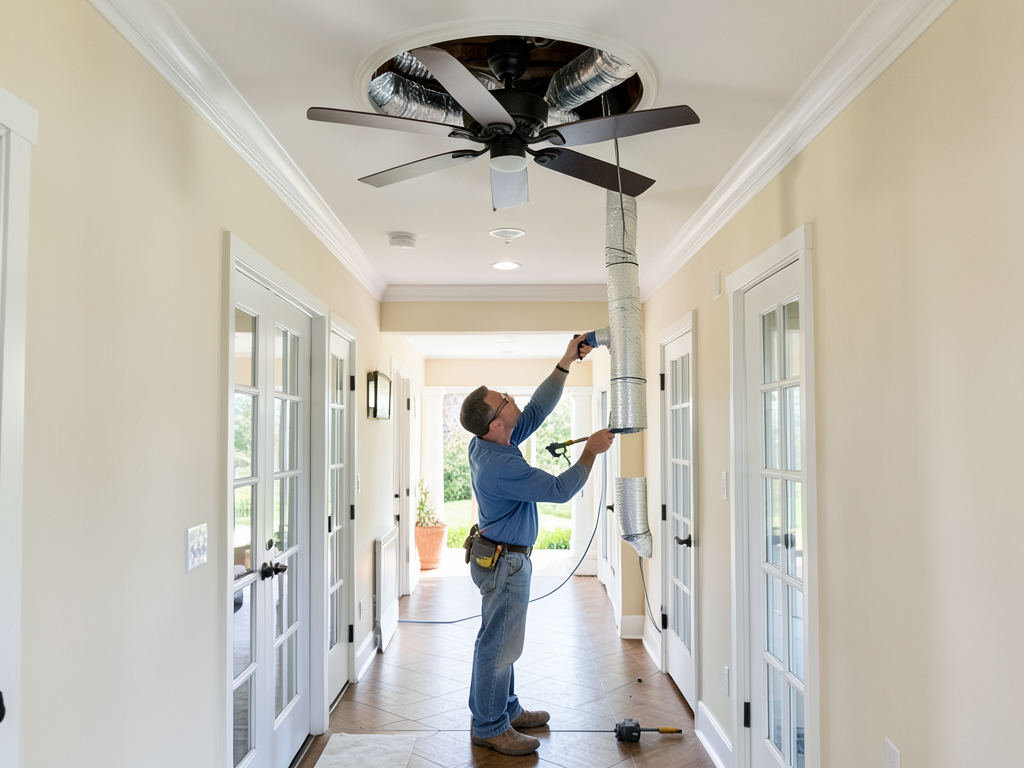
Whole house fans mount in your ceiling, typically in a central hallway, and create a powerful breeze throughout your home. When outdoor temperatures drop in the evening, these fans pull cool air through open windows and exhaust it through your attic vents. A typical whole house fan moves 3,000 to 6,000 CFM, creating noticeable cooling within minutes.
The Inland Empire’s unique climate makes whole house fans particularly effective here. While daytime temperatures often exceed 100°F, nighttime temperatures frequently drop into the 60s or 70s. This 30-40 degree temperature swing allows whole house fans to cool your home’s thermal mass, reducing AC runtime the following day by 30-50%.
Modern whole house fans like the QuietCool Stealth Pro operate at just 51 decibels, quieter than a normal conversation. Older belt-drive models could exceed 70 decibels, but newer direct-drive units eliminate the loud humming that once made whole house fans unpopular.
Key Differences Between Attic and Whole House Fans
| Feature | Attic Fan | Whole House Fan |
|---|---|---|
| Primary Function | Protects roof structure | Cools living space |
| Typical CFM Range | 1,000-3,000 | 3,000-6,000 |
| Installation Location | Roof or gable | Hallway ceiling |
| Noise Level | 60-70 dB | 45-55 dB |
| Energy Use | 300-600 watts | 400-800 watts |
| Best Time to Run | Daytime when hot | Evening when cool |
Why Grand Terrace Homes Benefit from Whole House Fans
Grand Terrace’s location in the foothills of the San Bernardino Mountains creates specific cooling challenges. The area experiences significant temperature swings between day and night, but many homes lack adequate attic insulation due to construction methods from the 1960s-1980s building boom. Whole house fans address both issues by actively cooling your living space while also ventilating your attic.
The typical Grand Terrace home built before 2000 has R-19 to R-30 attic insulation, below current Title 24 requirements of R-38. This means heat transfers easily from your attic to your living space. Whole house fans can reduce attic temperatures by 20-30 degrees, significantly decreasing the heat load on your AC system.
Local utility provider Southern California Edison offers rebates for energy-efficient cooling equipment, including certain whole house fan models. These rebates can offset 15-20% of installation costs, making whole house fans an even more attractive investment for Grand Terrace homeowners looking to reduce their summer electric bills. California Title 24 Energy Efficiency Standards.
Installation Requirements and Building Codes
Both attic and whole house fans require permits in Riverside County. The County requires mechanical permits for any fan exceeding 1,000 CFM. Whole house fans must comply with Title 24 energy efficiency standards, which mandate specific insulation requirements and air sealing measures. Switching to a High Efficiency Heat Pump in Riverside to Save on Monthly Energy Bills.
Proper attic ventilation is critical for whole house fan operation. The general rule requires one square foot of net free vent area for every 750 CFM of fan capacity. For a 4,000 CFM whole house fan, you need approximately 5.3 square feet of total vent area, split between intake and exhaust vents.
Attic fans must be installed with fire-rated dampers to prevent the spread of embers during wildfire season. Riverside County sits in a high fire-risk area, and building inspectors check for proper fire protection on all roof-mounted equipment.
Cost Comparison and ROI Analysis
Attic fan installation typically costs $800-$1,500, including permits and electrical work. Whole house fan installation ranges from $1,800-$3,500, depending on fan size and attic accessibility. While whole house fans cost more upfront, they provide greater energy savings by reducing AC runtime. How Much Does a New AC Installation Cost in Woodcrest Today?.
A typical Grand Terrace homeowner spends $300-$500 per month on cooling during peak summer months. Whole house fans can reduce this by 30-40%, saving $100-$200 monthly. The payback period for a whole house fan installation is typically 2-3 years, compared to 4-5 years for attic fans when considering only energy savings.
Maintenance costs also differ significantly. Attic fans require annual motor bearing lubrication and occasional capacitor replacement. Whole house fans need seasonal cleaning of louvers and occasional belt replacement on older models. Modern direct-drive whole house fans have fewer moving parts and lower maintenance requirements. Commercial Duct Cleaning.
Combined Strategy: Getting the Best of Both Worlds
Many Grand Terrace homeowners find that using both systems provides optimal results. Run your whole house fan in the evening to cool your living space and ventilate your attic. Then let your attic fan cycle on during the hottest part of the following day to prevent heat buildup.
This combined approach works particularly well for homes with mixed roofing materials. Many Grand Terrace houses have a combination of original composition shingle and newer tile sections, creating different heat absorption patterns. The whole house fan addresses interior comfort while the attic fan protects the most vulnerable roof sections.
Smart thermostats and fan controllers can automate this process. Set your whole house fan to run from 7 PM to 7 AM when outdoor temperatures drop below indoor temperatures. Program your attic fan to activate when attic temperatures exceed 95°F during daylight hours.
Common Mistakes to Avoid
The biggest mistake homeowners make is installing an attic fan thinking it will cool their living space. Attic fans only protect your roof structure and have minimal impact on indoor temperatures if your attic is properly insulated.
Another common error is inadequate attic venting. Installing a 3,000 CFM whole house fan without proper intake and exhaust vents creates backpressure that reduces fan efficiency by up to 50%. Always calculate your net free vent area before selecting fan size.
Timing matters significantly. Running a whole house fan when outdoor temperatures exceed indoor temperatures actually heats your home. In Grand Terrace, this typically occurs between 10 AM and 6 PM during summer months. Use your AC during these hours and save the whole house fan for evening operation.
Environmental and Health Benefits
Whole house fans provide superior air exchange compared to running your AC with closed windows. They can completely replace your indoor air every 3-5 minutes, removing indoor pollutants, allergens, and excess humidity. This is particularly beneficial in Grand Terrace, where Santa Ana winds can carry pollen and dust into homes.
During wildfire season, whole house fans can be equipped with MERV-13 rated filters to reduce smoke particle infiltration. While you should avoid using any ventilation system during extreme smoke events, filtered whole house fans provide cleaner indoor air than AC systems that recirculate the same air.
The energy savings from whole house fans also reduce your carbon footprint. A typical whole house fan uses 400-800 watts compared to 3,000-5,000 watts for a central AC system. Over a summer season, this can prevent several tons of CO2 emissions.
Making Your Decision: Which System is Right for You?
Choose an attic fan if your primary concern is protecting your roof structure, you have adequate attic insulation already, and you want a simple solution for reducing attic heat gain. Attic fans work best for homes built after 2000 with R-38 or better insulation.
Choose a whole house fan if you want to actively cool your living space, reduce AC runtime, and take advantage of Grand Terrace’s cool evening temperatures. Whole house fans are ideal for homes with inadequate insulation, high cooling bills, or comfort issues during summer evenings.
Consider both systems if you want maximum protection and comfort. The combined approach provides year-round benefits, from preventing ice dam formation in winter to reducing AC runtime in summer.
Next Steps for Grand Terrace Homeowners
Before making any decisions, have your attic inspected to determine current insulation levels, vent configuration, and structural conditions. Many Grand Terrace homes have hidden issues like inadequate venting or moisture damage that affect fan performance.
Call (951) 223-9644 today to schedule your free attic evaluation. We’ll assess your specific needs, calculate proper fan sizing, and provide a detailed quote for installation. Our technicians understand the unique challenges of cooling Grand Terrace homes and can recommend the optimal solution for your situation.
Don’t wait until the next heat wave hits. Proper ventilation planning now can save you hundreds of dollars in energy costs and prevent comfort issues when temperatures soar above 100°F this summer.
Frequently Asked Questions
How much can a whole house fan reduce my energy bills?
Whole house fans typically reduce AC runtime by 30-50%, saving $100-$200 per month during peak cooling season. The exact savings depend on your home’s insulation, local climate patterns, and how consistently you use the fan during cool evening hours.
Do I need to open windows when using a whole house fan?
Yes, you must open windows for a whole house fan to work properly. The fan pulls air through open windows and exhausts it through your attic vents. Without open windows, the fan creates backpressure that reduces airflow and can damage the motor.
Can I install an attic fan myself?
While DIY installation is possible, attic fans require proper electrical wiring, roof penetration sealing, and compliance with building codes. Improper installation can cause roof leaks, electrical hazards, or code violations. Professional installation ensures proper operation and maintains your roof warranty.
How do I know if my attic has enough ventilation for a whole house fan?
Calculate your total net free vent area by measuring all existing vents and subtracting the area blocked by screens or louvers. You need one square foot of net free area for every 750 CFM of fan capacity. A professional evaluation can identify ventilation deficiencies and recommend solutions.
Are whole house fans noisy?
Modern whole house fans like the QuietCool Stealth Pro operate at 45-55 decibels, quieter than a normal conversation. Older belt-drive models could exceed 70 decibels. Proper installation with vibration isolation and insulated ducting further reduces noise levels. For more information, visit Southern California Edison rebates.