How Riverside Drought Conditions and Blowing Dust Clog Up Your Air Conditioner
Your air conditioner works overtime in Riverside’s dry heat. Something else works against it too. Dust. Not just a little dust. Riverside’s unique climate creates a perfect storm of airborne particles that attack your HVAC system every single day.
When Santa Ana winds sweep through the Inland Empire they carry fine particulate matter from the desert floor. This dust settles on your AC’s outdoor condenser coils and gets pulled into your home through the return air vents. Combine that with our ongoing drought conditions and you have a system that fights for every breath of clean air. HVAC Palm Desert.
The result. Your AC runs longer. Your energy bills climb higher. Your indoor air quality drops faster than you might expect. Understanding how Riverside’s specific environmental challenges affect your HVAC system is the first step to keeping your home comfortable and your equipment running efficiently. Energy Department AC maintenance guide.
How Dust Affects Your AC Performance
Dust does not just make your home look dirty. It attacks your AC system from multiple angles. When dust accumulates on the evaporator coils inside your air handler it creates an insulating barrier. This barrier prevents the coils from absorbing heat effectively which forces your system to run longer cycles.
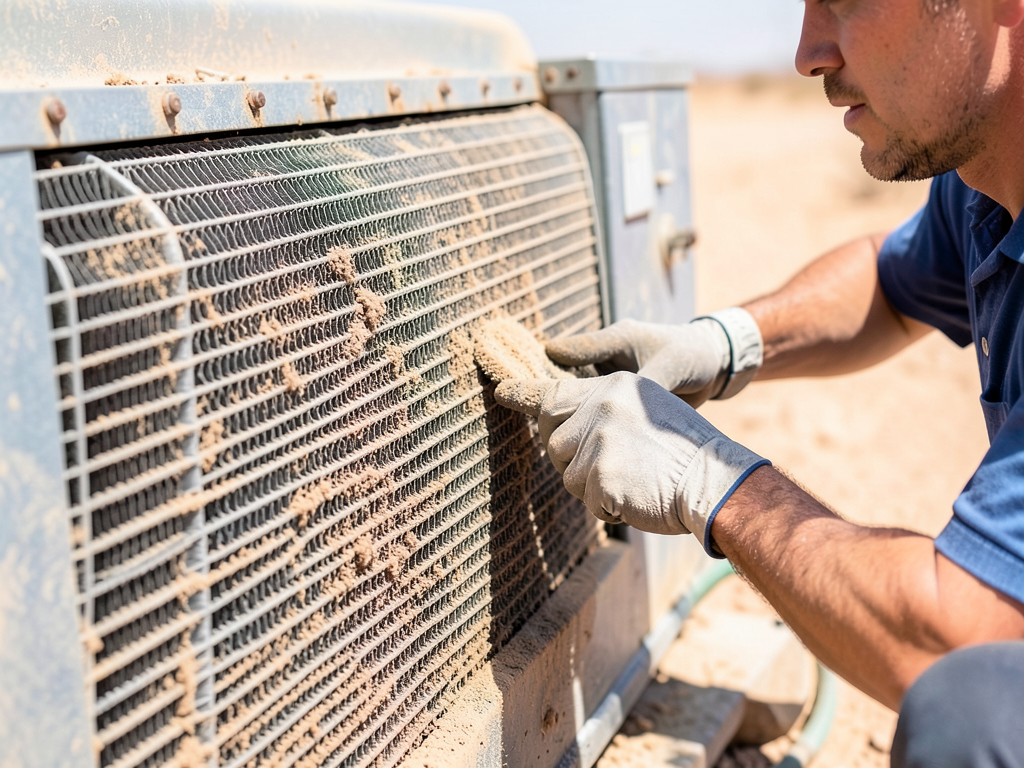
The outdoor condenser unit faces its own battle. Riverside’s blowing dust coats the condenser coils reducing their ability to release heat. Think of it like trying to cool off while wearing a thick wool blanket. Your AC works harder but accomplishes less.
Inside your home the air filter becomes ground zero in this dust war. A standard 1-inch filter in Riverside homes often needs replacement every 30-45 days during peak summer months. Compare that to coastal areas where the same filter might last 90 days. The difference is our desert dust loading.
Riverside’s Unique Dust Sources
Understanding where your AC’s enemy comes from helps you fight back more effectively. Riverside County’s dust problem has several sources that work together to create our specific air quality challenges.
Santa Ana winds are the biggest culprit. These hot dry winds blow from the desert through the Santa Ana mountain passes carrying fine dust particles that can travel for hundreds of miles. During Santa Ana events particulate matter levels in Riverside can spike to three times normal levels.
Construction activity throughout the Inland Empire adds another layer. New housing developments in areas like Eastvale and Jurupa Valley disturb soil that becomes airborne dust. Agricultural operations in surrounding counties contribute organic dust particles that mix with mineral dust from construction sites.
Even our local geography plays a role. The San Jacinto fault zone creates areas of loose soil that become dust sources during dry conditions. When combined with our low annual rainfall these natural factors create a dust environment that is unique to Riverside County.
Warning Signs Your AC is Clogged with Dust
Your AC will tell you when dust is winning the battle. Learning to recognize these warning signs can help you address problems before they cause expensive damage.
Reduced airflow from your vents is often the first noticeable symptom. If you place your hand near a supply vent and feel weak airflow your system might struggle to push air through a clogged filter or dirty coils. This is not just uncomfortable. It is a sign your AC works twice as hard for half the cooling.
Unusual noises from your outdoor unit can indicate dust problems. A condenser fan struggling against dust-coated blades might make a whining or grinding sound. The compressor might cycle on and off more frequently as it overheats from reduced heat exchange efficiency. Switching to a High Efficiency Heat Pump in Riverside to Save on Monthly Energy Bills.
Your energy bills provide another clue. If your July electricity usage is 20-30% higher than the same month last year but your thermostat settings have not changed your AC might run inefficiently due to dust buildup. Many Riverside homeowners see this spike during severe dust events.
Ice formation on refrigerant lines is a serious warning sign. When dust restricts airflow across the evaporator coils the refrigerant temperature drops below freezing. This causes condensation to freeze on the coils and refrigerant lines creating ice buildup that can damage your compressor.
Filter Types and Their Effectiveness in Riverside
Not all air filters are created equal especially when it comes to handling Riverside’s dust load. Understanding the differences can help you choose the right defense for your home.
| Filter Type | MERV Rating | Dust Capture Efficiency | Recommended Replacement |
|---|---|---|---|
| Fiberglass | 1-4 | 20% of large particles | 30 days |
| Pleated Media | 8-11 | 85% of particles 3-10 microns | 60-90 days |
| HEPA | 17-20 | 99.97% of particles 0.3 microns | 6-12 months |
Fiberglass filters are the cheapest option but they are also the least effective against Riverside dust. They capture only the largest particles and allow most of our fine desert dust to pass through. While they might seem economical they often lead to more frequent system cleaning needs. Commercial Duct Cleaning.
Pleated media filters offer a good balance for most Riverside homes. A MERV 8-11 pleated filter captures most dust particles while maintaining adequate airflow for your AC system. These filters typically need replacement every 60-90 days under normal conditions but during Santa Ana wind events you might need to change them monthly.
HEPA filters provide the highest level of dust protection but they come with a trade-off. Their dense filtration media can restrict airflow in standard residential AC systems. If you choose HEPA filtration you might need to upgrade your blower motor or install a variable speed air handler to maintain proper system performance. EPA guide on air cleaners and air filters.
Professional Maintenance Solutions
While regular filter changes help regular professional maintenance is essential for protecting your AC from Riverside’s dust assault. Professional service goes beyond what homeowners can do themselves.
Coil cleaning is a critical maintenance task that most homeowners cannot perform safely. Your evaporator coils need chemical cleaning to remove the fine dust that accumulates deep within the coil fins. This dust creates an insulating layer that reduces heat transfer efficiency by up to 30%.
Condenser coil cleaning requires specialized equipment and cleaning solutions. The outdoor unit faces constant exposure to blowing dust and requires high-pressure washing with coil-safe detergents. Professional technicians also check for coil damage and bent fins that can occur from debris impact during wind events.
Duct inspection and cleaning becomes more important in dusty environments. Riverside’s air quality means your ductwork accumulates dust faster than in other regions. Professional duct cleaning every 3-5 years can remove the dust buildup that your filters miss and improve your indoor air quality significantly.
Refrigerant level checks are crucial because dust-related efficiency losses can mask developing leaks. Low refrigerant levels force your AC to run longer cycles which creates more dust circulation and compounds the problem. Professional technicians use electronic leak detectors to find small leaks before they become major repairs. Same Day Emergency AC Repair for Families in Orangecrest.
DIY Steps to Protect Your AC
You do not have to be completely helpless against Riverside’s dust problem. Several DIY steps can significantly reduce the impact on your AC system.
- Check and Replace Filters Monthly
During peak dust season inspect your filter every 30 days. Hold it up to a light source. If you cannot see light through the filter it is time for replacement. Mark your calendar for regular checks.
- Keep Outdoor Unit Clear
Maintain a 2-foot clearance around your outdoor condenser unit. Remove any vegetation growing near the unit and sweep away accumulated dust and debris. This prevents the fan from working harder than necessary.
- Seal Return Air Leaks
Check your return air vents for gaps or leaks. Use foil tape to seal any openings in the ductwork near the vents. Leaky return ducts can pull dusty attic air into your system bypassing your filter entirely.
- Install a Pre-Filter
Consider adding a washable pre-filter to your return air grille. These inexpensive filters capture the largest dust particles before they reach your main filter extending its life and protecting your system.
Smart thermostat programming can also help manage dust-related efficiency losses. Running your AC during the hottest parts of the day when dust levels are often highest can be counterproductive. Consider programming your thermostat to pre-cool your home during early morning hours when dust levels are lower and outdoor temperatures are more moderate.
Window and door weatherstripping plays a bigger role than many homeowners realize. Gaps around windows and doors allow dusty outside air to infiltrate your home. This dust eventually makes its way to your AC system. Replacing worn weatherstripping can reduce indoor dust levels by up to 40%.
The Cost of Ignoring Dust Problems
Many Riverside homeowners underestimate the financial impact of dust on their AC systems. The costs extend far beyond just higher energy bills.
Premature system failure is perhaps the most expensive consequence. Dust-related strain on your compressor and fan motors can reduce your AC’s lifespan by 2-5 years. Given that a new AC system costs $5000-$10000 in Riverside that is $1000-$2000 per year in lost equipment life.
Indoor air quality issues affect your family’s health and comfort. Dust accumulation in your home requires more frequent cleaning and can trigger allergies and respiratory problems. Some Riverside families find they need to dust their furniture twice as often during severe dust events.
Emergency repair costs spike when dust problems are ignored. A compressor failure on a 100-degree day often means paying premium emergency service rates. These repairs frequently cost 50-100% more than scheduled maintenance during off-peak times.
Energy waste adds up quickly. A dust-clogged AC system can use 20-30% more electricity than a clean system. For a typical Riverside home that is an extra $300-$600 per cooling season. Over a 10-year period that is $3000-$6000 in wasted energy costs.
When to Call a Professional
Knowing when DIY maintenance is not enough can save you from costly repairs. Several situations require professional HVAC service to address dust-related problems effectively.
If your AC is blowing warm air despite clean filters and correct thermostat settings you might have dust-clogged coils or a refrigerant issue. These problems require specialized tools and expertise to diagnose and repair properly.
Unusual noises from your outdoor unit that persist after basic cleaning indicate mechanical problems. A failing fan motor or compressor bearing might struggle against dust-related strain. Continuing to run the system could cause catastrophic failure.
If your home feels humid even when the AC runs constantly you might have a frozen evaporator coil. This serious condition requires immediate professional attention to prevent compressor damage. The ice formation can also cause water damage to your home when it melts.
Energy bills that spike unexpectedly despite normal usage patterns often indicate system efficiency problems. A professional technician can perform a complete system analysis to identify dust-related issues and recommend solutions.
Long-Term Solutions for Riverside Homes
Beyond regular maintenance several long-term strategies can help your AC better handle Riverside’s dust challenges. These solutions require more upfront investment but often pay for themselves through improved efficiency and comfort.
Upgrading to a high-efficiency AC system with variable speed technology can significantly reduce dust-related problems. These systems adjust their output based on cooling demand rather than cycling on and off. This continuous operation actually helps filter air more effectively and reduces the impact of dust on system performance.
Whole-house air purification systems provide another layer of protection. These systems work with your existing AC to capture particles as small as 0.1 microns. While they represent a significant investment many Riverside homeowners find they reduce dusting frequency and improve allergy symptoms dramatically.
Duct sealing and insulation can prevent dust infiltration through leaky ductwork. Many Riverside homes have ducts in attics or crawl spaces where dust can enter through small gaps. Professional duct sealing can reduce dust circulation by up to 60% while also improving your AC’s efficiency.
Smart ventilation systems can help manage indoor air quality during dust events. These systems can automatically adjust to bring in fresh air when outdoor dust levels are low and recirculate indoor air when dust levels are high. This intelligent approach optimizes both air quality and energy efficiency.
Frequently Asked Questions
How often should I change my AC filter in Riverside?
During normal conditions change your filter every 60-90 days. During Santa Ana wind events or severe dust conditions check it monthly and replace when visibly dirty. Homes with pets or allergies might need monthly changes year-round.
Can dust really damage my AC compressor?
Yes. Dust buildup on condenser coils reduces heat rejection which causes the compressor to run hotter. This extra heat stress can significantly shorten compressor life. In severe cases dust can cause the compressor to fail completely requiring expensive replacement.
Is it worth upgrading to a HEPA filter for my Riverside home?
HEPA filters capture more dust but they also restrict airflow more than standard filters. Before upgrading to HEPA have your HVAC contractor evaluate whether your system can handle the increased air resistance. Many systems require blower motor upgrades to work effectively with HEPA filtration.
How do I know if my AC ducts need cleaning?
Signs include visible dust around supply vents excessive dust accumulation on furniture and worsening allergy symptoms. If your home is over 10 years old and has never had duct cleaning it is probably time. Professional duct cleaning every 3-5 years is recommended for Riverside homes.
What is the best MERV rating for Riverside AC filters?
For most Riverside homes a MERV 8-11 filter provides the best balance of dust capture and airflow. Higher MERV ratings capture more particles but can restrict airflow in standard systems. Your HVAC contractor can recommend the optimal rating for your specific equipment.
Dust might be Riverside’s invisible enemy but you do not have to let it win. Understanding how our unique climate affects your AC system is the first step toward better performance and lower energy bills. Regular maintenance proper filter selection and professional service when needed can keep your system running efficiently despite our challenging conditions.
Do not wait until your AC fails on the hottest day of the year. Call (951) 223-9644 today to schedule your professional AC inspection. Our experienced technicians know exactly how to handle Riverside’s dust challenges and can help you breathe easier while saving money on your energy bills. Pick up the phone and call (951) 223-9644 before the next Santa Ana wind event hits your neighborhood.