
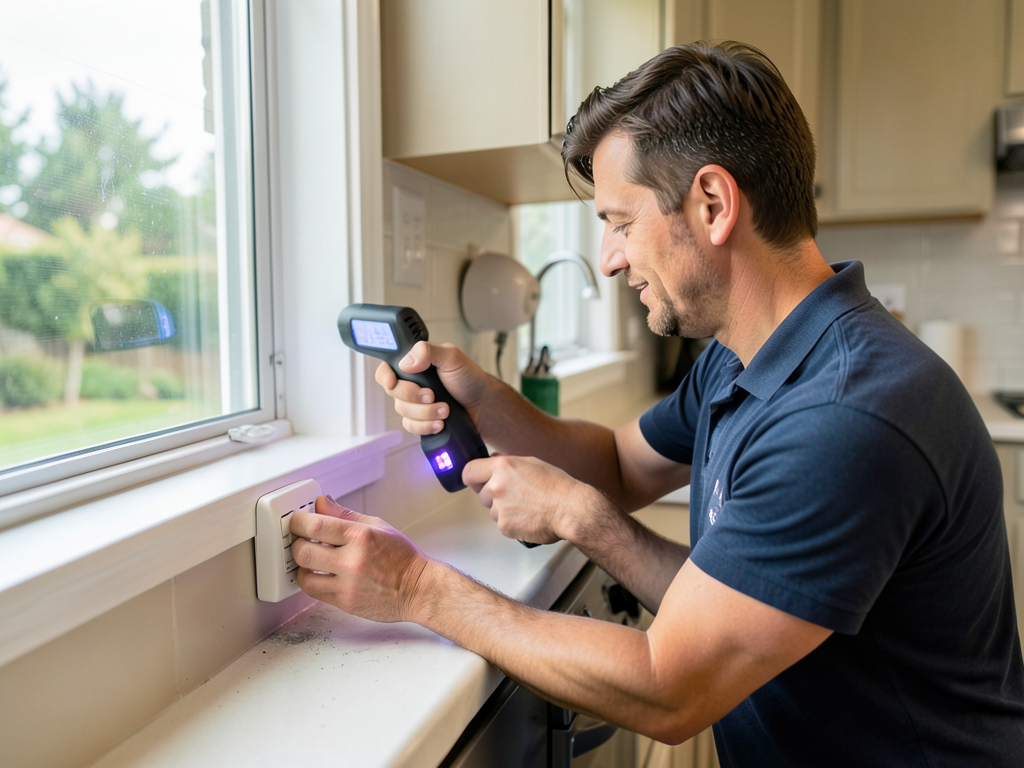
Why Putting Your Thermostat Near a Kitchen or Window Ruins Your Riverside Home Comfort
Your thermostat is the brain of your HVAC system. When it’s placed near a kitchen or window, it gets tricked by heat sources and drafts, causing your air conditioner to run longer than necessary. This leads to higher energy bills, uneven cooling, and unnecessary wear on your equipment. In Riverside’s extreme summer heat, these placement mistakes can make your home feel uncomfortable while driving up your utility costs by 10-15%.
The Inland Empire’s climate presents unique challenges for thermostat accuracy. With summer temperatures regularly exceeding 100°F and Santa Ana winds creating unpredictable drafts, a poorly placed thermostat can misread your home’s actual temperature by several degrees. This causes your system to either overcool or undercool, leaving you with hot spots and cold zones throughout your house.
The 5 Most Common Thermostat Placement Mistakes
Understanding where not to place your thermostat is the first step to better home comfort. Here are the five locations that consistently cause problems in Riverside homes.
Direct Sunlight and Solar Heat Gain
When your thermostat sits in direct sunlight, it experiences what HVAC technicians call the ‘greenhouse effect.’ The sensor reads the amplified heat from solar radiation rather than your home’s actual ambient temperature. This is especially problematic in Riverside where south-facing walls can reach 150°F on summer afternoons. Your AC will run continuously trying to cool a space that isn’t actually that hot.
Kitchen Heat Sources
Kitchens generate substantial heat from ovens, stoves, dishwashers, and refrigerators. When your thermostat is mounted on a kitchen wall, it registers this concentrated heat source as the room temperature. During meal preparation, your AC might run constantly, only to shut off completely once cooking ends, leaving other rooms too warm. This creates the frustrating cycle of ‘the AC won’t stop running’ that many Riverside homeowners experience.
Drafty Windows and Doors
Windows and exterior doors are sources of both heat gain and cold drafts. In Riverside’s climate, single-pane windows can create temperature differentials of 20-30 degrees between the window area and the room’s center. Your thermostat, if placed nearby, will respond to these temporary conditions rather than your home’s true temperature, causing short cycling and energy waste.
Near Supply Vents
Placing a thermostat too close to a supply vent creates a ‘short-cycle trap.’ The cold air from the vent blows directly on the thermostat sensor, causing it to register a lower temperature than the rest of the room. Your system shuts off prematurely, leaving other areas warm while the thermostat area becomes uncomfortably cold.
Hallways and Dead Air Zones
Hallways often lack proper air circulation and may not represent your home’s true temperature. These dead air zones can be several degrees different from living areas, causing your system to run inefficiently. In two-story Riverside homes, hallway placement on the second floor ignores the fact that heat rises, creating uncomfortable temperature stratification.
The Science of ‘Ghost Readings’
‘Ghost readings’ occur when your thermostat senses temperature that doesn’t represent your home’s actual comfort level. This phenomenon is particularly problematic in Riverside due to our extreme temperature swings and unique building characteristics.
When a thermostat experiences ghost readings, it’s detecting localized heat sources or cold spots rather than the room’s average temperature. For example, a thermostat near a west-facing window in summer might read 78°F when the actual room temperature is 72°F. Your AC runs continuously trying to reach the phantom 78°F, wasting energy and creating uncomfortable temperature swings.
The technical term for this is ‘thermal stratification.’ In Riverside homes, this is exacerbated by our low humidity and high solar gain. The thermostat might be measuring the temperature of rising hot air near the ceiling or the cooling effect of a nearby air vent, neither of which represents the temperature where you actually live and breathe.
Where is the Ideal Spot for a Riverside Home?
The perfect thermostat location balances several factors: central positioning, proper height, and protection from heat sources and drafts. Here’s what works best in Riverside’s climate.
Interior walls in central living areas provide the most accurate readings. These spaces typically have the best air circulation and represent your home’s average temperature. Avoid exterior walls entirely, as they’re subject to outdoor temperature fluctuations that can be 30-40 degrees different from your indoor comfort zone.
The ideal mounting height is between 52-60 inches from the floor. This range captures the air you actually breathe rather than the stratified air near the ceiling or floor. In Riverside’s two-story homes, this becomes even more critical as temperature differences between floors can exceed 10 degrees.
Look for a location away from heat-generating appliances, electronics, and direct sunlight. A north-facing interior wall in your main living area often provides the most stable readings. The spot should also have good Wi-Fi signal strength if you’re using a smart thermostat, as poor connectivity can cause communication issues with your HVAC system.
When to Consider Sensors or Zoning
Multi-story homes and larger floor plans in Riverside often benefit from additional temperature sensors or zoning systems. These solutions address the unique challenges of our climate and home layouts.
Smart thermostats like the Ecobee or Nest Learning Thermostat come with remote sensors that can be placed in different rooms. This allows your system to average temperatures across multiple locations rather than relying on a single point. For a typical Riverside two-story home, sensors in both upstairs and downstairs living areas provide much better comfort control.
Zoning systems divide your home into independently controlled areas. This is particularly valuable in Riverside where upstairs bedrooms might need cooling while downstairs living areas don’t. A zoning system with motorized dampers can direct conditioned air where it’s needed most, reducing energy waste and improving comfort.
For homes over 2,500 square feet or those with significant architectural features like vaulted ceilings or large windows, a zoning system can pay for itself through energy savings within 2-3 years. The California Energy Commission estimates that proper zoning can reduce HVAC energy consumption by up to 30% in larger homes.
Professional Calibration and Relocation
Moving a thermostat isn’t a simple DIY project. It involves running new low-voltage wiring, ensuring proper mounting, and calibrating the system. In Riverside, professional installation ensures your thermostat works correctly with our specific climate conditions. How Much Does a New AC Installation Cost in Woodcrest Today?.
A professional HVAC technician will first conduct a heat load calculation to determine the optimal thermostat location. This calculation considers your home’s orientation, window placement, insulation levels, and Riverside’s specific climate data. The technician will also check for proper wiring and ensure the new location meets building code requirements.
California Title 24 energy efficiency standards require that thermostats be installed in locations that provide accurate temperature readings. Improper placement can actually violate these standards, potentially affecting your home’s energy compliance rating. A professional installation ensures your system meets all local requirements. Switching to a High Efficiency Heat Pump in Riverside to Save on Monthly Energy Bills.
During relocation, technicians also check for proper leveling, as even a slightly tilted thermostat can affect its accuracy. They’ll test the system’s response time and make any necessary adjustments to your HVAC equipment’s control settings to ensure optimal performance in Riverside’s climate.
The Cost of Poor Thermostat Placement
Beyond comfort issues, incorrect thermostat placement has real financial impacts. In Riverside’s climate, where air conditioning runs for much of the year, these costs add up quickly.
Energy waste from ghost readings typically increases monthly utility bills by 10-15%. For a typical Riverside home spending $300 monthly on cooling, that’s $360-450 in unnecessary costs annually. Over a 10-year period, poor thermostat placement could cost you $3,600-4,500 in wasted energy.
Equipment wear is another hidden cost. When your system runs inefficiently due to bad readings, it experiences more frequent cycling and longer run times. This can reduce the lifespan of your compressor by 2-3 years, potentially costing $3,000-8,000 in premature replacement costs.
Humidity control suffers when your system doesn’t run optimally. In Riverside’s dry climate, proper humidity management is crucial for comfort and indoor air quality. Poor thermostat placement can lead to over-drying in some areas and insufficient dehumidification in others, potentially causing respiratory issues and material damage to wood floors and furniture.
DIY Testing: Is Your Thermostat in the Right Spot?
Before calling a professional, you can perform some basic tests to determine if your thermostat location is causing problems. Here’s a simple diagnostic process.
First, use a separate thermometer to check the temperature in different areas of your home. Place it in the center of your main living area, away from windows and vents. Compare this reading to your thermostat’s display. If there’s more than a 2-3 degree difference, your location might be problematic.
Next, observe your system’s behavior. Does it run continuously on mild days? Does it shut off quickly even when other rooms feel warm? These patterns suggest your thermostat might be getting false readings from its current location.
Check for obvious heat sources near your thermostat. Are there electronics, appliances, or direct sunlight affecting the sensor? Even a nearby television or computer can create enough heat to skew readings by several degrees.
Finally, consider your home’s layout. If your thermostat is in a rarely used room or a space that doesn’t represent your home’s average temperature, relocation might significantly improve your comfort and efficiency.
Smart Thermostat Features That Help
Modern smart thermostats offer features that can compensate for less-than-ideal placement, though they don’t eliminate the need for proper location entirely.
Learning algorithms in thermostats like the Nest can adapt to your home’s patterns over time. They learn that certain areas run warmer or cooler and adjust their calculations accordingly. However, this learning process takes weeks and may not fully compensate for severe placement issues.
Remote sensors are perhaps the most valuable feature for problematic placements. These battery-powered devices can be placed anywhere in your home and communicate with the main thermostat. For Riverside homes with challenging layouts, this technology essentially eliminates the importance of the main thermostat’s physical location.
Occupancy sensing helps smart thermostats understand when rooms are actually in use. This prevents overcooling empty spaces while ensuring occupied areas remain comfortable. In Riverside’s climate, where cooling costs are substantial, this feature can provide significant energy savings.
Geofencing capabilities allow your thermostat to prepare your home for your arrival based on your smartphone’s location. This means you can set back temperatures when away without returning to an uncomfortably warm house, regardless of where your thermostat is physically located.
Local Building Considerations
Riverside’s building codes and architectural styles create specific challenges for thermostat placement that homeowners in other regions don’t face.
Many older Riverside homes, particularly in historic districts like the Wood Streets, were built before central air conditioning was common. These homes often have unconventional layouts that make optimal thermostat placement difficult. The original construction didn’t account for modern HVAC needs, requiring creative solutions for thermostat installation.
California Title 24 requires that new construction and major renovations meet strict energy efficiency standards. This includes proper thermostat placement as part of the overall HVAC design. When remodeling your Riverside home, ensuring your thermostat location complies with these standards can affect your project’s approval and energy ratings.
The South Coast Air Quality Management District (SCAQMD) regulates HVAC installations in Riverside County. While they don’t specifically mandate thermostat locations, their efficiency requirements mean that improper placement can cause your system to fail emissions and efficiency testing during inspections.
Riverside Public Utilities offers rebates for energy-efficient HVAC upgrades, but many of these programs require that installations meet specific performance criteria. A poorly placed thermostat can cause your system to underperform, potentially disqualifying you from valuable rebate programs.
Commercial Applications
The principles of good thermostat placement apply to commercial buildings as well, though the scale and complexity increase significantly. Commercial Duct Cleaning.
In Riverside’s commercial spaces, thermostats must account for different occupancy patterns, equipment heat loads, and building usage. A retail store might need different thermostat locations than an office building, even if they’re the same size. Commercial spaces also face stricter energy efficiency requirements under California law.
Large commercial buildings often use building management systems (BMS) that integrate multiple sensors and thermostats. These systems can compensate for challenging layouts by averaging readings from multiple locations. However, the fundamental principle remains: accurate temperature sensing leads to better comfort and efficiency.
For restaurants and other businesses with significant internal heat sources, thermostat placement becomes even more critical. A thermostat near a commercial kitchen will experience extreme temperature swings that can cause the entire building’s HVAC system to behave erratically.
Future Trends in Thermostat Technology
The HVAC industry continues to evolve, with new technologies addressing the limitations of traditional thermostat placement.
Predictive algorithms are becoming more sophisticated, using weather forecasts, occupancy patterns, and even local events to anticipate heating and cooling needs. These systems can compensate for minor placement issues by learning your home’s specific thermal characteristics over time.
Integration with whole-home sensors is expanding beyond basic temperature. Modern systems can monitor humidity, air quality, and even occupancy to create a comprehensive comfort picture. This multi-factor approach reduces the importance of any single sensor’s location.
Voice-controlled and AI-powered systems are making thermostat interaction more intuitive. Rather than adjusting a physical device, homeowners can simply tell their system what they want, and the AI determines the best way to achieve it, potentially using data from multiple sensors throughout the home.
Energy grid integration is another emerging trend. Smart thermostats can communicate with utility companies to reduce load during peak demand times, potentially earning homeowners rebates while improving overall grid stability. This technology makes proper system operation even more valuable in Riverside’s hot climate.
Making the Right Choice for Your Home
Deciding whether to relocate your thermostat or invest in additional sensors depends on several factors specific to your Riverside home and lifestyle.
Consider your home’s age, layout, and existing HVAC system. Older homes with unconventional layouts might benefit more from zoning systems than simple thermostat relocation. Newer homes with open floor plans might only need minor adjustments to achieve optimal comfort.
Your budget and energy costs play a role in the decision. If you’re spending significantly on cooling each summer, the investment in proper thermostat placement or additional sensors can pay for itself within a few years through energy savings alone.
Think about your comfort priorities. If certain rooms consistently feel too hot or cold, addressing thermostat placement might solve these issues more effectively than adjusting your entire system’s settings.
Finally, consider future plans. If you’re planning renovations or additions, incorporating proper HVAC planning now can save significant costs and headaches later. A professional assessment can help you understand all your options and make the best choice for your specific situation.
Conclusion
Proper thermostat placement is crucial for home comfort and energy efficiency in Riverside’s challenging climate. Whether you’re dealing with a kitchen-side thermostat that runs your AC constantly or a hallway unit that doesn’t represent your home’s true temperature, understanding these issues is the first step toward solving them.
The investment in proper thermostat location or additional sensors pays dividends through improved comfort, lower energy bills, and longer equipment life. In Riverside’s extreme heat, where air conditioning is essential for months each year, getting this right isn’t just about comfort—it’s about protecting your home investment and quality of life.
Don’t let a poorly placed thermostat ruin your home comfort. Whether you need professional relocation, zoning installation, or just advice on optimizing your current setup, the right solution is available for your specific situation.
Frequently Asked Questions
How much does it cost to relocate a thermostat in Riverside?
Professional thermostat relocation typically costs between $150-400 in Riverside, depending on the complexity of the wiring run and whether wall repair is needed. This investment often pays for itself within 1-2 years through energy savings. Same Day Emergency AC Repair for Families in Orangecrest.
Can I move my thermostat myself?
While possible, thermostat relocation involves low-voltage wiring that requires proper knowledge to avoid system damage. Incorrect wiring can cause your HVAC system to malfunction or even create safety hazards. Professional installation ensures proper function and maintains any existing warranties.
How do I know if my thermostat is in a bad location?
Signs of poor placement include uneven cooling, the system running constantly or cycling too frequently, and rooms feeling different temperatures than what the thermostat displays. If you experience these issues consistently, your thermostat location might be the cause.
Will a smart thermostat fix placement issues?
Smart thermostats with remote sensors can help compensate for poor primary location, but they don’t eliminate the need for good placement entirely. The main thermostat should still be in a reasonable location for the system to function optimally.
How long does professional thermostat relocation take?
Most thermostat relocations can be completed in 2-4 hours by a professional HVAC technician. This includes assessment, wiring installation, system calibration, and testing to ensure proper operation. For more information, visit U.S. Department of Energy thermostat guide. For more information, visit ASHRAE HVAC standards and best practices.