
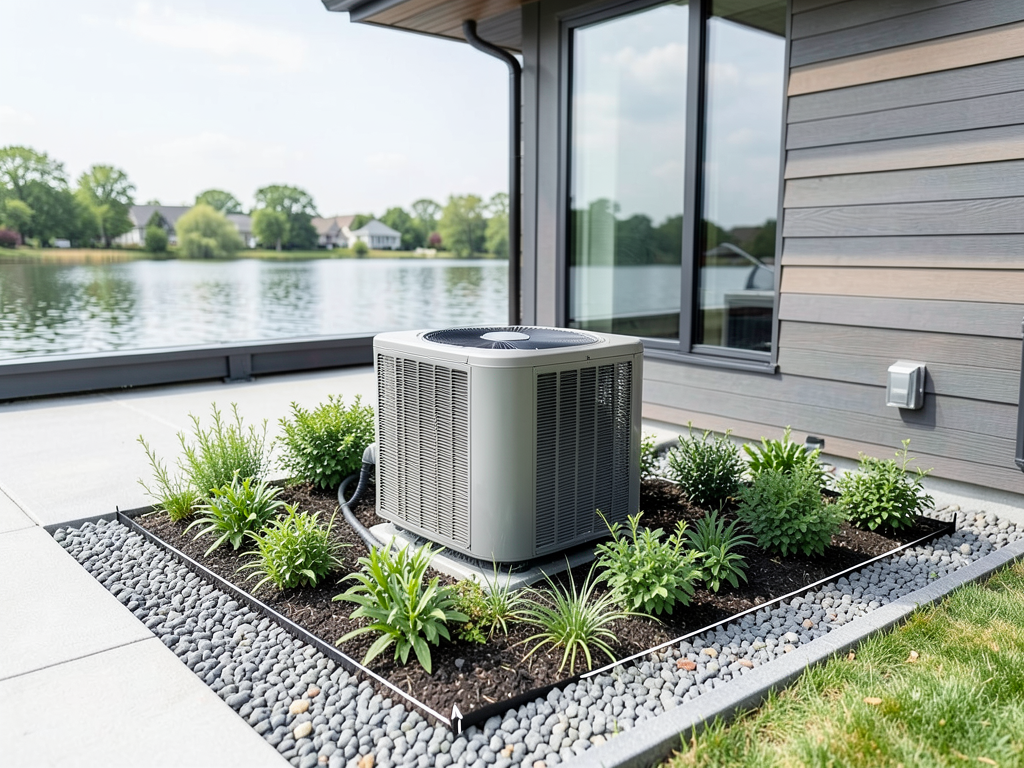
Landscaping Tips to Help Your Outdoor AC Unit Breathe Better in the Riverside Heat
Your air conditioning system works overtime in Riverside’s scorching summer heat and the landscaping around your outdoor unit plays a bigger role in efficiency than most homeowners realize. When plants crowd the condenser or debris blocks airflow your system struggles to cool your home and energy bills climb. This guide walks you through proven landscaping strategies that protect your AC investment while keeping your yard looking great. Switching to a High Efficiency Heat Pump in Riverside to Save on Monthly Energy Bills.
The Golden Rule: Why Airflow Matters in Riverside’s Heat
The condenser coil needs constant airflow to release heat. When plants grow too close or mulch piles up against the unit the system can’t exhaust hot air properly. In Riverside’s triple-digit summer temperatures this restriction forces the compressor to run longer which shortens equipment life and drives up utility costs. The industry standard is to maintain at least two feet of clearance on all sides and five feet above the unit. That means no shrubs within that zone no stacked pots and no storage of garden tools against the cabinet.
Clearance Violations to Avoid
- Planting bushes closer than 24 inches to the unit
- Allowing vines to grow on or above the condenser
- Stacking firewood or other items within the clearance zone
- Using organic mulch that can blow into the coil fins
Best Plants for Riverside Landscaping
Choosing the right plants means balancing aesthetics with low maintenance and minimal debris. Riverside sits in USDA Hardiness Zone 9b to 10a where summer temperatures regularly exceed 100 degrees. Drought-tolerant species are essential for water conservation and to avoid constant pruning. Native and Mediterranean plants thrive here without creating the fine litter that clogs condenser coils.
Top Low-Debris Plant Choices
- California Lilac (Ceanothus) – Evergreen with minimal leaf drop
- Russian Sage (Perovskia) – Tall purple blooms that attract pollinators
- Agave and Aloe – Succulents that need almost no water
- Lavender – Fragrant and drought-tolerant with fine foliage
- Red Yucca (Hesperaloe) – Dramatic flower spikes with no messy leaves
Ground Cover: Gravel vs. Mulch
The area around your AC pad matters as much as the plants. Organic mulch like bark or wood chips can be blown into the condenser by Riverside’s Santa Ana winds. Once inside the fins it traps heat and reduces efficiency. Crushed rock or decomposed granite provides a clean look without the debris risk. Light-colored gravel also reflects heat away from the unit helping it run cooler.
Material Comparison
| Material | Debris Risk | Heat Reflection | Maintenance |
|---|---|---|---|
| Crushed Rock | Low | High | Minimal |
| Decomposed Granite | Low | Medium | Minimal |
| Organic Mulch | High | Low | High |
Shading Strategies to Reduce Ambient Temperature
Direct sun on the condenser can raise the surrounding air temperature by 10 to 15 degrees. Strategic shading lowers the intake air temperature which improves efficiency. The key is to shade without blocking airflow. A pergola with spaced slats or a tall ornamental grass planted three feet away can cast shade during peak heat without choking the unit.
Effective Shading Options
- Deciduous trees planted at least five feet away
- Vinyl lattice screens with climbing vines kept trimmed
- Decorative metal screens that allow 70 percent open area
- Retractable shade sails mounted on posts away from the unit
Screening Solutions: Lattice, Trellises, and Fencing
Many homeowners want to hide the condenser for curb appeal. Screening is fine as long as it follows the two-foot clearance rule and includes removable panels for service access. Solid fences trap heat while open designs promote airflow. Vinyl or powder-coated aluminum lattice resists warping in the sun and won’t rust like steel.
Screening Design Guidelines
- Maintain 24 inches minimum clearance on all sides
- Use removable panels or hinged doors for technician access
- Choose materials rated for UV exposure in Zone 9b
- Avoid solid walls that block cross-ventilation
Seasonal Maintenance Tips for Landscaped AC Units
Riverside’s dry summers and windy springs mean debris builds up quickly. A quick monthly check prevents bigger problems. After Santa Ana wind events inspect the coil for leaves and dust. Trim back any plants that creep into the clearance zone. Check the pad for settling which can tilt the unit and strain refrigerant lines. HVAC Palm Springs.
Monthly AC Landscaping Checklist
- Clear leaves twigs and dust from the coil fins
- Trim plants back to maintain 24-inch clearance
- Inspect the concrete pad for cracks or settling
- Verify all screening panels are secure and removable
- Check for rodent nesting material under the unit
Impact on Energy Efficiency and SEER Ratings
Restricted airflow can reduce your system’s effective SEER rating by five to ten percent. In Riverside where cooling accounts for more than half of summer electricity use that translates to noticeable cost increases. Proper landscaping not only protects the equipment but also helps it operate closer to its rated efficiency which means lower bills and fewer repairs. EPA WaterSense on Xeriscaping.
Call (951) 223-9644 for a Professional AC Landscaping Assessment
Unsure if your current landscaping is hurting your AC’s performance? Call (951) 223-9644 today to schedule a professional inspection. We’ll check airflow clearances coil condition and pad stability then recommend specific plant and material changes tailored to your yard. Don’t wait until the next heatwave forces your system to fail.
Frequently Asked Questions
Can I plant flowers directly next to my AC unit?
No. Flowers and other plants should be at least 24 inches away to ensure proper airflow and easy access for maintenance.
What is the best ground cover to use around an AC unit?
Crushed rock or decomposed granite are ideal because they don’t produce debris and help reflect heat away from the unit.
How often should I trim plants around my AC condenser?
Check monthly during the growing season and after windstorms to ensure plants stay within the 24-inch clearance zone.
Will shading my AC unit improve efficiency?
Yes. Shading can lower the surrounding air temperature by up to 15 degrees which helps the system run more efficiently as long as airflow is not blocked.
Is it safe to build a fence around my AC unit?
You can build a fence if it maintains 24-inch clearance on all sides and includes removable panels for service access. Solid fences should be avoided because they trap heat. For more information, visit U.S. Department of Energy on Air Conditioning.