Prepping Your Riverside Home for the First Chilly Night of the Year
Winter in Riverside brings chilly nights that can drop into the low 40s. Your heating system has been dormant all summer and now needs attention before that first cold snap hits. This guide walks you through exactly what your HVAC system needs to handle those unexpected cold nights efficiently and safely.
Why Winter Heating Maintenance Matters in the Inland Empire
Riverside’s winter presents unique challenges for heating systems. The Santa Ana winds that batter our area from October through March carry fine dust that settles on outdoor condenser coils and infiltrates indoor components. When temperatures suddenly drop from 75°F to 45°F overnight, systems that haven’t run in months can struggle to respond.
The Inland Empire’s significant temperature swings mean your heating system must handle both rapid heating demands and extended idle periods. Dust accumulation during summer months combined with these temperature fluctuations creates conditions where components can fail exactly when you need them most.
DIY Winter Prep Checklist for Riverside Homeowners
Before calling a professional, several maintenance tasks can improve your system’s performance and potentially prevent emergency calls. Same Day Emergency AC Repair for Families in Orangecrest.
Filter Replacements and Air Quality
Start with your air filter. Riverside’s high dust environment means filters clog faster than in coastal areas. Replace your filter now with a MERV 11 rated filter. This rating captures fine desert dust while maintaining adequate airflow for your system. HVAC Palm Desert.
Check the filter monthly during winter months. If you have pets or live near agricultural areas, you might need replacements every 30-45 days instead of the standard 90 days.
Thermostat Calibration for Chilly Nights
Many Riverside homes have programmable thermostats that drifted during summer. Test your thermostat by setting it 5 degrees above current room temperature. If your system doesn’t respond within 3-5 minutes, the thermostat may need battery replacement or recalibration.
For heat pump systems common in newer Riverside developments, ensure the emergency heat function works. This backup heating activates when outdoor temperatures drop below freezing or when the heat pump cannot keep up with demand.
Outdoor Unit Clearance and Debris Removal
Walk around your outdoor condenser unit. Santa Ana winds deposit leaves, twigs, and fine dust around the base. Clear at least 2 feet of clearance on all sides. Use a garden hose on gentle spray to rinse the coil from inside out, removing dust that accumulated during summer.
Check for rodent nests or insect activity. Riverside’s mild winters mean pests often seek shelter in outdoor units during fall months.
Professional HVAC Tune-Up: What Our Technicians Inspect
While DIY maintenance helps, professional inspection catches issues that homeowners miss. A comprehensive winter tune-up includes several critical checks.
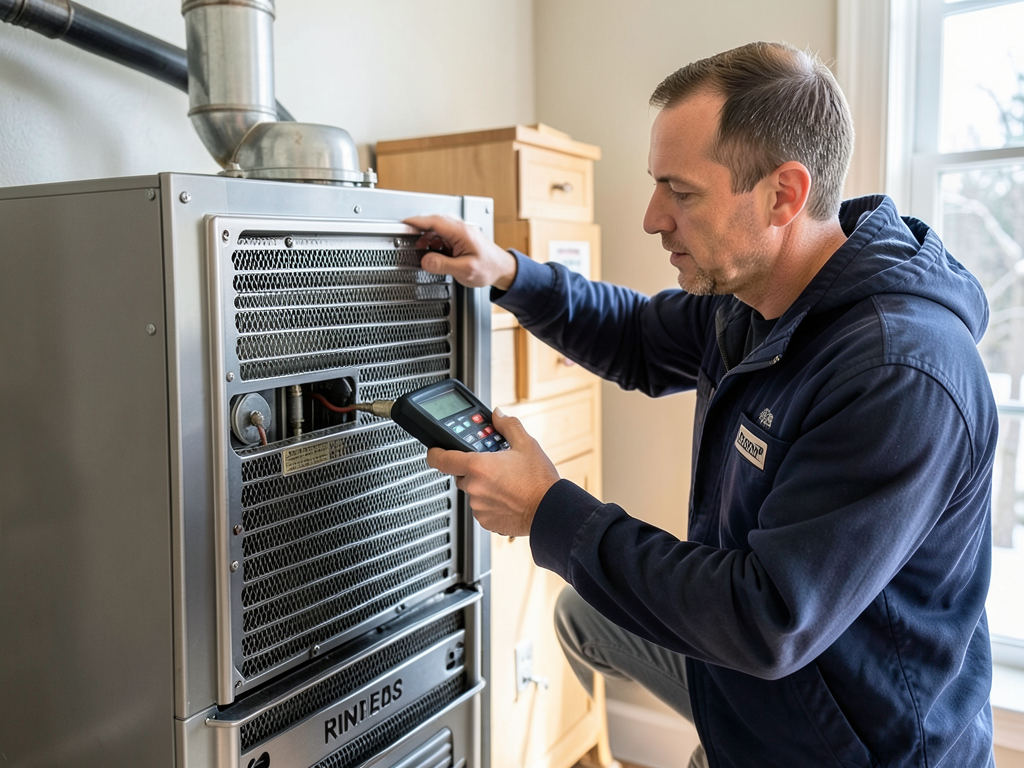
Technicians test electrical connections for signs of corrosion that Santa Ana winds accelerate. They measure amperage draw on motors to identify failing components before they break down. Heat exchangers receive inspection for cracks that could leak carbon monoxide into your home.
Refrigerant levels get checked even on heating systems. Low refrigerant affects heat pump efficiency and can cause the system to run continuously without achieving desired temperatures. Switching to a High Efficiency Heat Pump in Riverside to Save on Monthly Energy Bills.
Gas furnace inspections include checking the flame sensor, igniter, and gas valve operation. These components experience wear during summer’s humidity changes that homeowners rarely notice until failure occurs. Reliable Furnace Repair in Riverside to Keep Your Family Warm This Winter.
Addressing Riverside-Specific Challenges (Dust & Santa Ana Winds)
Riverside’s unique environmental conditions require specific maintenance approaches. The fine particulate matter from Santa Ana winds creates problems that generic HVAC advice doesn’t address.
Outdoor condenser coils accumulate a layer of fine dust that standard cleaning misses. This dust insulates the coil, reducing heat transfer efficiency by up to 15%. Professional coil cleaning with specialized equipment removes this buildup.
Indoor air quality becomes crucial during winter when windows stay closed. Riverside’s air quality issues mean your system circulates the same air repeatedly. Consider having your ducts inspected for accumulated dust that gets redistributed when heating starts.
Heat pumps in Riverside often run defrost cycles during winter mornings. This normal function can concern homeowners who hear unusual sounds. Understanding this process prevents unnecessary service calls.
Energy-Saving Tips for Lowering Riverside Public Utilities (RPU) Bills
Riverside Public Utilities rates make energy efficiency financially important. A properly maintained system can reduce winter heating costs by 10-15% compared to neglected equipment.
Programmable thermostats save money when set correctly. Lower temperatures by 5-7 degrees during sleeping hours or when away from home. Each degree reduction for eight hours saves approximately 1% on heating costs.
Seal air leaks around windows and doors. Riverside’s temperature swings make air infiltration more noticeable. Weatherstripping and caulking prevent heated air from escaping and cold air from entering.
Consider RPU’s energy efficiency rebate programs. Current incentives cover programmable thermostat installations and high-efficiency heating system upgrades. These programs change annually, so check current offerings before making equipment decisions. How Much Does a New AC Installation Cost in Woodcrest Today?.
Heat Pump vs. Gas Furnace Care Differences
Riverside homes use both heat pumps and gas furnaces, each requiring different winter preparation approaches. EPA guide to air duct cleaning.
Heat pumps need outdoor coil cleaning and defrost cycle verification. The reversing valve that switches between heating and cooling modes can stick after summer inactivity. Technicians test this function to prevent mid-winter failures.
Gas furnaces require carbon monoxide detector testing and heat exchanger inspection. The combustion process creates moisture that can cause rust in Riverside’s humidity fluctuations. Rust leads to cracks that compromise safety.
Both systems benefit from blower motor lubrication and belt tension checks. Riverside’s temperature variations cause expansion and contraction that affects these components differently than in more stable climates.
Carbon Monoxide Safety for Gas Heating Systems
Gas heating systems require specific safety attention. Carbon monoxide detectors should be installed on every level of your home, particularly near sleeping areas.
Test detectors monthly by pressing the test button. Replace batteries annually, even if they appear functional. Carbon monoxide detectors have a 5-7 year lifespan and should be replaced when expired.
Symptoms of carbon monoxide exposure include headaches, dizziness, and nausea. If multiple family members experience these symptoms simultaneously, evacuate immediately and call emergency services.
Professional inspection includes checking for proper venting and combustion air intake. Blocked vents cause dangerous backdrafting where exhaust gases enter living spaces instead of exiting through the flue.
Indoor Air Quality During Winter Months
Winter air quality concerns differ from summer issues. Closed windows mean your HVAC system continuously recirculates indoor air. Riverside’s air quality challenges make filtration more important during heating season.
Consider upgrading to a higher MERV rated filter if family members have respiratory issues. MERV 13 filters capture smaller particles including some viruses and bacteria, though they may require more frequent replacement to maintain airflow.
Humidity levels drop during winter heating. Riverside’s already dry climate becomes drier when air is heated. This can cause static electricity, dry skin, and respiratory irritation. Some homeowners benefit from whole-house humidifiers, though these require additional maintenance.
Emergency Preparation for Heating System Failures
Even well-maintained systems can fail during critical cold snaps. Prepare for potential outages with these steps.
Keep emergency contact numbers readily available. Write down (951) 223-9644 for Horizon HVAC Riverside service. Store this information where family members can find it quickly.
Have backup heating options available. Electric space heaters can provide temporary warmth but require careful use to prevent fire hazards. Never use outdoor heating equipment indoors.
Know how to turn off your heating system if you smell gas or suspect a malfunction. Locate the emergency shutoff switch, typically near the furnace or on the unit itself.
Professional vs. DIY Maintenance Limitations
Understanding what you can safely handle versus what requires professional attention prevents dangerous situations and costly mistakes.
Safe DIY tasks include filter replacement, thermostat battery changes, and outdoor unit debris removal. These maintenance items improve efficiency without risking system damage.
Professional tasks include electrical testing, gas line inspection, refrigerant handling, and heat exchanger examination. These require specialized tools, training, and licensing to perform safely.
Attempting professional-level repairs often voids manufacturer warranties and can create safety hazards. The cost savings rarely justify the risks involved with complex HVAC repairs.
Frequently Asked Questions
How often should I replace my HVAC filter in Riverside?
Riverside’s high dust environment means most homes need filter replacement every 30-60 days during winter months. Check monthly and replace when visibly dirty.
What temperature should I set my thermostat for winter efficiency?
Set your thermostat to 68°F when home and awake. Lower to 60-65°F when sleeping or away. Each degree reduction saves approximately 1-3% on heating costs.
How can I tell if my heating system needs professional service?
Call for service if your system makes unusual noises, produces burning smells, cycles on and off frequently, or fails to maintain set temperatures. These symptoms indicate problems requiring professional diagnosis.
Are there Riverside Public Utilities rebates for heating system upgrades?
RPU offers various energy efficiency rebates that change annually. Current programs may cover programmable thermostats, high-efficiency equipment, and insulation improvements. Check RPU’s website or call (951) 351-6100 for current offerings.
How long should my heating system last in Riverside’s climate?
Well-maintained gas furnaces typically last 15-20 years in Riverside. Heat pumps often need replacement after 10-15 years due to year-round operation. Regular maintenance extends equipment lifespan significantly.
What’s the difference between emergency heat and regular heat pump operation?
Emergency heat uses electric resistance heating strips and activates when outdoor temperatures drop below freezing or when the heat pump cannot meet heating demands. It’s less efficient but provides reliable backup heating.
Should I cover my outdoor AC unit during winter?
Covering outdoor units isn’t necessary in Riverside’s mild climate. Covers can trap moisture and create environments for pest nesting. Instead, keep the area clear of debris and ensure proper drainage around the unit.
How much does a professional winter HVAC tune-up cost in Riverside?
Professional tune-up costs typically range from $89 to $149 in Riverside, depending on system type and included services. This preventive maintenance often pays for itself through improved efficiency and prevented breakdowns.
Can I use my AC’s fan mode to circulate warm air during winter?
Yes, running your system’s fan continuously at low speed helps distribute warm air evenly throughout your home. This can eliminate cold spots and improve overall comfort without significantly increasing energy costs.
What should I do if I smell gas near my furnace?
If you smell gas, evacuate immediately without using any electrical switches or phones. Call your gas company’s emergency line or 911 from a safe location. Do not re-enter your home until professionals declare it safe.
Taking Action Before the Next Cold Snap
Don’t wait until that first 40-degree night to discover heating problems. Most HVAC emergencies occur when systems are suddenly needed after months of inactivity.
Start with basic maintenance tasks this weekend. Replace your filter, clear outdoor unit debris, and test your thermostat. These simple steps often resolve minor issues before they become major problems.
For systems over 10 years old or those that showed problems last winter, professional inspection provides peace of mind. A technician can identify worn components before they fail during critical cold periods.
Remember that heating emergencies rarely happen during business hours. Having a trusted service provider’s number saved in your phone ensures quick response when you need it most.
Call (951) 223-9644 today to schedule your winter HVAC inspection. Our technicians understand Riverside’s unique heating challenges and can ensure your system handles whatever winter brings.
Don’t let the first chilly night catch you unprepared. A few hours of preparation now prevents uncomfortable and potentially dangerous situations later. Your family’s comfort and safety depend on reliable heating when temperatures drop. For more information, visit U.S. Department of Energy heating system guide.